Camco 20143 Brass Flow-Through Quick Connect Guide
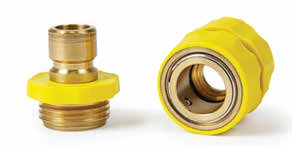
Exact product shown: Camco 20143 Brass Flow-Through Quick Connect Guide. Manufacturer photograph used with permission.
The Camco 20143 connector is the flow-through member of Camco’s brass quick-hose-connect range. Its purpose is to make a compatible hose connection easier to separate and reconnect. It does not add the automatic shutoff feature associated with model 20135, and that distinction should guide how you plan the connection.
This guide is based on the manufacturer catalog rather than a hands-on leak or flow test. Current exact-model retail availability and a model-specific potable-water certification have not been verified. Before using an older or marketplace-supplied connector in a drinking-water setup, obtain the current product documentation and confirm that it is appropriate for that intended service.
Identify the exact flow-through model
Camco’s catalog lists 20143 as a brass connector with a flow-through connection. The same page distinguishes the 20135 brass automatic-shutoff connector and the 20103 plastic connector with a shutoff. It also shows a separate 20136 value pack with additional male connectors.
Those neighboring products make listing accuracy important. A marketplace title that says only “Camco quick connect” does not tell you which behavior or bundle you are buying. Match the selected model number with its photograph and written contents rather than assuming all brass quick-connect products are equivalent.
The catalog photograph for the 20143 depicts the two mating parts. Because the current dealer product page did not return an active model listing during research, confirm the supplied package contents with the seller. Do not borrow a description of included extra plugs from a different bundle.
Understand what flow-through means in use
The practical difference is that this model should not be treated as an automatic shutoff when the hose is disconnected. Plan to stop the water source and relieve pressure according to the connected equipment’s instructions before separating the coupling. A quick-release mechanism is a convenience feature, not permission to disconnect a pressurized line casually.
This behavior can suit an owner who already follows a deliberate shutdown routine and does not need another valve in the connector. However, someone specifically seeking automatic shutoff should compare the documented 20135 design instead. Neither choice eliminates the need for the main source shutoff or careful handling.
Do not interpret the flow-through label as a measured promise of zero pressure loss. Every assembled connection should be evaluated in its actual system. We have not verified a comparative flow curve or independent test showing how this connector performs against other brands or the shutoff version.
Verify hose-thread compatibility
First identify the hose and fitting that will receive each half. Check connection type, sealing method and clearance in the current instructions. A matching nominal diameter alone does not establish compatibility with a pipe-thread connection or with another brand’s quick-connect profile.
Also keep the two types of compatibility separate. One concerns the threaded ends that attach to equipment. The other concerns the quick-connect interface joining the plug and receiver. A threaded fitting that screws into your hose does not prove its plug will latch properly in a different receiver.
If you already own quick-connect parts, compare manufacturer part numbers rather than testing a partial fit under pressure. A connector that appears to engage but does not lock securely is not a successful match. Use the approved mating components and retain the documentation for future replacements.
Plan access for the release mechanism
Measure the space around the faucet or inlet. The release section needs room for your hand, and a nearby filter, wall or compartment edge can make a supposedly convenient connection difficult to operate. Consider the hose’s natural resting position, not just the position while you hold it in the air.
Avoid letting the connector become a lever against the RV inlet. An elbow or flexible support may be appropriate if the equipment manufacturer allows it, but adding adapters simply to make a long chain fit can create more joints to inspect. The cleanest arrangement is the shortest approved layout that gives useful access without strain.
Keep the disconnect location visible. If it is hidden behind stored equipment, you may be less likely to notice a dripping seal or incomplete engagement. Convenience should make inspection easier rather than encourage leaving a questionable joint out of sight.
Connect and inspect methodically
With the supply off and pressure relieved, inspect both mating surfaces for damage and contamination. Follow the actual instructions for assembly and locking. Do not use the connector to force misaligned hoses together or compensate for a twisted fitting.
After assembling, restore water with supervision and inspect the threaded joints and the quick-connect interface separately. A leak at the hose washer is a different fault from a leak between mating halves. Identifying the location prevents random tightening of the wrong part.
If a leak or incomplete lock remains, stop and resolve it before continuing. Avoid adding unapproved lubricant, sealant or replacement O-rings based only on visual similarity. The original manufacturer’s service information should determine compatible repair parts and materials.
Keep drinking-water claims separate from convenience
The catalog establishes the connector’s identity and basic mechanical purpose. It does not, by itself, verify every current water-contact certification that a drinking-water buyer might require. Confirm the exact unit’s current suitability before including it in a potable supply path.
A brass appearance is not a certification. Likewise, a generic low-lead statement for a broad fitting range should not be extended automatically to an unidentified old-stock connector. Ask for model-specific documentation when the package or seller description is unclear.
If that evidence cannot be obtained, choose a well-documented suitable connector for the intended service rather than filling the uncertainty with assumptions. The small saving from reusing a questionable accessory does not make the compatibility question disappear.
Storage and long-term ownership
Protect both halves from grit when disconnected. Keep potable-use components dedicated to that purpose and away from waste-service hoses. A quick connector that is frequently handled needs a clean storage routine just as much as the hose itself.
Inspect the release movement, locking condition and visible seals before each setup. Follow the manufacturer’s storage and freeze-protection guidance. Do not assume an internal passage has drained completely merely because the outside looks dry.
Keep a spare only if you can identify its matching counterpart. Labeling the plug and receiver family is particularly helpful when several people add accessories to the RV kit. A bin full of visually similar connectors can make troubleshooting slower rather than improve preparedness.
Is the 20143 the right choice?
Consider it when you want a documented flow-through quick connection, can confirm current service suitability and have compatible mating parts. Prefer an automatic-shutoff model when that particular feature is an explicit requirement, while still following a proper source-shutoff routine.
If you connect a hose only occasionally and its threaded coupling is already accessible, a quick connector may add little practical value. Judge the improvement against the extra joint, storage pieces and future replacement needs, not just the appeal of faster setup.
Does it stop water automatically when separated?
Do not expect that feature from the 20143 flow-through model. Camco lists the automatic-shutoff model separately as 20135.
Will it mate with every garden quick connector?
No universal compatibility has been verified. Match the quick-connect profile and threaded connections through the relevant manufacturer instructions.
Sources and verification
Research and specifications checked November 25, 2026. Verify current model details, availability and instructions before purchase.