Valterra A01-1117VP Adjustable Water Regulator: Detailed RV Buying Guide
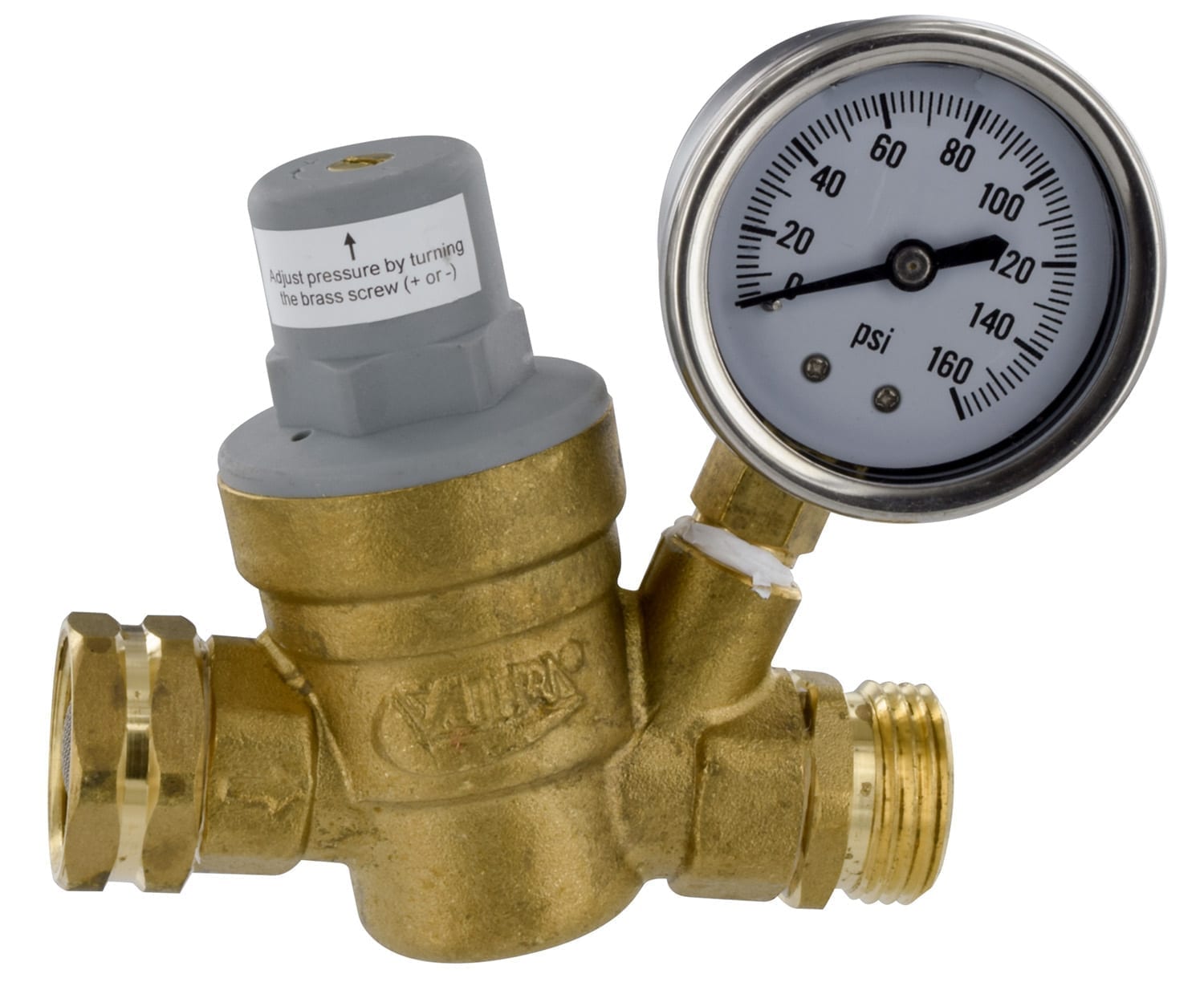
Exact product shown: Valterra A01-1117VP Adjustable Water Regulator. Manufacturer photograph used with permission.
What the regulator is meant to control
Valterra A01-1117VP is an adjustable brass water regulator with a visible gauge. The proper outlet setting comes from the RV manual, not from a universal internet recommendation.
A campground pressure regulator limits downstream pressure, but the acceptable setting comes from the RV manufacturer. Do not adopt a single internet number for every rig. Plumbing, water heater, fixtures and modifications can have different limits. The lowest relevant documented limit controls.
Place the regulator according to the product and RV instructions. Many owners regulate near the source so the potable hose is not exposed to unregulated campground pressure, but the exact arrangement should remain consistent with the equipment documentation.
Pressure is not the same as flow
A gauge can show pressure while every fixture is closed, yet the shower can still feel weak when water moves. Hose diameter, filter condition, quick connectors and campground supply capacity affect dynamic performance. Do not raise the setting beyond the RV limit to overcome a clogged cartridge or kinked hose.
When diagnosing poor flow, change one variable at a time. Record static pressure, then observe behavior during a normal draw if the gauge and instructions support that use. Inspect filters, washers and valves. A larger or more expensive regulator cannot create flow that the source cannot provide.
Model and gauge checks
Use the complete model number when comparing Valterra A01-1117VP Adjustable Water Regulator. Similar brass regulators can have different adjustment ranges, inlet sizes, gauge scales or intended installation conditions. Verify the direction arrow, connection requirements and current manual. Do not transfer specifications from another size in the same family.
The gauge is a measuring component, not proof that calibration remains perfect. Protect it from impacts and freezing, and follow any storage or service guidance. If readings become erratic or disagree with a trusted reference, stop relying on the number until the cause is resolved.
Setup and adjustment
Assemble the potable-water path with the source off. Start threads by hand, use the required washer or sealing method and support the regulator so it does not strain the spigot. Open water gradually and inspect every connection. Make adjustments using the manufacturer’s procedure while remaining within the RV’s approved range.
Do not disassemble a sealed device or alter a factory-set model unless the instructions authorize it. If an adjustable unit cannot hold a stable setting, check source behavior and downstream restrictions before assuming the regulator is defective.
Materials, freeze protection and storage
Verify current lead-free or potable-water documentation for the exact model when that matters to the installation. A brass appearance alone does not establish certification. Likewise, a standards reference should be tied to the complete device and claim.
Drain and store the regulator as directed. Trapped water can freeze inside the body or gauge. Protect threads, keep the unit clean and separate it from waste-service equipment. Inspect washers and the gauge before each trip rather than discovering damage after opening a high-pressure source.
Buying verdict
Choose this adjustable regulator when its documented range and connections fit the RV and you want to monitor and set outlet pressure. It is less suitable when a correct fixed regulator would meet the need with fewer adjustments.
Compare it with simpler fixed regulators and other adjustable models in the RV pressure regulator guide. An adjustable unit offers control and a visible reference, but it requires the owner to choose, verify and preserve the correct setting. A fixed model can be simpler where its documented output matches the RV.
Before you order
Confirm model, inlet and outlet size, adjustment range, gauge scale, approved orientation, temperature limits and package contents. Measure clearance at the source and in storage. This guide does not claim a live price, guaranteed gauge accuracy or hands-on testing.
Keep the manual and initial setting with the RV records. A trustworthy recommendation depends on documented compatibility and careful use, not on popularity alone. If manufacturer documents conflict, obtain clarification rather than selecting whichever number is more convenient.
How to verify the offer and seller
Before buying, compare the manufacturer’s exact model page with the selected marketplace offer. Check the model number in the title, specification table, package photograph and variant selector. Those fields can disagree when a seller has merged several products onto one listing. Save a copy of the order description and inspect the received package before the return window closes.
Seller credibility is a separate question from product design. Look for a clearly identified seller, an appropriate return policy and a realistic delivery promise. A high review count does not confirm that the current seller will ship the exact model shown, and reviews attached to a variation family may cover different products. Treat recurring fit or leakage complaints as issues to investigate, not proof that every unit will fail.
Total ownership cost
Compare the complete ownership task rather than the shelf price alone. Include required adapters, replacement seals, cartridges, mounting hardware, electrical work, storage protection and likely service access. A low-cost component can be poor value if it needs unsupported adapters or frequent replacement. A more expensive assembly can still be a weak recommendation when its documented benefit does not address the buyer’s problem.
Keep consumable part numbers in the RV records and check whether they remain readily available. Do not calculate a precise cost per gallon, season or trip unless the actual service life is known for the user’s water and operating conditions. A range with stated assumptions is more honest than a precise figure copied from ideal marketing conditions.
What to record after installation
Create a short equipment record with the exact model, purchase source, installation date, manual link and any compatible replacement parts. Photograph the final routing and note the normal valve or gauge position. These details make future troubleshooting safer, especially when a different person sets up the RV or services it months later.
During initial use, record leaks, unusual noise, flow changes or operating conditions that matter. Stop if the product behaves outside its instructions. Do not keep tightening, raising pressure or bypassing protection in an attempt to make an incompatible part work. Contact the manufacturer or use qualified service when the cause is unclear.
Responsible recommendation standard
RV Water Fix should recommend this product only for buyers whose documented need matches its function. The article should keep manufacturer claims, independent standards and customer feedback clearly separated. It should also be updated when specifications, package contents or availability change. That standard protects readers better than repeating a marketplace title or implying firsthand testing that did not occur.
The final decision should be repeatable: identify the problem, verify the exact model, confirm compatibility, understand the maintenance and compare a realistic alternative. If any of those steps remains unresolved, the responsible conclusion is to wait for clarification rather than forcing a confident recommendation.
Sources and verification
- Valterra A01-1117VP Adjustable Water Regulator source or manufacturer documentation
- Winnebago owner manual directory
Research and specifications checked November 25, 2026. Verify current model details, availability and instructions before purchase.