
An RV water heater anode rod is a service part used by certain tank designs to help protect the tank from corrosion. Therefore, before ordering one, identify the actual heater and read its maintenance instructions. Not every RV water heater uses the same corrosion-protection system.
The drain opening is not enough to identify the right part. In particular, thread size, material and the manufacturer’s requirements matter. A generic marketplace compatibility claim should not replace the appliance documentation.
What an RV water heater anode rod does
In the Suburban tank-water-heater guide cited below, the anode is a sacrificial component that deteriorates as it helps protect the tank. Wear is therefore expected, but its condition and replacement needs depend on the specified service guidance and water conditions.
That explanation applies to the covered tank models. It should not be extended to every tankless heater, aluminum-tank design or aftermarket appliance. First, confirm whether your manual calls for an anode at all.
Do not remove a required rod permanently to reduce maintenance or address odor. If a heater specifies anode protection, changing that arrangement can affect tank life and warranty coverage. Ask the manufacturer about an approved solution.
Choose an RV water heater anode rod by model
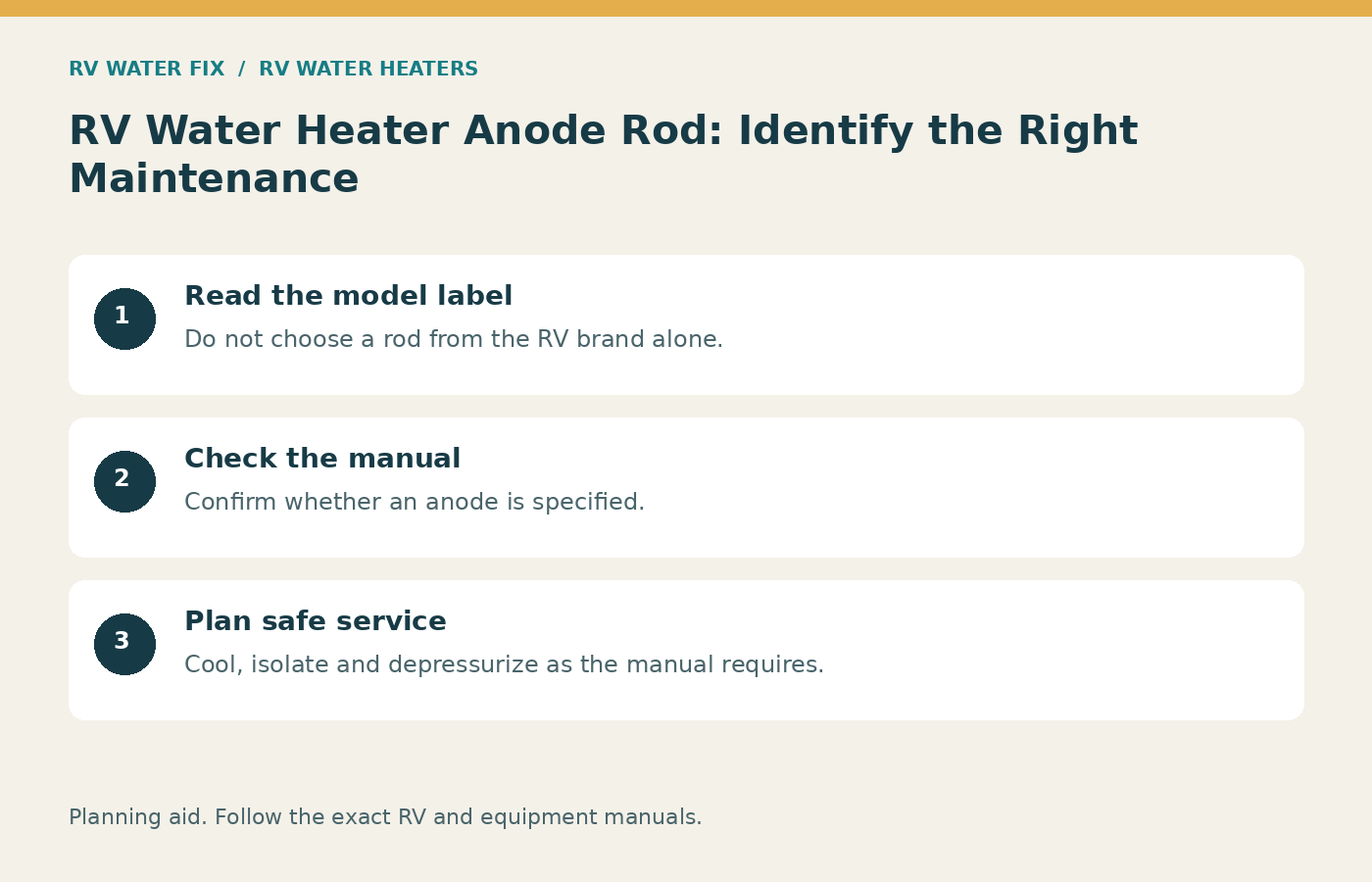
First, record the model and serial details from the appliance label. Then locate the parts information for that model and suffix. Also note the approved part number, material and any thread-sealing instructions.
In addition, keep the replacement information in your RV maintenance folder. A photo of the package alone can become confusing if several spare parts travel together. Therefore, label the part with the heater model it belongs to.
If an existing drain fitting looks different from the manual, investigate before proceeding. A previous modification may need correction. Do not assume that the installed part proves compatibility.
Treat removal as a hot-water pressure task
However, a water heater can contain hot pressurized water even after its heating switch is off. Therefore, follow all instructions for cooling, isolating energy, stopping water supply and relieving pressure. Never loosen a plug or rod to find out whether the tank is still pressurized.
Suburban’s guide directs owners to qualified service for repairs and maintenance. Follow that restriction where it applies. If you are uncertain about the isolation procedure, arrange service rather than using this article as a removal guide.
Keep people clear of the service area. Do not substitute an online socket-and-wrench demonstration for the precautions in your model’s instructions.
RV water heater anode rod inspection records
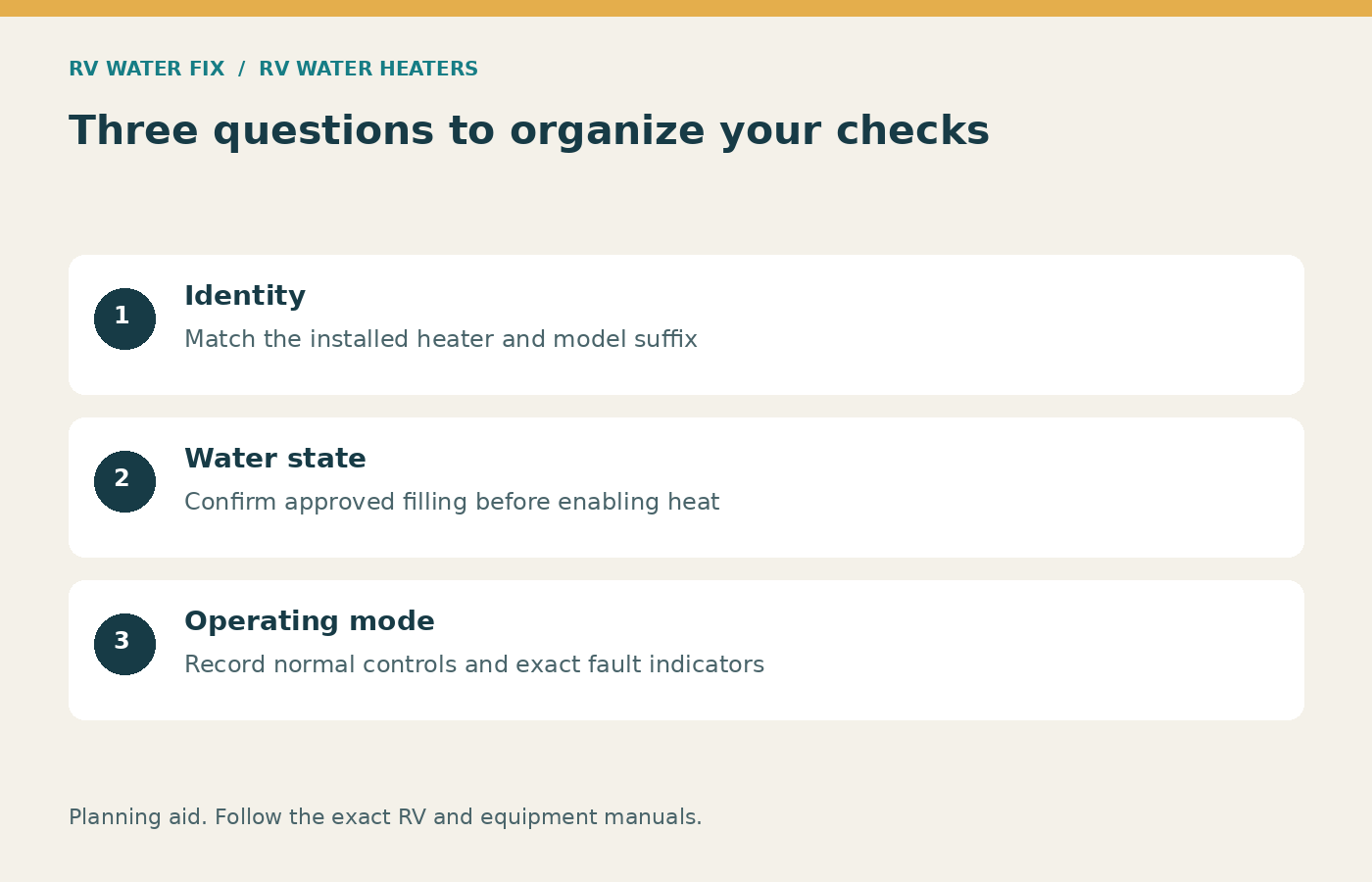
Use the maintenance schedule and wear criteria in the exact manual. Water conditions and use can change how quickly a sacrificial part deteriorates. Do not assume a calendar reminder means the rod remains serviceable until that day.
Also ask the service technician to record the observed condition, replacement part and date. A photo taken during authorized service can make the history easier to understand. Then pair this with any manufacturer-required tank cleaning or draining record.
Before the next heating cycle, the appliance must be correctly reassembled, leak-checked and filled according to its instructions. A newly installed rod does not make dry operation acceptable.
Common purchasing questions
Will any rod with matching threads work?
Matching threads alone do not establish approval. Instead, use the appliance’s parts documentation and ask the manufacturer if alternatives are acceptable.
Can an anode fix every hot-water smell?
No. Odor needs a source-specific assessment, and smell does not establish drinking-water safety. Do not remove required protection or use an improvised chemical mixture as a shortcut.
Should I keep a spare?
A correctly identified spare can be convenient during travel. Keep it clean, labeled and accompanied by the required service instructions. The ability to carry a part is separate from the ability to perform the work safely.
Sources and editorial notes
Source check: November 25, 2026. This is a research-based guide, not a hands-on product test or a claim of certified technician review. Manufacturer instructions for the exact installed equipment take priority. Featured artwork is an AI-generated editorial illustration, not a product photograph or installation diagram.
- Suburban tank water heater operation and maintenance guide, pages 3 and 8–9
- Winnebago operator manuals by model and year
- CDC: choosing water filters