
An RV winterization checklist should account for every part that can retain water, not just the kitchen faucet. Begin with the manuals for your RV and installed appliances. Then create a written route through the system so small outlets do not get missed.
This checklist is a planning tool, not a substitute for the actual storage procedure. Different pumps, heaters, filter housings and appliances can have different requirements. A method that protects the main lines may leave another component exposed.
Build your RV winterization checklist before starting
First of all, write down the RV model and year, pump model, heater model and filter system. Furthermore, add any dishwasher, ice maker, washer, outside shower, spray port or aftermarket drinking-water tap. In addition, use the manuals to identify each water-holding branch.
Next, confirm which winterization methods the manufacturers permit. Record required products, adapters and limits. Do not choose an air-pressure number or antifreeze quantity simply because it worked for another owner.
In addition, photograph the normal-use utility-panel settings. Also locate the fresh-tank drain and low-point drains in the RV manual. If an access point is missing or blocked, resolve that before the first freezing conditions.
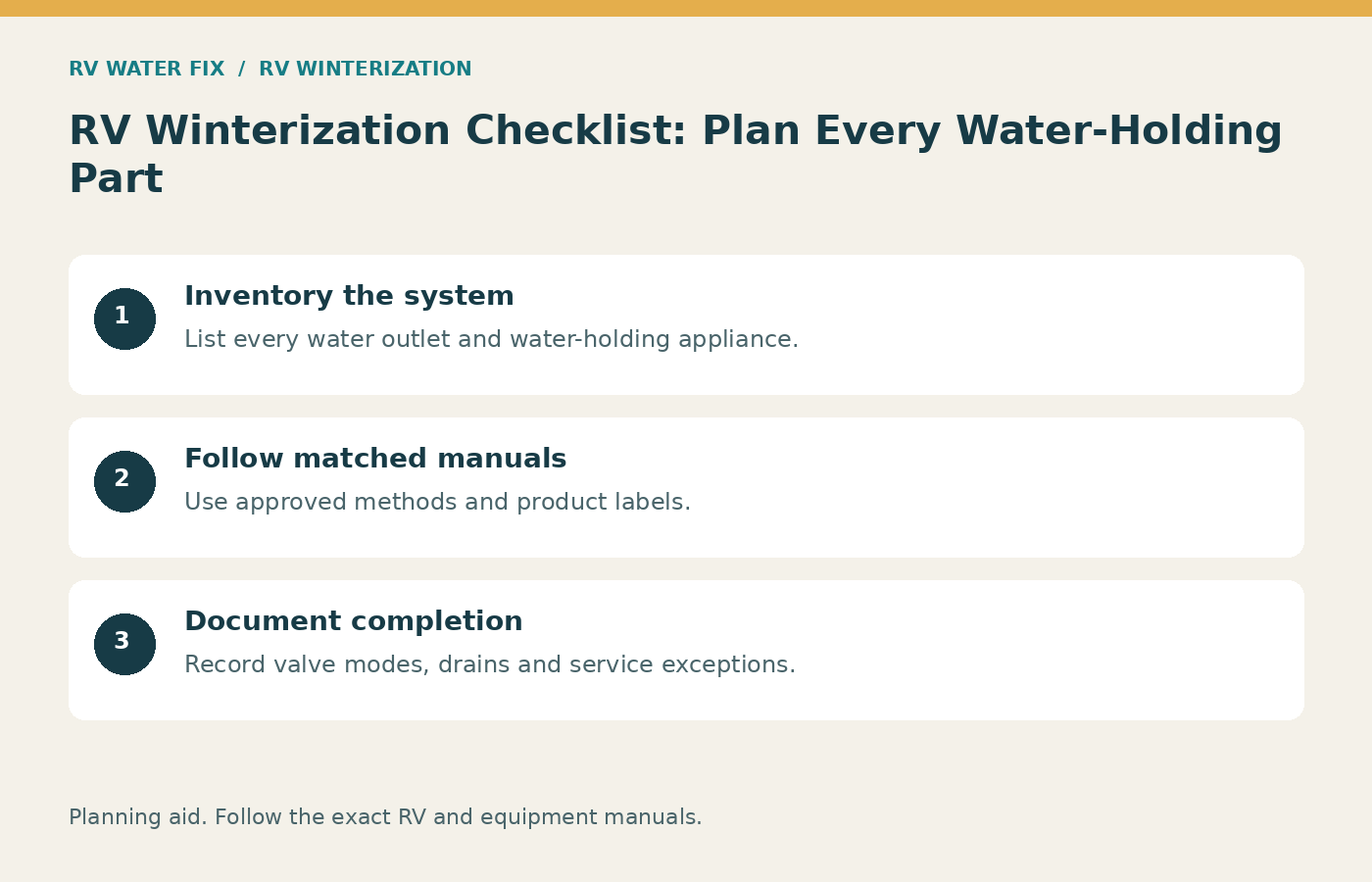
RV winterization checklist: separate the systems
Next, list the fresh tank, distribution lines, pump, heater, filter equipment and wastewater traps separately. The purpose is to prevent a completed task in one area from implying protection everywhere else.
For example, bypassing a tank heater does not itself drain that heater. Likewise, removing a cartridge does not establish that its housing is empty or freeze protected. Read the service instructions for each assembly.
Jayco’s general winterization article describes air and RV-antifreeze approaches, but it was published in 2012. Use it as background only. Your current model-specific manuals and appliance instructions should control the actual process.
Prepare products and isolation safely
Use only a winterizing product labeled for the applicable RV potable-water task. Never substitute automotive coolant or windshield-washer fluid. Read the product’s temperature claims and instructions rather than treating every pink liquid as equivalent.
Also keep heating off while tanks are empty or their condition is uncertain. Follow the heater’s cooling, energy-isolation and pressure-release requirements before draining or service. Suburban directs maintenance to qualified personnel for the tank models covered by its guide.
If your chosen method needs compressed air, use the approved equipment and limits. A regulator and gauge are essential parts of an approved setup; compressor maximum pressure is not a setting for the RV.
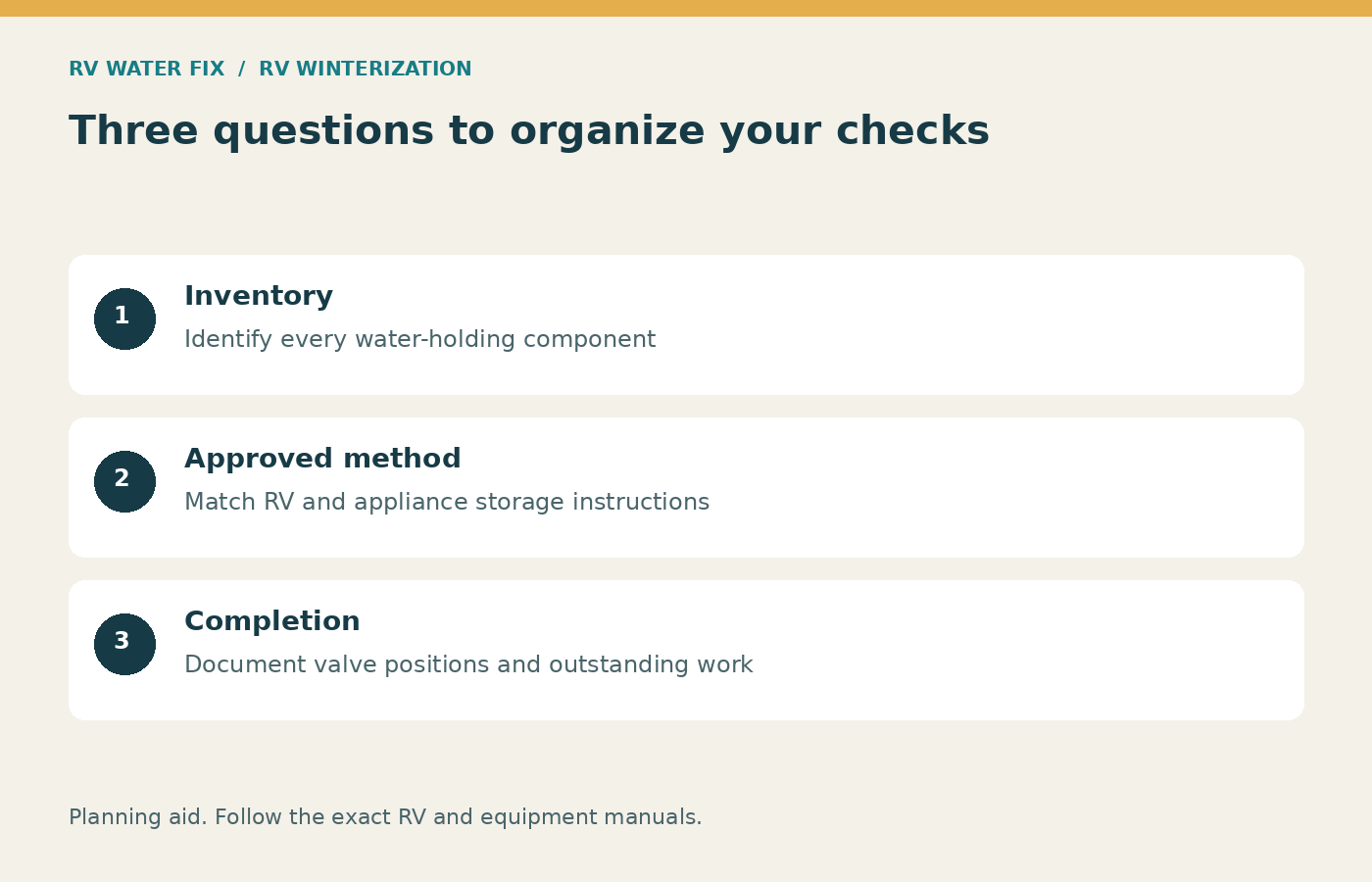
RV winterization checklist: account for every outlet
Use a check box for each hot and cold fixture and any special appliance branch. Include the toilet and outdoor connections where the RV manual specifies them. Do not assume that a nearby faucet proves the whole branch is protected.
Have the actual procedure beside you. Tick a box only after completing that component’s requirement. If a component cannot be serviced, leave it clearly marked incomplete and arrange help.
Also account for portable hoses, regulators, spare filters and detached housings. Follow each product’s storage instructions. Moving equipment into a compartment does not guarantee it will stay above freezing.
Leave a clear storage record
Record the date, products used, valve modes and work completed. Attach a visible reminder that heating must remain off until the required refill and startup checks are complete. Store photos with the maintenance record.
Is an empty fresh tank enough?
No. Lines, pumps, traps and appliances can retain water. Your RV winterization checklist should identify each component rather than treating the tank drain as the entire job.
Can I use the same checklist every year?
Use it as a starting point, then update it after modifications, appliance replacements or revised manufacturer instructions. A checklist is useful only when it matches the RV you actually own.
Sources and editorial notes
Source check: November 25, 2026. This is a research-based guide, not a hands-on product test or a claim of certified technician review. Manufacturer instructions for the exact installed equipment take priority. Featured artwork is an AI-generated editorial illustration, not a product photograph or installation diagram.
- Jayco: winterizing plumbing, general background, published 2012
- Winnebago operator manuals by model and year
- Suburban tank water heater operation and maintenance guide, pages 3 and 8–9
- Xylem Flojet RV water pump user guide