
The RV antifreeze vs blowout choice depends on the system you own and the procedure its manufacturers approve. Neither method becomes complete simply because water stops coming out of a faucet. Pumps, traps and appliances still need individual attention.
Start with your RV manual, then check the installed pump, heater and optional appliances. If their instructions differ, resolve the conflict with the manufacturers or a qualified RV technician before you winterize.
RV antifreeze vs blowout: what changes?
A blowout procedure uses an approved compressed-air setup to move water from specified plumbing paths. An RV-antifreeze procedure introduces a product intended for the applicable potable-water winterizing task. Some systems require a combination of procedures across different components.
The important comparison is coverage. Ask which parts each procedure actually protects. An apparently clear main line does not prove an appliance's internal passages or a separate branch has been addressed.
Jayco's older background article describes both approaches. It is useful for understanding the distinction, but it is not a current instruction sheet for every Jayco or other RV. Use your exact model's requirements for the work.
RV antifreeze vs blowout: verify air requirements
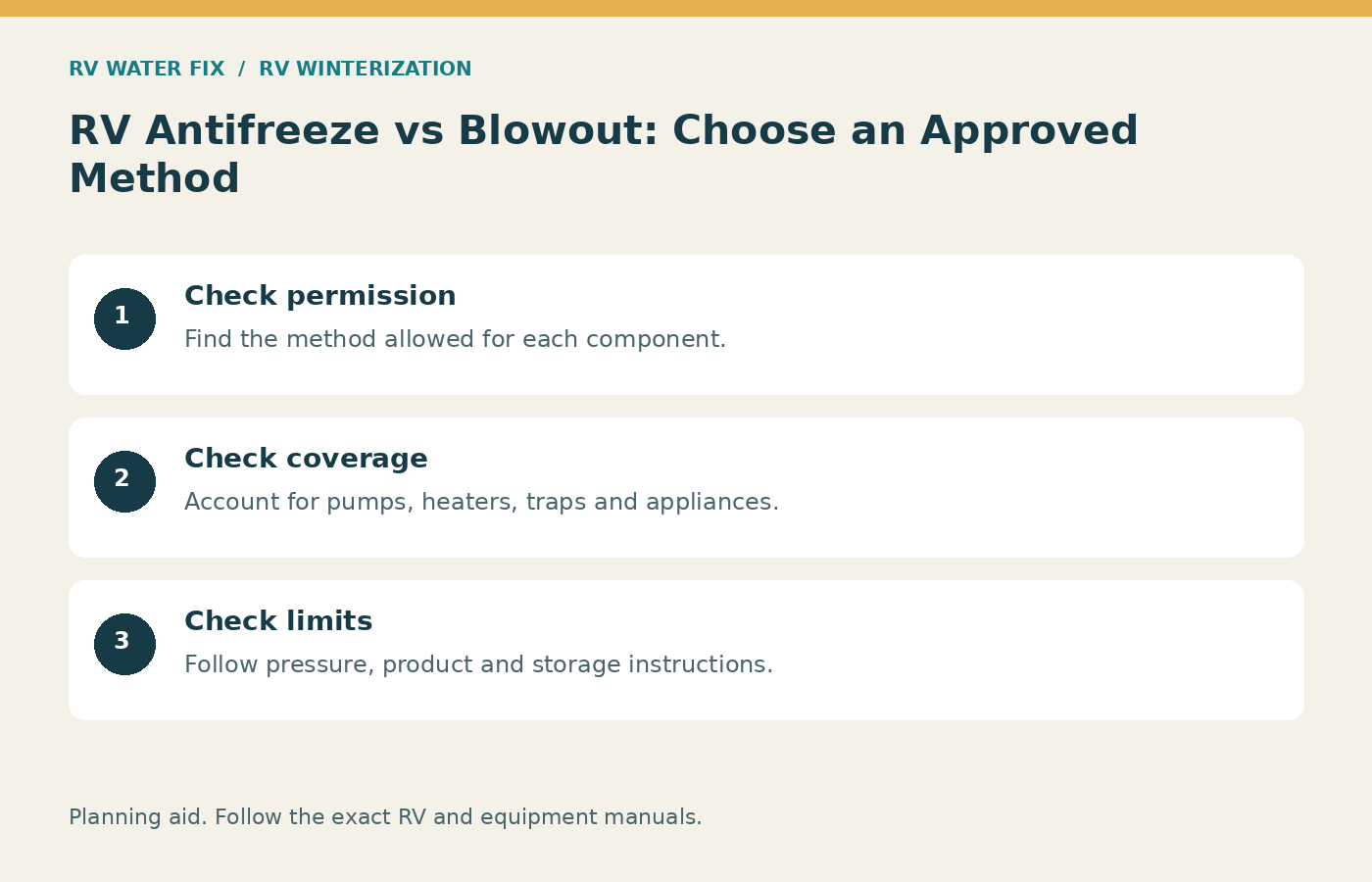
Find the approved connection point, pressure limit, sequence and equipment requirements. Use a suitable regulated air supply as the manufacturer specifies. Never use a compressor's maximum output as a default RV setting.
Also determine how the procedure protects the pump and water heater. Air introduced through the city connection may not follow every path that water takes from the fresh tank. Check component instructions instead of assuming the entire system has been cleared.
If you cannot establish a controlled setup or verify the relevant limits, get assistance. More air pressure is not a substitute for a complete procedure and can damage components.
RV antifreeze vs blowout: read the product label
Read the full product label, including application, temperature protection and flushing instructions. Do not assume a product labeled for one use will suit every appliance or plumbing material. Do not mix winterizing products unless the label explicitly allows it.
Never use automotive antifreeze or windshield-washer fluid in the fresh-water system. Also avoid calling RV winterizing antifreeze a drinking-water additive. It is a storage product that you use and later remove according to the applicable instructions.
Check heater bypass requirements, filter removal or bypass requirements, and the pump's winterizing method. Determine the required quantity from the actual procedure and layout. A number from another RV's shopping list may be misleading.
Compare convenience without skipping coverage
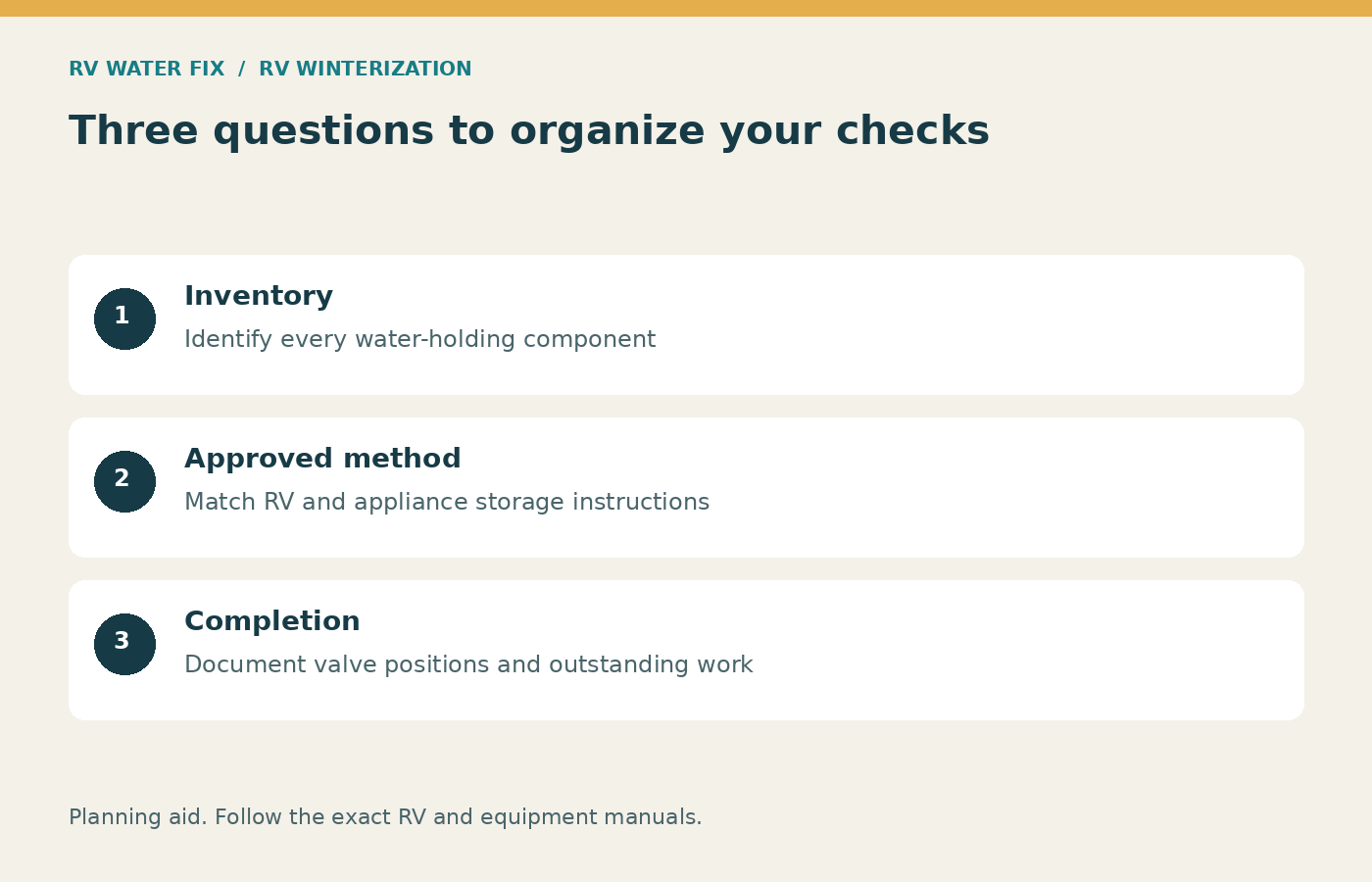
For an owner who already has a suitable regulated air setup, blowout may seem convenient. For another owner, an approved pump-fed antifreeze method may be easier to follow. Convenience should come after component coverage and manufacturer permission.
Consider where you will work, how you will handle drainage and how you will document completion. If a service shop performs the work, ask which appliances and external accessories are included in its package.
Make an inventory of any exceptions. An ice maker or aftermarket filter can be overlooked when a shop uses a generic service checklist. A written exception is better than a false assumption that everything is protected.
Plan the spring startup now
Keep the product label, valve photos and completed work record. Those details make flushing, sanitizing and restoring normal operation easier later. Keep the heater disabled until its prescribed filling checks are complete.
Which method is best for every RV?
There is no universal winner. The right method is the approved one that protects every component in your specific installation and can be performed within all stated limits.
Sources and editorial notes
Source check: November 25, 2026. This is a research-based guide, not a hands-on product test or a claim of certified technician review. Manufacturer instructions for the exact installed equipment take priority. Featured artwork is an AI-generated editorial illustration, not a product photograph or installation diagram.
- Jayco: winterizing plumbing, general background, published 2012
- Winnebago operator manuals by model and year
- Pentair SHURFLO 4008 installation and operation manual
- Suburban tank water heater operation and maintenance guide, pages 3 and 8–9