Lippert Flow Max 12V Fresh Water Pump, LC689052: Detailed RV Buying Guide
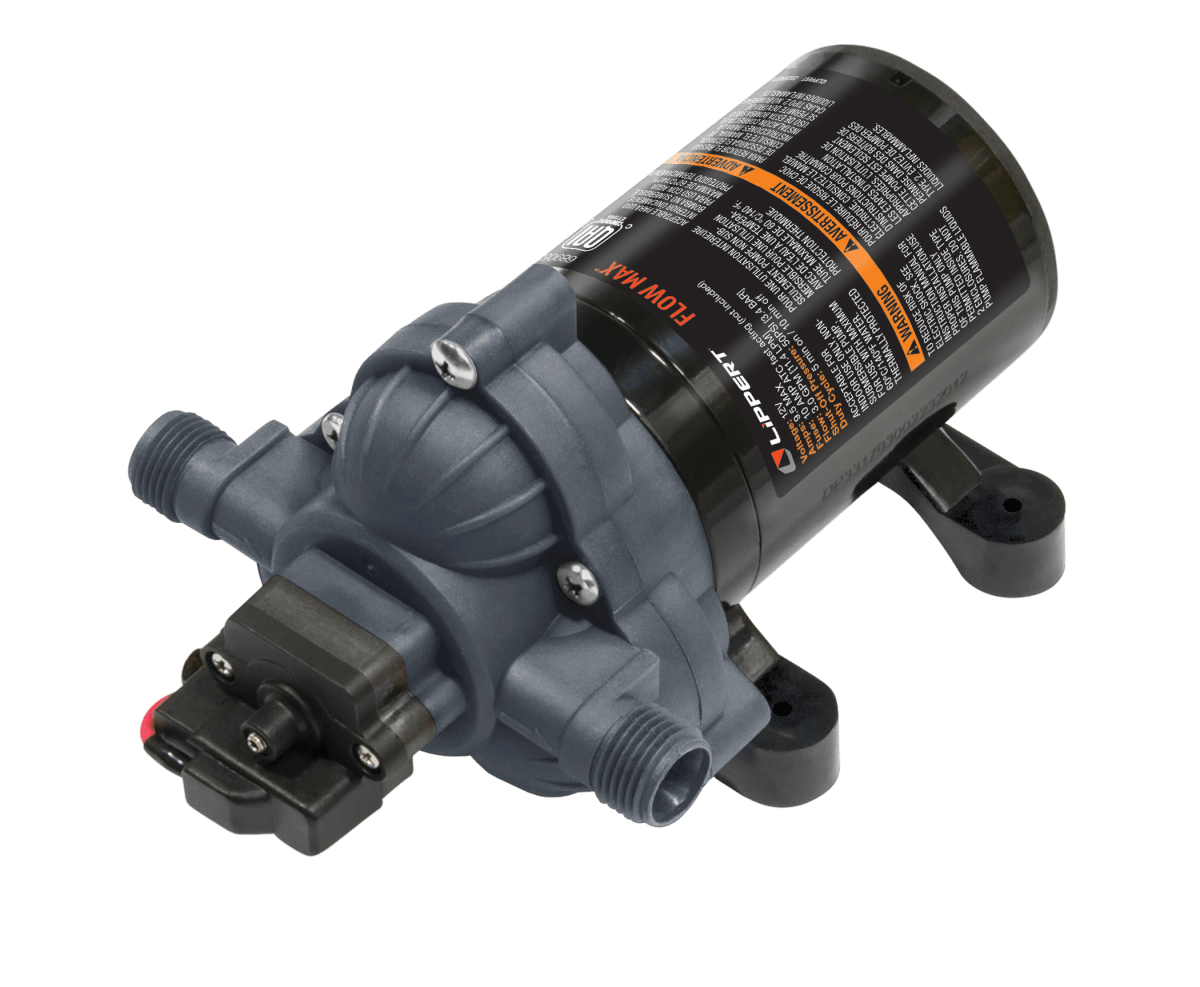
Exact product shown: Lippert Flow Max 12V Fresh Water Pump, LC689052. Manufacturer photograph used with permission.
Identify the exact assembly
Lippert part 689052 is the 12-volt Flow Max fresh-water pump. Compatibility depends on the complete electrical circuit, fittings, mounting footprint and the RV manufacturer’s permitted pressure.
Pump families often share a housing while their pressure switch, flow rating, current draw and fittings differ. Use the full SKU, not the brand color or series name. Compare the installed pump’s label with the manufacturer table and the seller’s selected variant. A picture of a similar pump is not sufficient evidence that a replacement is electrically or hydraulically compatible.
This guide is a planning resource rather than an installation manual. Work on 12-volt circuits and pressurized plumbing should follow the RV, pump and applicable electrical instructions. If the required wire, fuse, connection or mounting change is unclear, use a qualified RV technician.
Compare the complete electrical circuit
Nominal 12-volt operation does not make two pumps interchangeable. Check maximum current, recommended circuit protection, conductor size and voltage drop over the actual wire run. A higher-output pump can exceed an existing switch, controller, fuse or connector even when it powers on during a quick test.
Disconnect power using the approved procedure before service. Do not rely on the wall switch alone when conductors remain energized elsewhere. Protect connections from moisture, use the required polarity and restore any ground or bonding arrangement exactly as documented. An oversized fuse is not an acceptable way to stop nuisance opening caused by an incompatible load.
Match pressure, flow and plumbing
Flow and pressure must be considered together. A headline gallons-per-minute figure does not promise that every shower will receive that flow, and a pressure-switch number is not the same as delivered fixture pressure. Pipe diameter, elbows, filters, check valves and elevation contribute restrictions. The RV’s weakest permitted component still controls the system limit.
Compare the old and proposed pump at the documented operating conditions. Do not choose a higher pressure simply because it appears more powerful. If a regulator, water heater, toilet valve or fitting has a lower approved limit, the new pump must remain compatible with that equipment.
Fittings, strainer and service access
Confirm inlet and outlet type, connector geometry and flow direction. Reusing an old connector because it seems to thread in can create a poor seal or restrict flow. An inlet strainer protects the pump from debris, but it is not a drinking-water treatment filter. It needs enough clearance for inspection and cleaning without removing the entire pump.
Plan for future service. Leave room for electrical access, hose removal and strainer-bowl cleaning. Flexible pump hoses may reduce transmitted vibration when installed as directed, but they should not be kinked or used to pull a misaligned pump into place.
Mounting, noise and accumulator behavior
Mount the assembly on the approved surface with the specified orientation and fasteners. Rigid plumbing and a resonant panel can make a healthy pump sound worse, while a loose mount can move under cycling. Do not add soft material or isolate the pump in a way that blocks cooling or violates its instructions.
An accumulator can reduce rapid cycling and smooth short draws when it is correctly sized and precharged. It cannot repair an air leak, blocked strainer, failing check valve or incorrectly adjusted pressure switch. A bypass pump may have different accumulator guidance from another design, so follow the exact pump manual rather than a universal forum rule.
Commissioning and troubleshooting
After installation, restore water and power under supervision. Follow the priming procedure, purge air at fixtures and inspect all connections. If the pump will not prime, keeps running or cycles rapidly, stop and diagnose the supply, valves, leaks, strainer and wiring. Repeated dry running or continuous operation can damage equipment.
Record voltage at the pump under load if the diagnostic procedure calls for it, not only battery voltage with the pump off. Separate an electrical supply problem from a plumbing restriction. The pump troubleshooting guide provides a structured sequence, while the manufacturer’s manual controls model-specific tests.
Buying verdict
Consider this exact assembly only after confirming voltage, current, pressure, flow, fittings, mounting and service clearance. A kit can simplify sourcing, but bundled components do not remove the need for a complete compatibility review.
Compare the footprint, flow, pressure, current, fittings, mounting pattern, noise-control provisions and warranty process. Include any new strainer, connector, hose or wiring work in the real cost. A less expensive pump that requires extensive changes may not be the better replacement.
Questions before ordering
Photograph the installed label and connections. Measure the mounting area and service clearance. Find the current manufacturer manual and confirm the seller’s exact SKU. Ask whether the package includes the parts shown in the photograph. Do not use customer reviews as proof that a unit will fit your RV.
Finally, decide who will install and verify it. The replacement pump selection guide helps organize the comparison. This page does not claim hands-on testing, a live price or universal fit. Its recommendation depends on documented compatibility with the individual RV.
How to verify the offer and seller
Before buying, compare the manufacturer’s exact model page with the selected marketplace offer. Check the model number in the title, specification table, package photograph and variant selector. Those fields can disagree when a seller has merged several products onto one listing. Save a copy of the order description and inspect the received package before the return window closes.
Seller credibility is a separate question from product design. Look for a clearly identified seller, an appropriate return policy and a realistic delivery promise. A high review count does not confirm that the current seller will ship the exact model shown, and reviews attached to a variation family may cover different products. Treat recurring fit or leakage complaints as issues to investigate, not proof that every unit will fail.
Total ownership cost
Compare the complete ownership task rather than the shelf price alone. Include required adapters, replacement seals, cartridges, mounting hardware, electrical work, storage protection and likely service access. A low-cost component can be poor value if it needs unsupported adapters or frequent replacement. A more expensive assembly can still be a weak recommendation when its documented benefit does not address the buyer’s problem.
Keep consumable part numbers in the RV records and check whether they remain readily available. Do not calculate a precise cost per gallon, season or trip unless the actual service life is known for the user’s water and operating conditions. A range with stated assumptions is more honest than a precise figure copied from ideal marketing conditions.
What to record after installation
Create a short equipment record with the exact model, purchase source, installation date, manual link and any compatible replacement parts. Photograph the final routing and note the normal valve or gauge position. These details make future troubleshooting safer, especially when a different person sets up the RV or services it months later.
During initial use, record leaks, unusual noise, flow changes or operating conditions that matter. Stop if the product behaves outside its instructions. Do not keep tightening, raising pressure or bypassing protection in an attempt to make an incompatible part work. Contact the manufacturer or use qualified service when the cause is unclear.
Responsible recommendation standard
RV Water Fix should recommend this product only for buyers whose documented need matches its function. The article should keep manufacturer claims, independent standards and customer feedback clearly separated. It should also be updated when specifications, package contents or availability change. That standard protects readers better than repeating a marketplace title or implying firsthand testing that did not occur.
The final decision should be repeatable: identify the problem, verify the exact model, confirm compatibility, understand the maintenance and compare a realistic alternative. If any of those steps remains unresolved, the responsible conclusion is to wait for clarification rather than forcing a confident recommendation.
Sources and verification
- Lippert Flow Max 12V Fresh Water Pump, LC689052 source or manufacturer documentation
- SHURFLO 4008 installation manual for general RV pump concepts
Research and specifications checked November 25, 2026. Verify current model details, availability and instructions before purchase.