SEAFLO 43 Series SFDP1-030-055-43 12V Pump
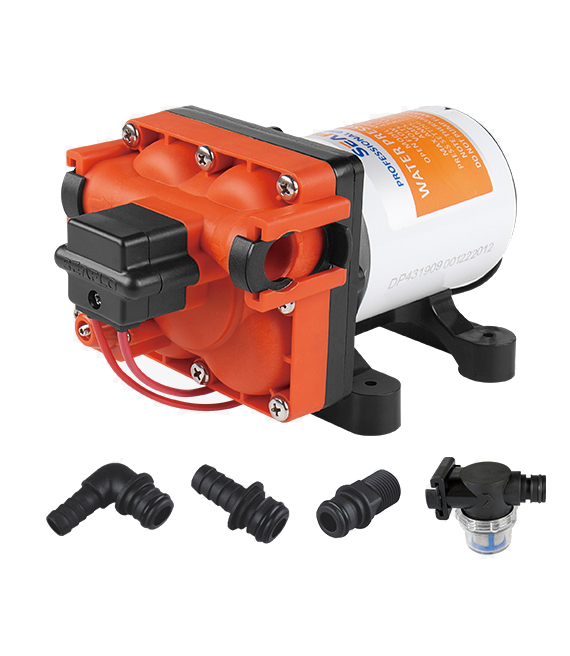
Exact product shown: SEAFLO 43 Series SFDP1-030-055-43 12V Pump. Manufacturer photograph used with permission.
The SEAFLO SFDP1-030-055-43 is a 12-volt demand-pump option for an RV fresh-water installation that meets its electrical and plumbing requirements. Its full model number matters because the 43 Series page also lists different supply-voltage versions. A broad “SEAFLO 3 GPM” marketplace title is not enough to identify what will arrive.
This guide uses SEAFLO’s product information and manual as the starting evidence. We have not tested this pump’s sound, service life or delivered flow. Current Amazon pricing, seller identity and availability remain unverified. The aim is to help you decide whether to investigate this exact pump further, not to present every manufacturer marketing phrase as an independently proven advantage.
Read the exact configuration row
SEAFLO lists SFDP1-030-055-43 as 12V, with 3.0 GPM open flow, 55 PSI shutoff and maximum draw of 6.86 amps. Other rows on the same page describe 24V, 115V and 220V products. Those rows are useful comparisons, but they must not be blended into the specification table for this model.
Open flow and shutoff pressure are separate endpoints, not a promise of 3 GPM delivered at 55 PSI. SEAFLO publishes a pressure-versus-flow table, and the flow declines as pressure rises. Some displayed values are internally inconsistent, including a GPM/LPM pair at one pressure point. Use the current model documentation or ask SEAFLO for clarification before relying on that particular row for a precise design calculation.
Consider the intended use before the advertised capacity
An owner replacing a failed pump should first identify the required operating conditions. Confirm the RV’s pressure limit and the circuit available at the pump location. Then consider how many fixtures are normally used together and what restrictions exist between the tank and each outlet.
For example, a short supply route with a clean strainer differs from a long route with several restrictive accessories. The pump cannot be assessed meaningfully without that context. A problem confined to one shower head also does not establish that the existing pump needs replacing. Start with the pump troubleshooting guide when the cause is uncertain.
Treat the duty rating as a point to verify
The English SEAFLO product page describes continuous duty, while other regional information for the series uses different wording about duty and short dry running. Do not resolve that discrepancy by choosing the most permissive phrase. Ask for the manual and operating limits supplied with the exact unit and intended application.
This distinction matters if you plan something beyond ordinary intermittent fixture use. A pump appropriate for a faucet does not automatically suit a continuous transfer or filtration task. Even where a manufacturer describes dry-run protection, that should not become a habit of leaving a pump running without a confirmed water source.
Match the electrical system before purchase
Record the existing wire run, switching arrangement, fuse or breaker and any pump controller. The published maximum draw is useful, but it does not replace the manual’s requirements for conductor sizing and protection. Check the actual circuit rather than assuming that every RV equipped with a 12V pump can accept any replacement.
Have a qualified person handle changes that exceed your competence. Repeated protection trips, heat-damaged wiring or a burning smell need diagnosis. Do not bypass a fuse or install a larger one merely because the replacement briefly starts. The circuit must protect the wiring as well as allow the pump to operate.
Check connectors and service clearance
SEAFLO describes quick-connect fittings for the 43 Series. Confirm the supplied connector pattern and seal arrangement for the package you are buying. Compare it with the existing hose and pump ports. A collection of near-matching adapters can add restrictions and leak points while making future replacement harder.
Also leave room to inspect and remove the inlet strainer. A transparent bowl offers little practical benefit if it faces a wall or cannot be opened without twisting a hose. Measure the entire installation route, including fittings, bend space and electrical access. Do not use shipping-box dimensions as a precise installed clearance drawing.
Evaluate mounting and noise claims realistically
SEAFLO advertises a rubber mounting base and an internal bypass intended to reduce cycling. Those are design descriptions, not a verified sound level in your particular cabinet. Mounting surface, plumbing contact and fixture restriction can all influence what an owner hears.
Compare the manual’s mounting pattern with the actual support surface. Keep flexible connections from rubbing against thin panels or sharp edges. Avoid surrounding the motor with insulation that could interfere with required cooling or conceal a leak. If the installation remains noisy, document when the sound occurs before changing control settings.
Plan maintenance around the inlet path
Keep the tank, suction valves, inlet hose and strainer in the same maintenance picture. Debris or an air leak before the pump can create symptoms that resemble internal pump failure. Inspect accessible components with power isolated and pressure relieved, using the relevant instructions for disassembly and cleaning.
After service, observe a supervised startup. Look for steady delivery, normal shutoff and dry connections. Then recheck after travel. If the pump does not prime within its permitted operating procedure, stop rather than letting it run while you investigate elsewhere. Record the exact symptom so a technician can reproduce the conditions.
Include winter care and replacement parts in the value decision
Check the winterization procedure before installing the pump in an inaccessible location. Main-tank drainage alone does not confirm that the pump and nearby fittings are protected. Keep the equipment manual with the RV’s seasonal checklist, and document any removed parts or disconnected lines during storage work.
Also ask about replacement connectors, strainers and service support. A modest purchase price can be less attractive if a simple seal or fitting cannot be sourced during a trip. The manufacturer advertises a two-year warranty on its series page, but verify the terms applicable to the seller, country and actual purchase rather than assuming every offer has identical support.
Compare alternatives on matched conditions
The SHURFLO 4008-101-E65 has separately documented electrical and bypass characteristics. The replacement pump selection guide helps organize those differences without ranking products solely by open-flow figures.
Is this the same as a SEAFLO accumulator kit?
No. A standalone pump and a preassembled pump-and-tank system differ in contents, footprint and control behavior. Check the complete model number before comparing prices or photographs.
Can I assume every 43 Series photo shows this voltage?
No. A family page can show several variants. Verify the model label or obtain an exact-model product image before treating the photograph as identification evidence.
Sources and verification
Research and specifications checked November 25, 2026. Verify current model details, availability and instructions before purchase.