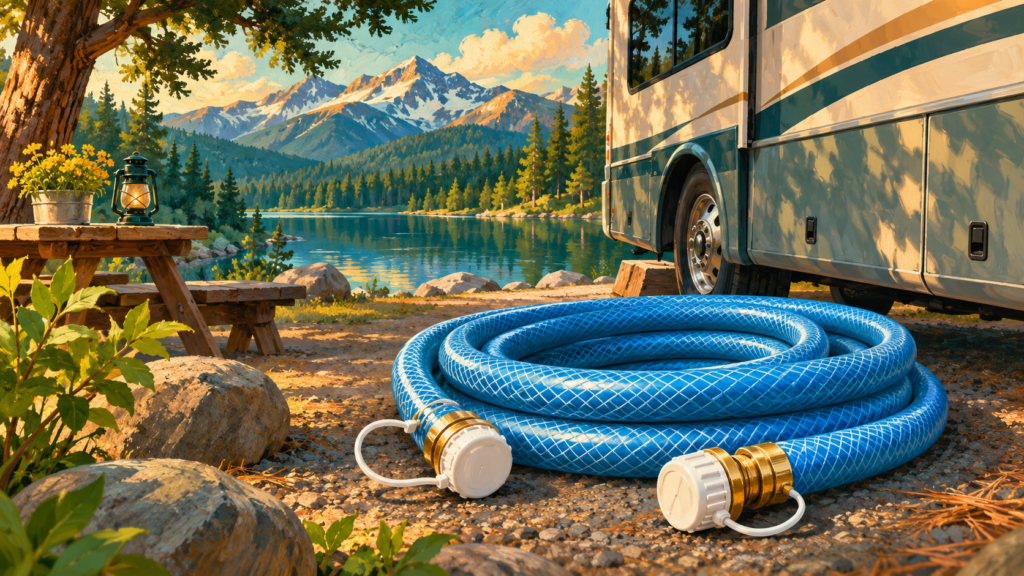
RV drinking water hose storage should protect the inside and the fittings from contamination between trips. Keep potable-water equipment separate from sewer and tank-flush gear, then follow the hose manufacturer's draining, cleaning and storage instructions.
A neat coil is useful, but appearance alone does not establish cleanliness. The practical aim is a repeatable routine that prevents clean connection ends from touching dirty equipment while you pack and unpack.
Start RV drinking water hose storage with the right hose
Choose a hose explicitly intended for drinking-water service. Product color alone is not a reliable way to identify that use. Read the label and keep the model information with your equipment record.
Camco's hose range, for example, includes different drinking-water lengths and constructions. That variety is a reason to read the exact product guidance rather than assume every RV hose has the same temperature rating or care requirements.
Label potable equipment clearly so another person helping at teardown does not use it for tank flushing. A dedicated storage container makes the distinction easier to maintain during a rushed departure.
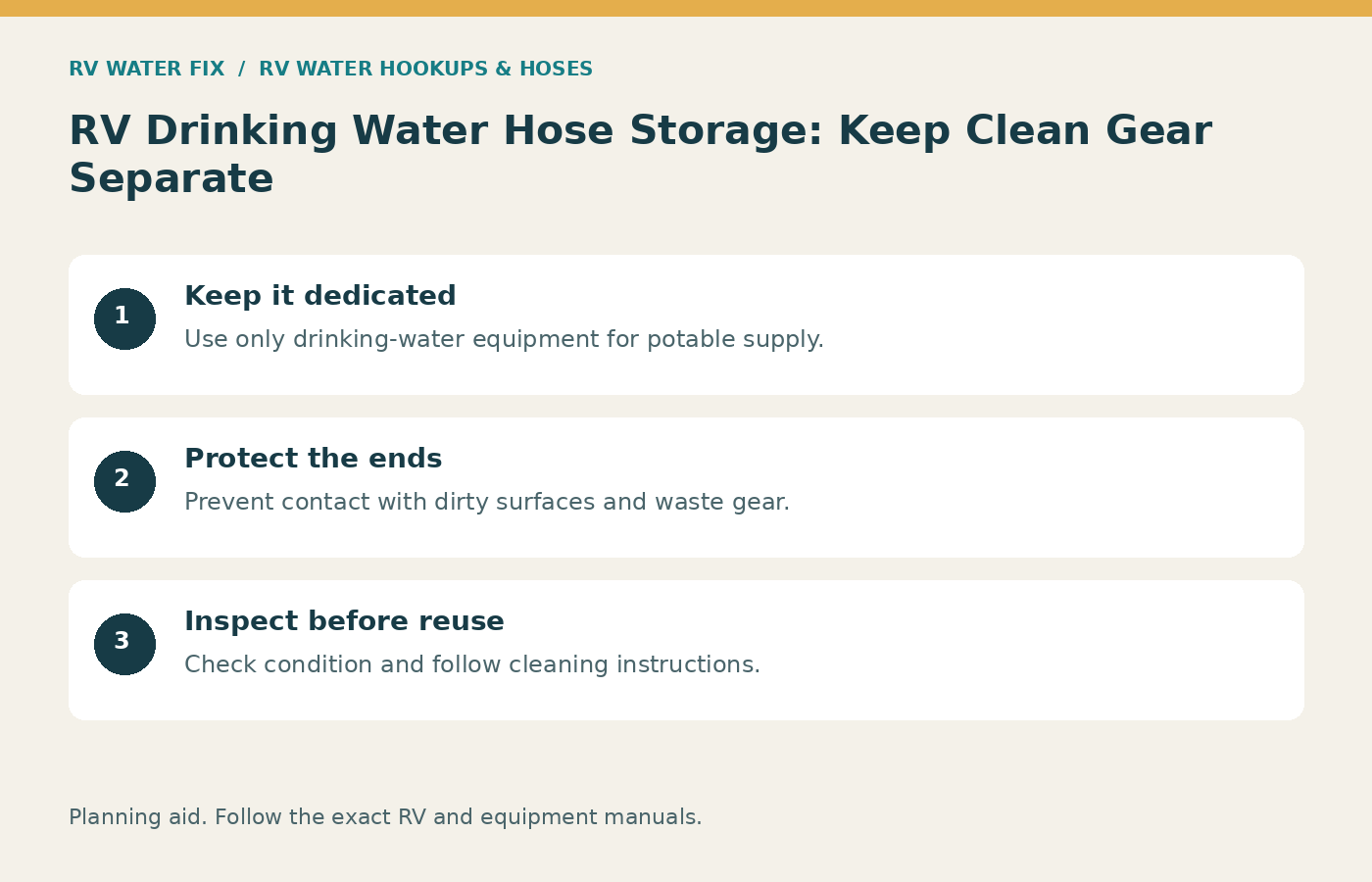
RV drinking water hose storage: protect the ends
Shut off the source and relieve pressure before removing fittings. Keep couplings off the ground and away from the sewer area. Handle potable and waste tasks separately, using appropriate hand hygiene between them.
Drain the hose according to its instructions. Inspect the ends and washers as you work. If an end contacts a contaminated surface, follow an approved cleaning or sanitation method before returning it to potable service.
Do not invent a strong chemical soak based on a tank-sanitizing recipe. Hose materials, liners, seals and heated-hose components can require different care. The product's own instructions should determine compatible treatment.
RV drinking water hose storage: choose a clean space
Use a clean container reserved for drinking-water hose, regulator and compatible fittings. Keep waste accessories, oily tools and cleaning chemicals elsewhere. If the container becomes dirty, clean it appropriately before returning clean gear.
Follow the manufacturer's requirements for ventilation, end caps and whether the hose should be stored connected end to end. Do not assume that trapping residual water inside any hose is the intended method.
Protect the equipment from crushing, sharp edges and excessive heat. Also read freeze-storage instructions. A heated hose's operating claim does not automatically describe how to store it disconnected, coiled or without power.
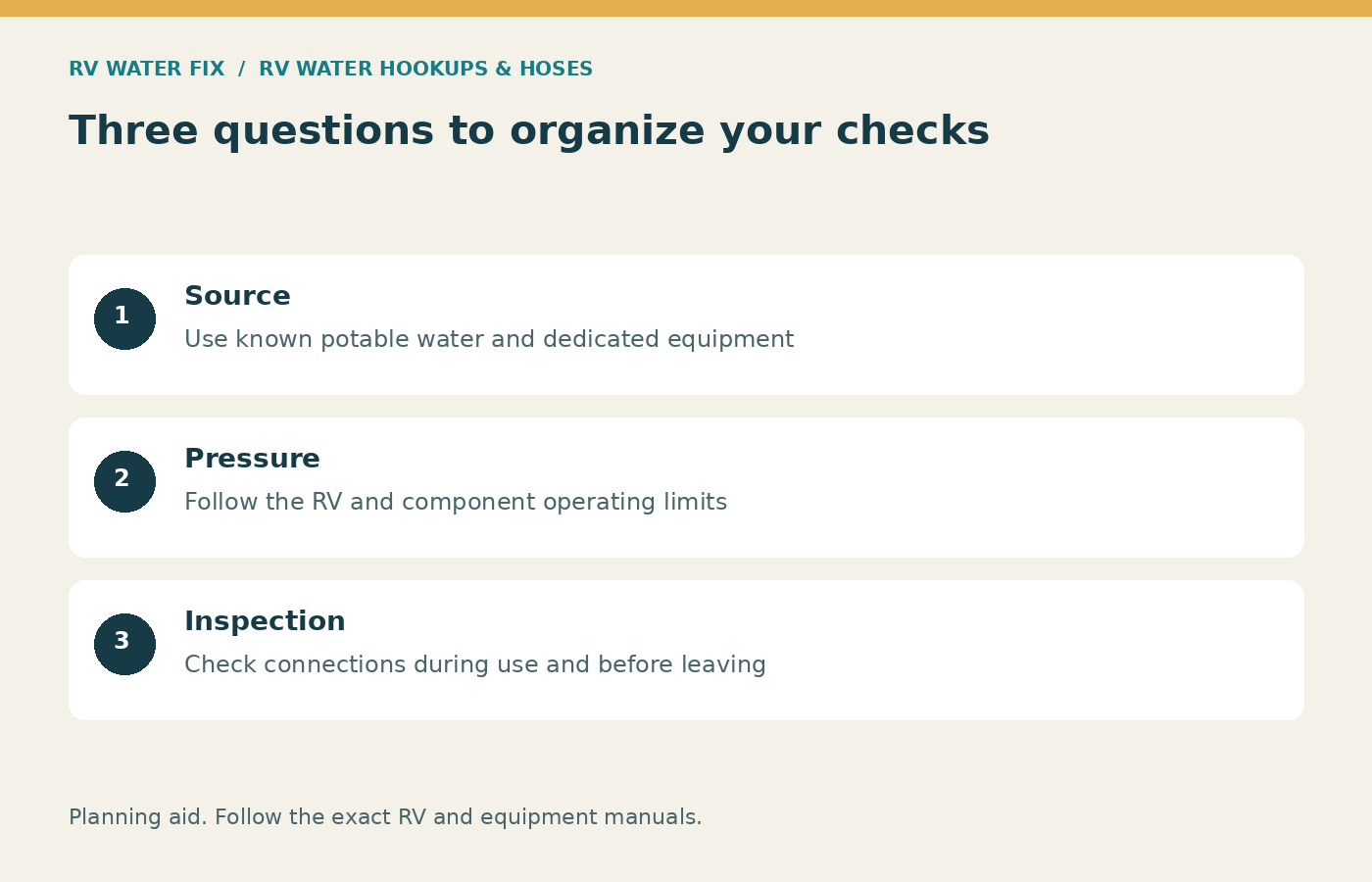
Inspect before the next connection
Look for cracks, a damaged outer jacket, distorted couplings and worn washers. Check the interior ends for visible contamination without touching the sealing surfaces unnecessarily. Replace equipment that is damaged beyond its approved service options.
Then confirm the campground source is potable and identify the correct inlet. Good storage cannot make an unsuitable source safe. Follow any current water advisory regardless of how clean the hose looks.
If the water has an unusual taste or odor, investigate the source and equipment rather than masking it with another filter. CDC cautions that normal taste and appearance are not proof of safety either.
Keep the routine practical
Pack a labeled spare washer and any manufacturer-approved caps with the hose. Make the dedicated container easy to reach so clean gear does not end up temporarily beside waste equipment.
Should I replace a hose every year?
Use the product's guidance, condition and any contamination history. A universal calendar rule does not establish serviceability. Record a replacement when it occurs so you can track recurring damage or storage problems.
Can the tank-flush hose become my backup drinking hose?
Keep equipment dedicated to its intended task. Do not repurpose a hose with a waste-service history for potable supply simply because its outside has been rinsed.
Sources and editorial notes
Source check: November 25, 2026. This is a research-based guide, not a hands-on product test or a claim of certified technician review. Manufacturer instructions for the exact installed equipment take priority. Featured artwork is an AI-generated editorial illustration, not a product photograph or installation diagram.
- Camco: drinking-water hose product range
- CDC: choosing water filters
- Lippert: RV setup and teardown checklist