
RV water pump noise can come from the motor, its mounting surface or plumbing that carries vibration into a cabinet. Before buying a quieter pump, find out which sound you are hearing and when it occurs.
A low, steady hum during water use is different from a new rattle, repeated rapid starts or sputtering at a faucet. Record a short sound sample and note which fixtures were open. That gives you a useful before-and-after reference.
Identify the pattern of RV water pump noise
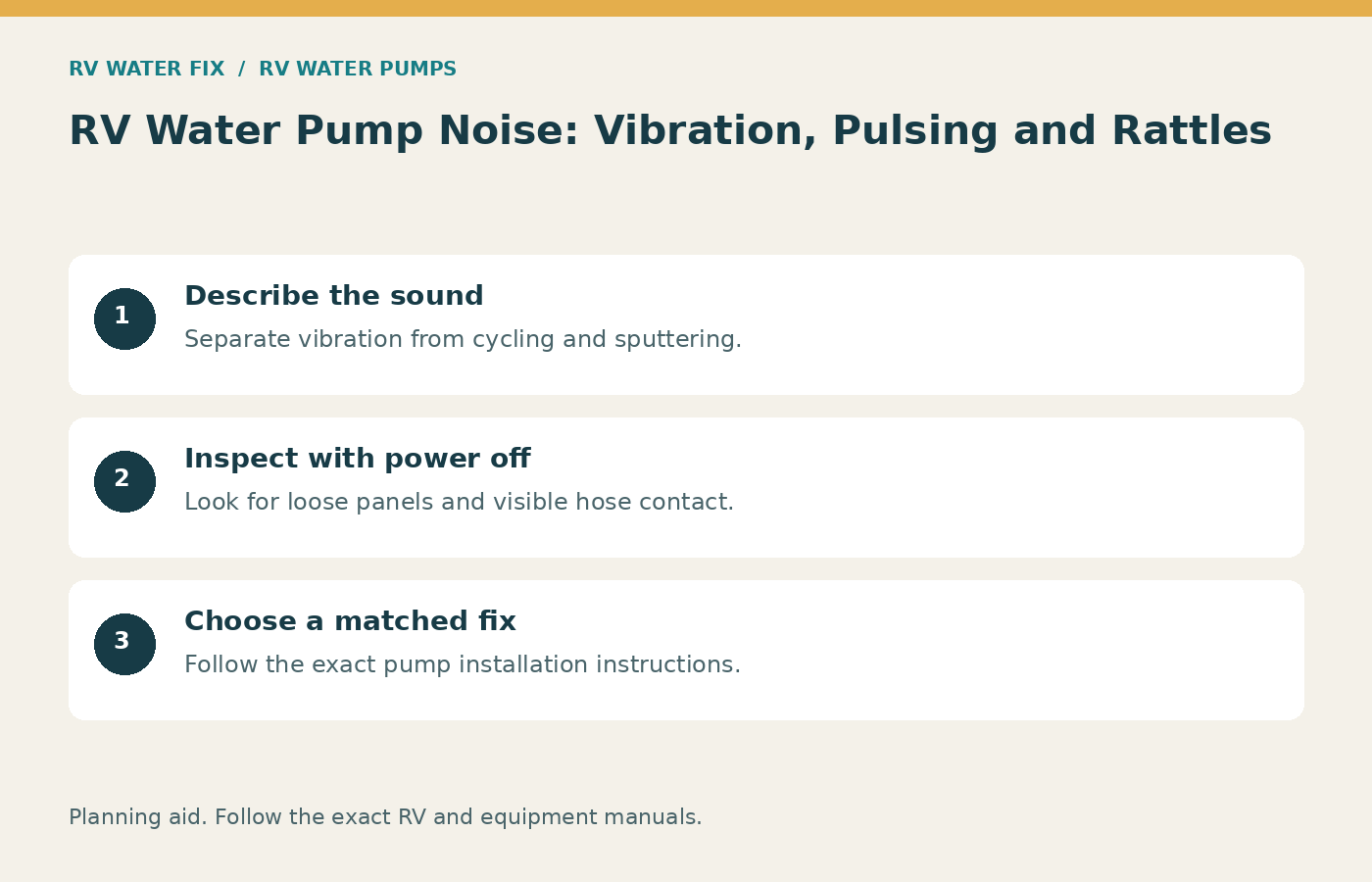
Test one fixture at a time while you stay with the RV. Notice whether the sound changes at a small trickle, a stronger flow or immediately after the faucet closes. Then turn the pump off before examining the compartment.
If a cabinet panel vibrates but the water stream stays steady, investigate contact and mounting. When the motor repeatedly starts and stops with a faucet partly open, investigate flow restrictions and the model's normal control behavior. If water spits air, supply and priming deserve attention first.
Do not reach into a powered pump compartment to hold parts still. Demand pumps can restart automatically when pressure changes. Isolate power and release water pressure before touching connections.
Trace RV water pump noise through the mounting
Look for a hose resting against a thin panel, stored gear touching the motor or a loose access door. Remove loose stored objects and check the manufacturer's mounting requirements. Tightening every screw harder is not a soundproofing method, especially where rubber mounting feet are involved.
For a specific example, Xylem's standard 3 GPM Flojet installation guide calls for flexible hose to reduce vibration transfer. The SHURFLO 4008 guide likewise discourages rigid piping directly at its ports. Follow your exact model's approved fittings, hose type and mounting position.
Keep ventilation and service access clear. Wrapping a motor in foam or stuffing insulation around it can interfere with cooling. A compartment that looks quieter may become harder to inspect for a leak.
Investigate restrictions before changing settings
A partly closed valve, dirty inlet strainer or restrictive fixture can change how a pump behaves. Check the visible water path and use the manufacturer's troubleshooting chart. Clean serviceable screens only with the system isolated and according to their instructions.
Compare the kitchen faucet with the shower. If a symptom happens at just one outlet, begin with that fixture's accessible screen or head. If it happens everywhere, the shared supply path becomes a more useful place to investigate.
This comparison is an organizing method, not a definitive test. Two restrictions can exist at once. Record what changes after each correction rather than making several adjustments together.
Does an accumulator reduce RV water pump noise?
An accumulator can be appropriate in some systems, but it is not a universal accessory. Pump control designs differ. Pentair expressly says the SHURFLO 4008 bypass pump does not need an accumulator. Check compatibility before adding a vessel, fittings and another potential leak point.
Also avoid random pressure-switch adjustments. They can affect shutoff and bypass behavior. If the manual does not give an owner adjustment procedure, ask the pump manufacturer or a qualified technician.
RV water pump noise that needs service
Switch the system off if the noise accompanies a leak, a burning smell, damaged wiring or an overheating motor. A new mechanical grinding sound also deserves inspection before further use. Repeatedly cycling power does not establish that the fault has cleared.
For a service visit, bring the pump model, a recording, the fixture conditions and photos of mounting and hose routing. If replacement is necessary, compare compatibility and service access alongside sound claims. Noise figures measured under different conditions are poor direct comparisons.
Is a higher-flow pump always quieter?
No. Installation and control behavior matter, and the RV must support the replacement's pressure and electrical requirements. Diagnose the existing system before changing its capacity.
Sources and editorial notes
Source check: November 25, 2026. This is a research-based guide, not a hands-on product test or a claim of certified technician review. Manufacturer instructions for the exact installed equipment take priority. Featured artwork is an AI-generated editorial illustration, not a product photograph or installation diagram.
- Xylem Flojet standard 3 GPM pump installation guide
- Pentair SHURFLO 4008 installation and operation manual
- Xylem Flojet RV water pump user guide