Inline vs. Multi-Stage RV Water Filters
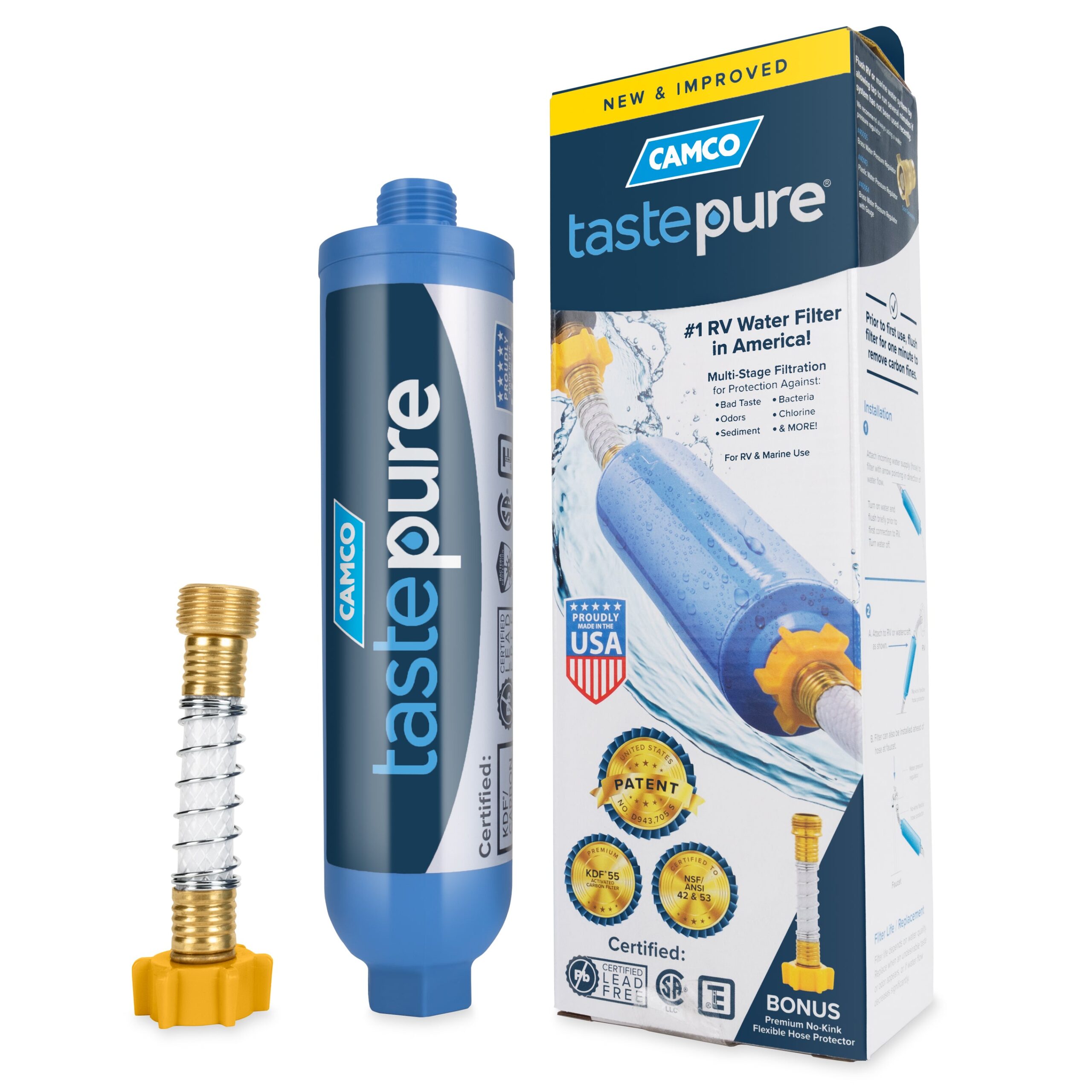
Product example: Camco TastePURE Inline Water Filter, 40043. Manufacturer photograph used with permission.
Inline and multi-stage RV filters can serve the same campsite but create very different ownership routines. The useful comparison is not small versus large. It is documented treatment, flow, setup time, service access and replacement cost.
This guide is designed for RV owners who want a repeatable decision process, not a list of universal settings or a promise that one accessory fits every rig. Water systems vary by manufacturer, model year and later modifications. Use the current manuals for the RV and every installed appliance as the controlling instructions.
The examples below identify real products so readers can see how specifications change a decision. They are not claims of personal testing. Manufacturer statements, independent standards and customer feedback should remain separate. Prices, availability and seller details also change, so verify the selected offer at the time of purchase.
What an inline filter does well
An inline unit places the treatment body directly in the hose path. It usually reduces the number of loose housings and can be faster to connect for a short stay.
Check the exact media, flow direction, flush procedure and service-life conditions. Support the filter so its weight does not strain the spigot or RV inlet.
Convenience does not prove broad contaminant reduction. The unit may be discarded as a whole, and a narrow flow rating can affect several fixtures.
Product example: Camco 40043 is a common inline format, while Waterdrop’s WD-RVS publishes a 0.5 GPM figure that deserves close attention for whole-RV use.
What separate stages add
A multi-canister system lets the manufacturer assign sediment and carbon or other media to separate positions. Individual cartridges can often be serviced without discarding the complete system.
Read the sequence and replacement codes. Check whether every stage adds a documented benefit for the buyer’s water concern.
More stages mean more seals, housings, replacement parts and storage. Stage count is not a substitute for third-party evidence tied to the exact reduction.
Product example: The CW31 has one sediment position and two carbon-block positions, while the EVO X2 uses a dual-canister format.
Flow and pressure tradeoffs
Every cartridge and fitting introduces resistance. Sediment loading can increase that resistance over time.
Compare clean-cartridge flow under stated conditions and keep a maintenance record. Diagnose a sudden decline before changing pressure.
Do not assume a larger system always flows better or that an inline product is always restrictive. Test conditions and the complete hookup matter.
Product example: The AR3 advertises a high-flow figure at 60 PSI, but an RV whose permitted setting is lower needs performance information at its approved condition.
Setup, travel and weather
A full-size assembly needs a stable operating location, protection from impacts and a travel-storage plan. Inline units need hose support and protection from heat or freezing.
Walk through arrival, departure, wet storage and cartridge service before choosing. Include the case, wrench and spare parts in the space calculation.
A system left outside can experience temperature conditions that the RV interior never sees. Freezing can damage housings without obvious exterior evidence.
Product example: Clearsource Mini systems target compact storage, while the full-size Ultra is a more substantial chassis-and-canister package.
A decision rule that works
The decision should start with evidence for the water problem, then move to fit and maintenance. Convenience and appearance come later.
Choose the simplest format that meets the documented need at the RV’s pressure and provides acceptable flow. Price the replacement routine for a realistic season.
Do not choose an inline filter merely because it is cheap or a three-stage unit merely because it looks professional.
Product example: A traveler who moves daily may prefer a supported inline unit. A seasonal-site owner who services cartridges may benefit from a canister system.
Related RV Water Fix guides
Use the first related guide for the next decision and the second related guide for a complementary checklist. Internal links should help a reader continue the same task, not merely repeat keywords.
Use the guide as a decision worksheet
Turn the recommendations into a short worksheet before buying or changing anything. Write the RV make, model year, water-panel type and the model numbers of the pump, heater and filter. Add the permitted pressure, available service space and the connection type you can verify from the manuals. Leave an item blank when it is unknown instead of filling the gap with a common assumption.
Next, describe the actual problem in observable terms. Examples include sediment collecting in a clear bowl, chlorine taste from known potable water, a pump that continues after every fixture is closed or a hose that cannot reach without a tight bend. This description is more useful than beginning with the name of a product. It also creates a baseline for checking whether a change helped.
Compare no more than a few compatible options at one time. Use the same fields for each: exact model, verified function, operating limits, included parts, maintenance, warranty path and total cost. Mark claims that come only from marketing and claims supported by a manual or independent listing. A blank evidence column is a reason to ask a question, not a reason to invent an answer.
After installation, review the worksheet against the observed result. Confirm that leaks, flow, noise and controls behave normally. Keep the removed part until the replacement has been verified when practical. If the expected improvement does not occur, return to the original symptom and diagnose the complete system instead of adding another accessory at random.
Build a simple ownership record
Save the model numbers, manual links and installation photographs for the components in the final setup. Record filter cartridge dates, normal regulator settings, pump circuit details and seasonal valve positions where they apply. A one-page record is valuable when another person connects the RV or when a problem occurs months after installation.
Update the record after any plumbing or appliance change. A replacement water heater, pump or utility panel can make an old procedure inaccurate even when the outside labels look familiar. When documents conflict, ask the manufacturer or a qualified RV technician instead of choosing the instruction that is easiest to follow.
How RV Water Fix evaluates recommendations
A responsible recommendation should solve a defined problem, fit the documented limits and have a maintenance routine the owner can follow. Popularity alone is not enough. A high review count does not verify contaminant reduction, pressure compatibility, electrical suitability or freeze protection. Reviews are most useful for identifying questions about fit, package contents, leakage and long-term ownership.
The best choice is often the least complicated setup that meets the documented need. Extra stages, gauges, adapters and valves add service points. They are worthwhile only when their specific benefit justifies the added maintenance. If a key specification cannot be verified, label the gap rather than guessing.
Final pre-purchase checklist
Before ordering equipment, confirm the exact model and selected variant, current package contents, connection type, operating limits, required accessories, service clearance and return policy. Compare total ownership cost, including replacement filters, seals, adapters, mounting hardware and professional work. Keep potable-water equipment separate from waste-service gear.
Before turning water or power back on, perform the model-specific commissioning steps and remain present to check for leaks or abnormal operation. Stop if the system behaves outside its instructions. This careful process is slower than copying a generic checklist, but it produces a safer and more defensible result.
Sources and verification
Research and specifications checked November 25, 2026. Verify current model details, availability and instructions before purchase.