To sanitize an RV fresh water tank, use the procedure for your RV and the specified treatment product. First, confirm the tank capacity, chemical concentration and contact time before mixing anything. A generic recipe can be wrong for the system or product in front of you.
This article helps you plan and verify the process. It intentionally does not give one bleach quantity for every RV. Manufacturer instructions differ, and household bleach products can have different concentrations or additives.
Before you sanitize an RV fresh water tank
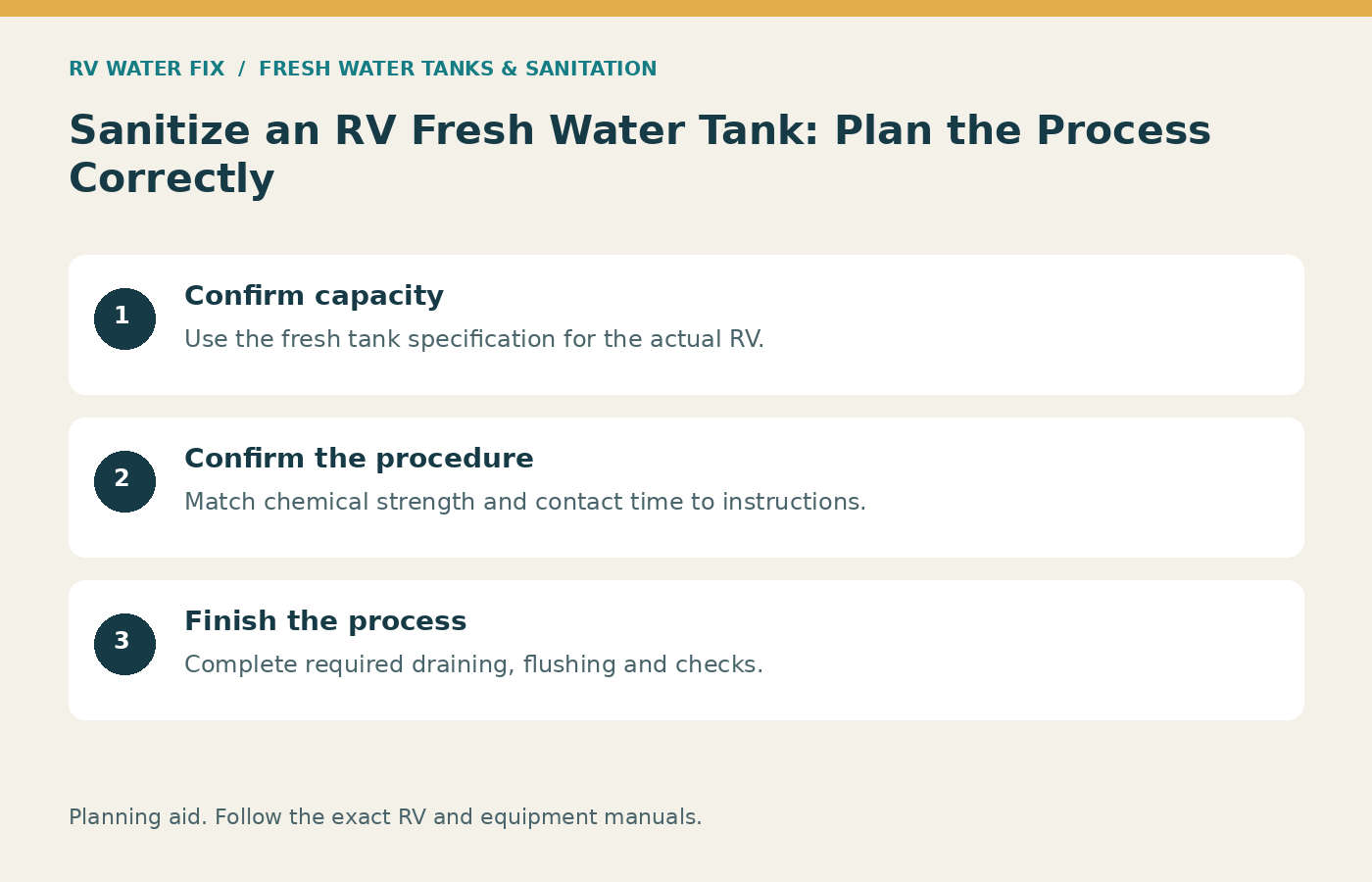
Find the fresh-water section of the correct model-year manual. Record the tank capacity and confirm whether the quoted figure includes other components. Do not use a waste-tank capacity or a similar floorplan’s specification.
Then read the approved sanitizer’s label and the RV procedure together. Identify the permitted chemical, dilution, method of introduction and required contact time. If the instructions conflict or rely on a concentration you cannot confirm, ask the RV maker or product manufacturer for clarification.
Also use appropriate gloves and eye protection as the product label requires. Never mix bleach with ammonia, acids or other cleaners. Do not pour chemicals into an unidentified inlet.
Sanitize an RV fresh water tank: appliance checks
Next, inventory the pump, heater, filter housings, drinking-water tap and any optional appliances. Check their compatibility and bypass requirements before introducing treatment. A tank procedure does not automatically authorize exposing every cartridge or appliance to the same solution.
Also keep heating off whenever the heater’s filling status is uncertain. If a component needs separate service, record it on the checklist. Do not skip an incompatible device and later assume its branch was sanitized.
Use clean equipment dedicated to potable water. Keep hose ends and the fill connection off contaminated surfaces. A carefully measured solution cannot compensate for reintroducing dirt through the equipment used to fill the tank.
Follow the whole treatment procedure
The applicable manual should define how the solution reaches the required tank and plumbing paths. Follow that sequence, including the listed fixtures and contact period. Starting a timer before treatment has reached the required areas can give a misleading completion time.
Then record the start and finish of the actual contact period. Keep anyone using the RV informed that the water system is being treated. Avoid using treated water for cooking, drinking or bathing during the procedure.
More chemical or a longer soak is not automatically better. Concentration, exposure and material compatibility belong together. Therefore, use the approved procedure rather than combining the strongest steps from several online guides.
Sanitize an RV fresh water tank: complete the flush
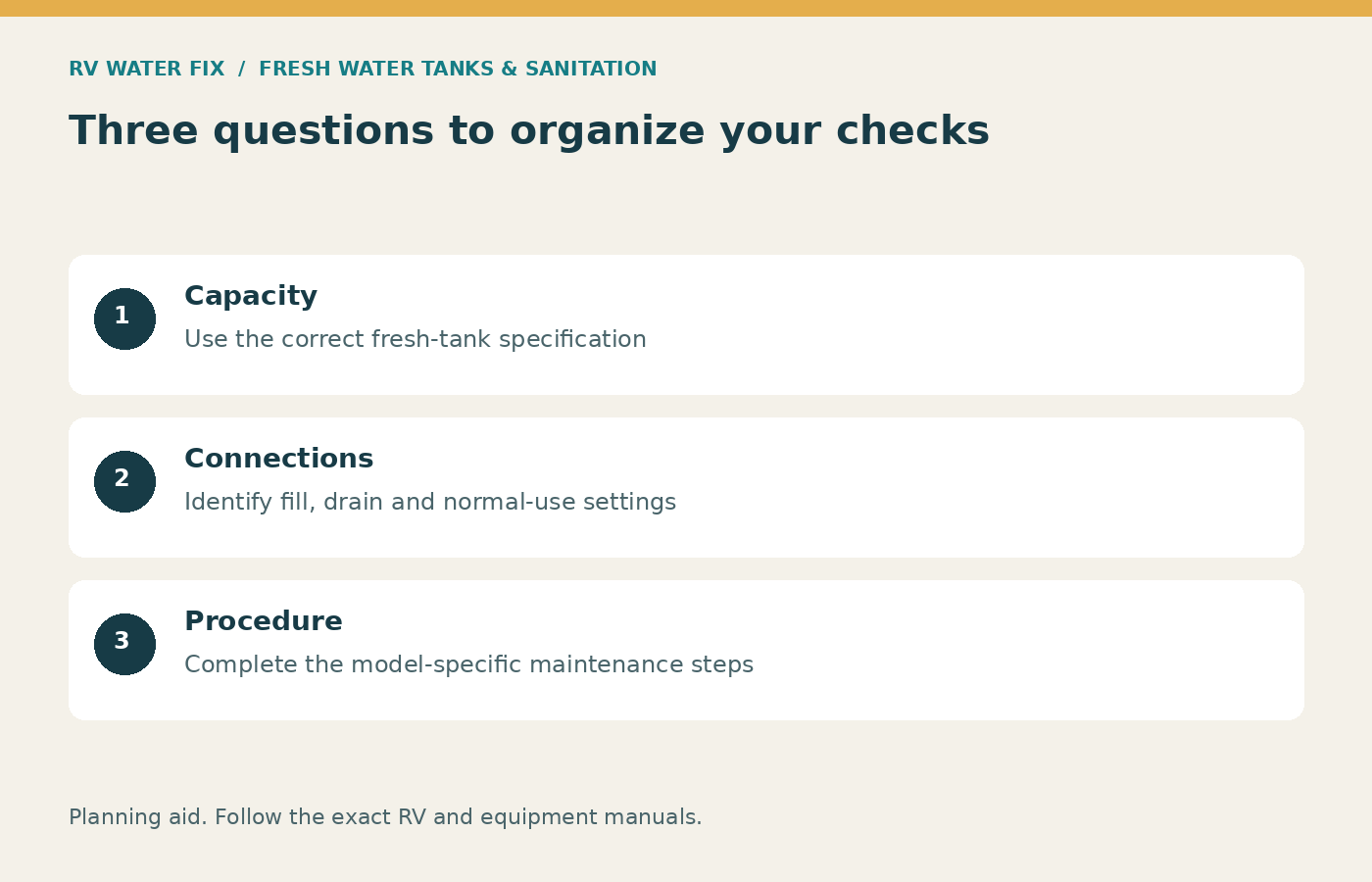
Finally, complete the prescribed drain and rinse cycles using a known potable source. Follow local rules for disposal. Restore bypasses, filters and appliance settings only at the appropriate stage in their instructions.
In addition, keep a maintenance record showing the procedure source, product, tank capacity, date and completed flushes. That record is more informative than a note saying “added bleach.” Check visible joints for leaks after returning the system to normal operation.
CDC warns that taste, smell and appearance are not reliable indicators of water safety. Sanitizing is maintenance, not a guarantee that an unknown source or unresolved contamination event is acceptable. Follow advisories and seek appropriate testing when a concern remains.
Common planning questions
Does a carbon filter sanitize the tank?
No such conclusion follows from taste improvement or a carbon-media label. Tank sanitation and a filter’s documented treatment claims are separate matters.
When should I repeat the procedure?
Use the RV maker’s schedule and event-based guidance, including storage or suspected contamination where specified. Do not use a single calendar interval as proof that every situation is covered.
Sources and editorial notes
Source check: November 25, 2026. This is a research-based guide, not a hands-on product test or a claim of certified technician review. Manufacturer instructions for the exact installed equipment take priority. Featured artwork is an AI-generated editorial illustration, not a product photograph or installation diagram.
- 2025 Winnebago Towables owner manual, plumbing section
- Winnebago operator manuals by model and year
- CDC: choosing water filters