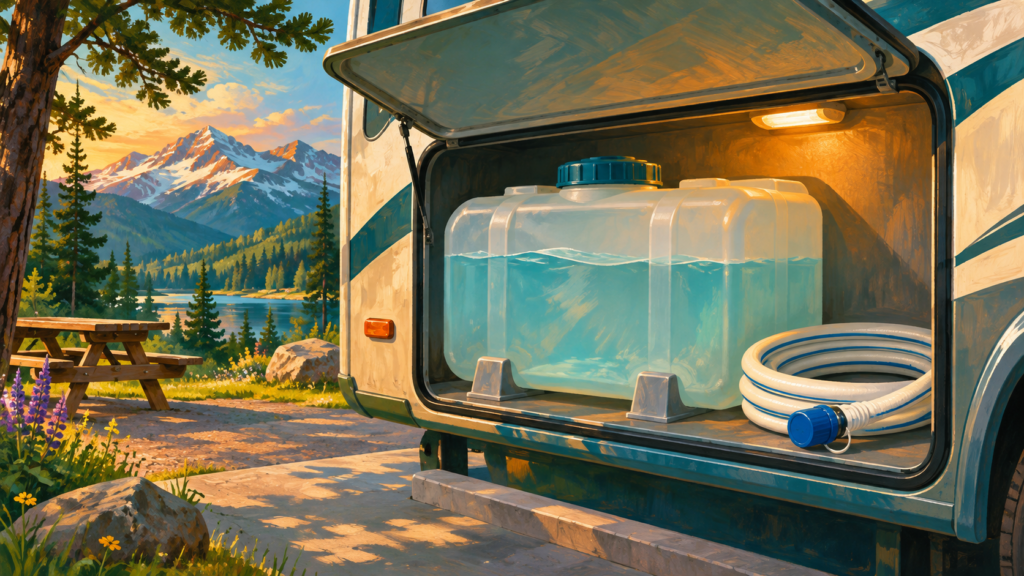
To drain an RV fresh water tank, locate the correct fresh-tank drain in the owner manual and follow its procedure. Do not assume the first valve under the RV serves the tank. Low-point drains and waste-tank valves perform different jobs.
Drainage is useful during approved maintenance or storage preparation. However, an empty fresh tank does not establish that the pump, heater and distribution lines are empty or protected against freezing.
Prepare to drain an RV fresh water tank
Start with the model-year manual and identify the valve location before crawling near the RV. Use stable footing and safe access. Never work underneath a vehicle supported only by leveling equipment or an unsuitable jack.
Turn off the water supply and pump as instructed. Keep the heater off while its water condition is uncertain. If you need to drain that appliance too, use its separate cooling, isolation and pressure-release procedure.
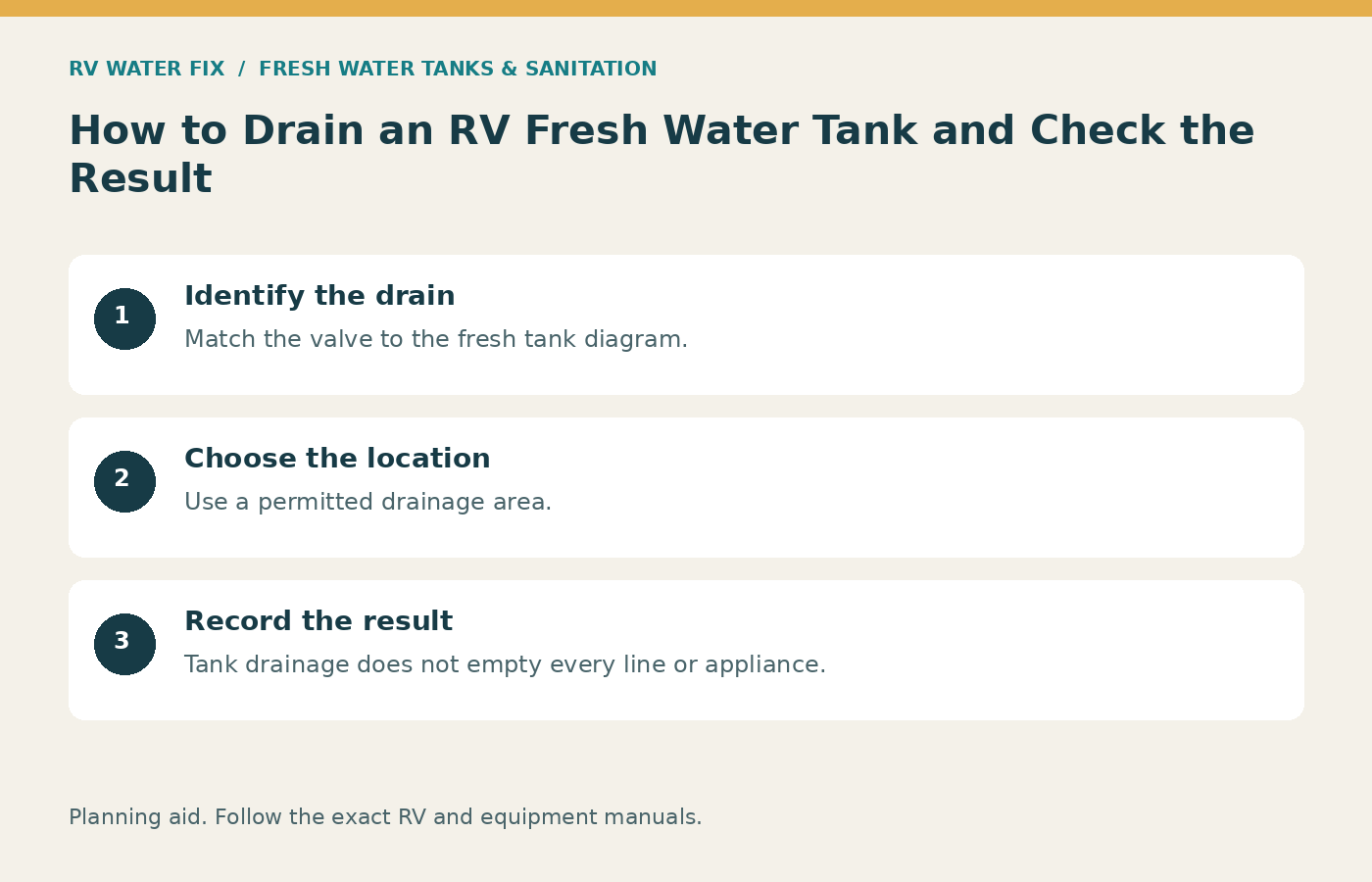
Choose an appropriate place for the discharge. Campgrounds and local rules can restrict draining onto the ground, especially when treatment chemicals or winterizing products are present. Ask the property operator when the permitted location is unclear.
Drain an RV fresh water tank through the right valve
Compare the label and plumbing diagram with the physical valve. A low-point drain may release water from a line without emptying the tank. Likewise, opening a fresh-tank drain does not necessarily clear the pump's internal passages.
Follow the manual's requirements for venting and opening fixtures. Do not use compressed air to speed up a gravity drain unless the manufacturer specifically calls for that procedure. Do not force a brittle or seized valve.
Watch the initial discharge from a safe position. Unexpected color, odor or debris deserves investigation, but its absence is not a water-safety test. Keep draining equipment separate from waste-water equipment.
If drainage is slow or stops unexpectedly
First check the instructions and the valve's actual position. Look for an accessible kink, obstruction or leakage in the documented drain path. Avoid pushing objects into the tank outlet or dismantling a concealed valve without a service plan.
The RV's attitude and tank shape can affect what remains, but do not reposition the vehicle in an unsafe way to chase the last visible water. Use only manufacturer-approved positioning and support.
If the gauge still shows water after drainage, record it rather than assuming either the tank or sensor must be wrong. A display and an observed discharge are different pieces of evidence. Have persistent discrepancies checked.
Drain an RV fresh water tank before storage
Build a separate inventory for the lines, pump, filter housings, heater and traps. Each can have its own storage requirement. The pump manual and heater manual are especially important where the RV procedure refers owners to appliance instructions.
For example, a tank heater may require a separate drain process even when its plumbing is bypassed. A portable filter sitting in an outside compartment may also retain water. Do not mark the RV winterized simply because the fresh-tank drain has stopped flowing.
If the purpose is sanitation, complete the specified treatment and flushing procedure rather than just draining old water. The correct next step depends on the maintenance task.
Leave a clear completion record
Note the date, reason for drainage and final valve positions. If a plug or part was removed, label it and store it cleanly. Add a reminder to restore the system and confirm heater filling before normal operation.
Should I run the pump until everything is dry?
Follow the RV and pump instructions. Dry-running limits differ, and running the pump is not a universal way to empty every water-holding part. Do not improvise a long dry run to compensate for an unidentified drain.
Sources and editorial notes
Source check: November 25, 2026. This is a research-based guide, not a hands-on product test or a claim of certified technician review. Manufacturer instructions for the exact installed equipment take priority. Featured artwork is an AI-generated editorial illustration, not a product photograph or installation diagram.
- Winnebago operator manuals by model and year
- 2025 Winnebago Towables owner manual, plumbing section
- Xylem Flojet RV water pump user guide
- Suburban tank water heater operation and maintenance guide, pages 3 and 8–9