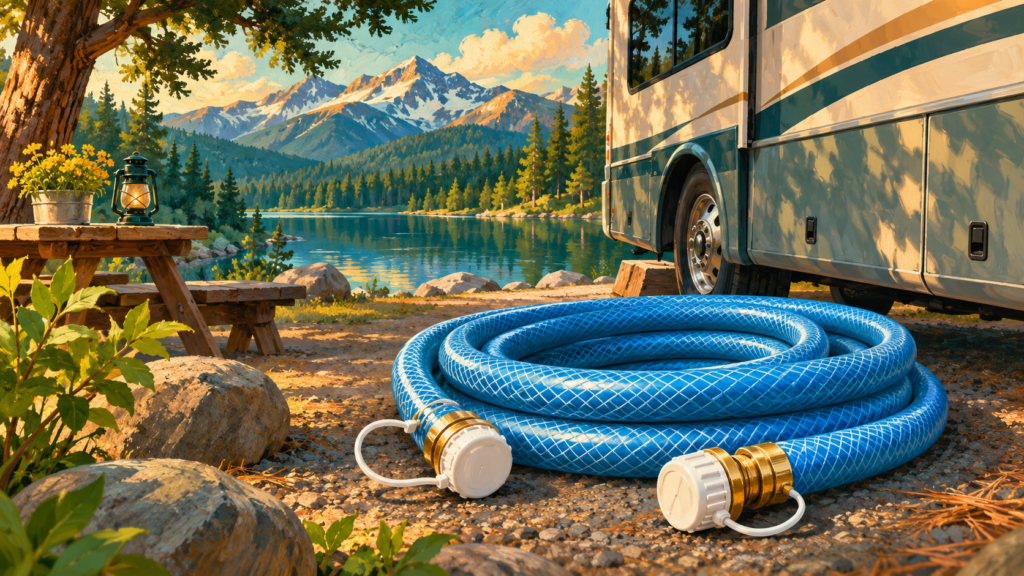
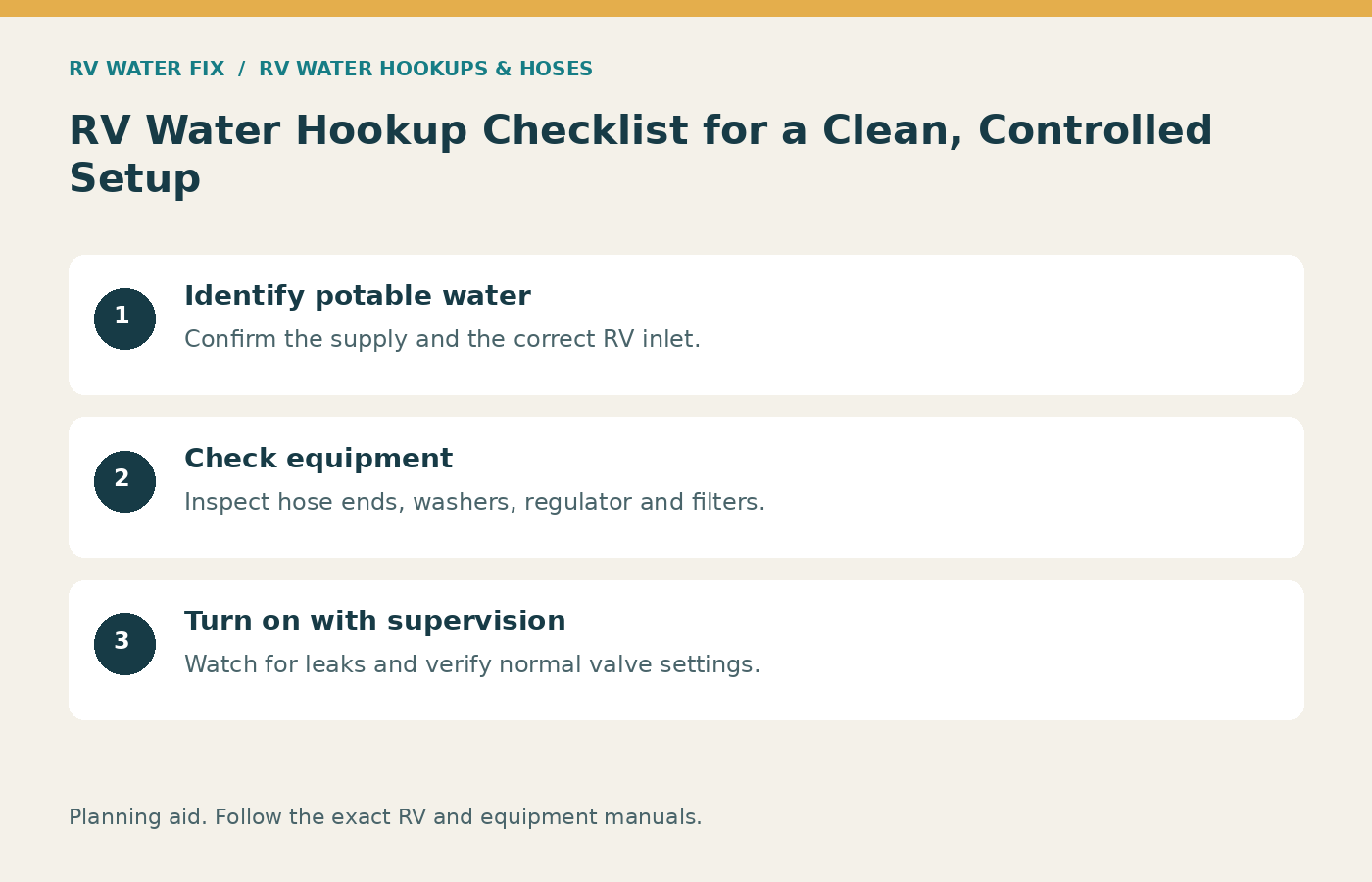
An RV water hookup checklist helps you make a clean connection, control incoming pressure and catch leaks before leaving the RV unattended. Start by identifying the supply and the correct inlet. A familiar-looking fitting is not enough to confirm its purpose.
This checklist covers a normal potable campground connection. Tank filling, winterizing suction and waste-tank flushing may use different settings or ports. Use the labels and manual for your own RV.
RV water hookup checklist: before connecting
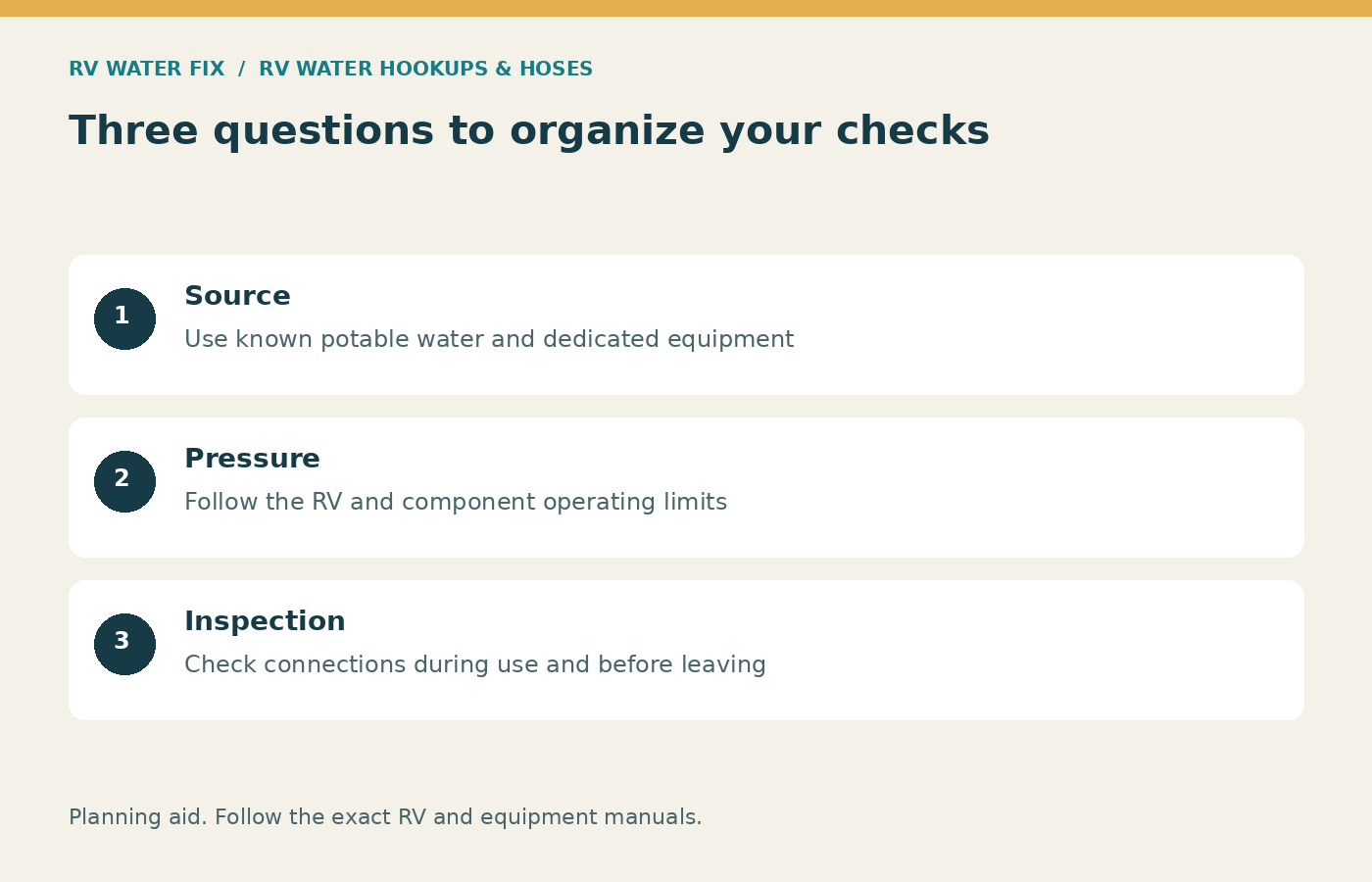
Confirm that the campground identifies the source as potable and ask about current advisories. Keep drinking-water equipment separate from sewer and tank-flush equipment. Do not use an unlabeled hose left at a site for your potable hookup.
Next, inspect the hose, end washers and fittings for damage or contamination. Keep clean ends off the ground. Replace split washers or damaged couplings rather than trying to stop a leak by overtightening the entire connection.
Review the utility-panel mode. A tank-fill position can send water somewhere different from a normal city-water setting. Photograph unfamiliar labels and consult the manual before opening the supply.
RV water hookup checklist: pressure and support
Use a suitable regulator and follow the RV's stated pressure limit. The setting from a neighbor's rig may not be appropriate. Also check the operating limits for the hose, filter housings and other connected components.
Follow the equipment manufacturers' connection sequence and flow-direction markings. Place regulation so the equipment that needs protection is protected, within those instructions. Avoid a heavy, unsupported assembly hanging from the RV inlet.
A gauge is useful only when you understand where it measures. Record whether a reading is upstream or downstream of a filter and whether water is flowing. A good-looking static number does not guarantee a strong shower.
RV water hookup checklist: supervised startup
Turn water on in a controlled way and remain at the hookup. Look for leaking washers, strained fittings and water entering an unintended path. Shut the supply off before correcting a connection.
Check the inside fixtures according to the RV's normal startup procedure. Keep the heater off until its fill requirements have been met. Do not assume that running cold water proves a tank heater is ready to heat.
Inspect the utility bay and cabinet areas again after pressure has stabilized. A small drip at the start can become a larger problem if left unattended. Ask the campground operator for help if the supply connection itself is damaged.
Make the setup easy to inspect
Route the hose away from sharp edges, vehicle tires and walking paths. Avoid tight bends at couplings. Use suitable connection support where the equipment instructions require it.
Keep valve labels and shutoffs visible. Store the manual's relevant page on your phone or in the RV folder. The goal is to make it easy to stop the supply promptly if a leak appears later.
Follow the RV and equipment guidance for leaving the campsite unattended. Do not treat a pressure regulator as a substitute for leak awareness or a sound connection.
Disconnect with the same care
Shut off the supply and relieve pressure as instructed before removing fittings. Drain and store equipment according to its product guidance. Finally, keep drinking-water parts in a dedicated clean container, away from waste gear.
Record any connection that leaked or needed attention. Replace damaged parts before the next trip rather than relying on an increasingly tight coupling.
Do I need the pump on with city water?
Follow your RV manual. Many systems use city pressure directly, but controls and permitted operation vary. Do not copy another owner's pump setting without checking your model.
Sources and editorial notes
Source check: November 25, 2026. This is a research-based guide, not a hands-on product test or a claim of certified technician review. Manufacturer instructions for the exact installed equipment take priority. Featured artwork is an AI-generated editorial illustration, not a product photograph or installation diagram.
- Lippert: RV setup and teardown checklist
- 2026 Winnebago View operator manual, plumbing section
- 2025 Winnebago Towables owner manual, plumbing section
- Camco: drinking-water hose product range