Clearsource Ultra Replacement Filter 3-Pack: Detailed RV Buying Guide
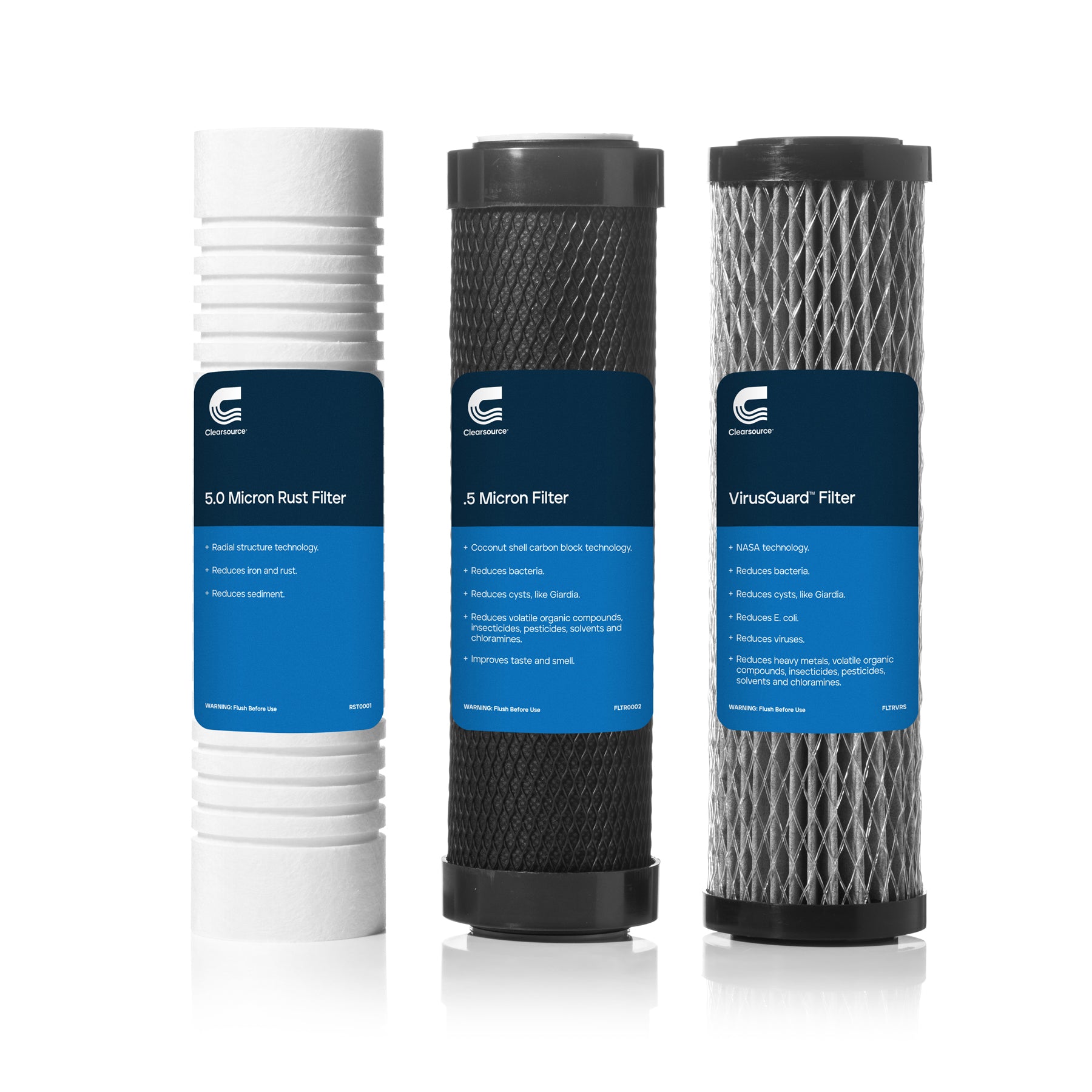
Exact product shown: Clearsource Ultra Replacement Filter 3-Pack. Manufacturer photograph used with permission.
Clearsource sells this three-cartridge pack for the full-size Ultra VirusGuard system. The Ultra Mini and other Clearsource systems use different replacement arrangements.
This guide is based on manufacturer documentation and general water-treatment guidance. It is not a report of laboratory testing or personal use.
Start with the water problem, not the product shape
The most useful way to evaluate Clearsource Ultra Replacement Filter 3-Pack is to write down the specific concern before comparing stages, colors or marketplace ratings. Sediment, chlorine taste, hardness, microorganisms and a known health-related contaminant are different problems. A product that improves taste may still have no evidence for another contaminant. CDC guidance recommends choosing a filter based on what is in the water and checking the label or performance information for the reduction you need.
That distinction protects both the buyer and the site owner’s credibility. The word “filter” is not a blanket safety guarantee. A micron number, carbon ingredient or familiar standards logo should be tied to the exact system, cartridge and claim. If the campground has issued a boil-water or do-not-use advisory, follow the responsible authority. Do not assume a portable consumer filter overrides the advisory.
Read standards and test claims precisely
NSF explains that different drinking-water treatment standards address different categories of performance. NSF/ANSI 42 commonly covers aesthetic effects such as chlorine taste, while NSF/ANSI 53 applies to specified health-related reductions. Certification must still be checked for the exact model and exact claim. Materials compliance, component testing and certification of a complete treatment system are not interchangeable.
For Clearsource Ultra Replacement Filter 3-Pack, obtain the current performance sheet when a reduction claim matters. Match the model number, cartridge combination and replacement interval. Do not transfer a result from a larger unit, a different filter pack or a laboratory media study to this finished product. Customer reviews can reveal fit, leakage or taste complaints, but they cannot establish contaminant reduction.
Compatibility and flow checks
Build the complete water path on paper: source, pressure regulator, potable hose, any prefilter, the treatment unit and the RV inlet. Every restriction and joint affects the result. A product-page flow figure is meaningful only with its test pressure, water condition and cartridge state. Never raise pressure beyond the RV’s documented limit to chase an advertised flow rate.
Measure the storage and service space, not just the visible body. Cartridge removal can require clearance below a housing, while an inline filter needs room for hose bends and support. Confirm thread types instead of assuming that fittings with similar diameters are interchangeable. A stable layout that can be inspected is preferable to a chain of unsupported adapters.
Setup and leak inspection
Use the supplied instructions for flow direction, initial flushing and connection order. Keep the campground source off during assembly. Support the unit so its weight does not hang from an RV inlet. Open water gradually, inspect every connection and remain present during the first operating period. A dry paper towel can help reveal a slow weep around a threaded joint.
Initial flushing is part of commissioning, not evidence that every treatment claim has been verified. Carbon fines or trapped air can affect appearance during startup. Follow the stated flush procedure and discard that water as directed. If odor, discoloration or leakage continues, stop and resolve it instead of assuming extra flushing will repair a damaged housing or incorrect cartridge.
Replacement and storage planning
The cost of ownership includes the exact replacement parts, not merely the original purchase. Record the cartridge code, installation date and source-water conditions. A manufacturer’s month or gallon estimate is conditional because sediment load and use patterns vary. A sudden flow decline can justify inspection, but clear water alone does not prove that carbon media still performs as claimed.
Follow model-specific storage instructions. Do not copy a wet-storage method from another brand or place a cartridge exposed to questionable water back into service without guidance. Protect fittings from dirt and keep potable-water equipment away from sewer tools. Freezing can damage housings even when the exterior looks normal, so follow temperature and seasonal-storage limits.
Who is this product for?
Choose this pack only for the exact compatible housing and system generation. Its value comes from correct media sequence and dependable replacement availability, not from treating any same-size cartridge as equivalent.
Compare it with the alternatives linked from the RV filtration selection guide and the filter maintenance guide. A compact inline unit favors quick setup. A serviceable multi-stage system favors separate media and replaceable parts. A prefilter or replacement pack only makes sense as part of the compatible system it serves.
Questions to answer before ordering
Confirm the exact model, included fittings, replacement part numbers, documented operating range and the evidence for the reduction you care about. Check whether the seller is offering one unit or a multipack, and whether a listing combines variants. Prices and availability change, so this guide does not treat an old observed price as current.
Finally, decide how you will verify installation and maintain records. A defensible purchase is one you can fit, operate and service correctly. Popularity and a high stage count are secondary to compatibility, documented performance and an ownership routine you will actually follow.
How to verify the offer and seller
Before buying, compare the manufacturer’s exact model page with the selected marketplace offer. Check the model number in the title, specification table, package photograph and variant selector. Those fields can disagree when a seller has merged several products onto one listing. Save a copy of the order description and inspect the received package before the return window closes.
Seller credibility is a separate question from product design. Look for a clearly identified seller, an appropriate return policy and a realistic delivery promise. A high review count does not confirm that the current seller will ship the exact model shown, and reviews attached to a variation family may cover different products. Treat recurring fit or leakage complaints as issues to investigate, not proof that every unit will fail.
Total ownership cost
Compare the complete ownership task rather than the shelf price alone. Include required adapters, replacement seals, cartridges, mounting hardware, electrical work, storage protection and likely service access. A low-cost component can be poor value if it needs unsupported adapters or frequent replacement. A more expensive assembly can still be a weak recommendation when its documented benefit does not address the buyer’s problem.
Keep consumable part numbers in the RV records and check whether they remain readily available. Do not calculate a precise cost per gallon, season or trip unless the actual service life is known for the user’s water and operating conditions. A range with stated assumptions is more honest than a precise figure copied from ideal marketing conditions.
What to record after installation
Create a short equipment record with the exact model, purchase source, installation date, manual link and any compatible replacement parts. Photograph the final routing and note the normal valve or gauge position. These details make future troubleshooting safer, especially when a different person sets up the RV or services it months later.
During initial use, record leaks, unusual noise, flow changes or operating conditions that matter. Stop if the product behaves outside its instructions. Do not keep tightening, raising pressure or bypassing protection in an attempt to make an incompatible part work. Contact the manufacturer or use qualified service when the cause is unclear.
Responsible recommendation standard
RV Water Fix should recommend this product only for buyers whose documented need matches its function. The article should keep manufacturer claims, independent standards and customer feedback clearly separated. It should also be updated when specifications, package contents or availability change. That standard protects readers better than repeating a marketplace title or implying firsthand testing that did not occur.
The final decision should be repeatable: identify the problem, verify the exact model, confirm compatibility, understand the maintenance and compare a realistic alternative. If any of those steps remains unresolved, the responsible conclusion is to wait for clarification rather than forcing a confident recommendation.
Sources and verification
- Clearsource Ultra Replacement Filter 3-Pack source or manufacturer documentation
- CDC guide to choosing home water filters
- NSF guide to treatment standards
Research and specifications checked November 25, 2026. Verify current model details, availability and instructions before purchase.