
An RV water heater bypass changes the water path so the plumbing can route around the heater. It is often relevant during winterization and spring startup. The correct setting depends on the RV's layout and the appliance installed.
There is no universal photograph that tells every owner how to position the valves. Some rigs have several valves near the tank. Others use a labeled utility panel. Tankless systems may require a different storage procedure altogether.
Find the RV water heater bypass instructions
Start with the RV's model-year manual and the heater's own instructions. If someone replaced the appliance, gather its documentation too. Photograph the current labels and handles before making changes.
Identify the task you are performing: normal camping use, filling, draining, winterizing or returning from storage. A setting that is correct for protecting lines with antifreeze may be wrong for supplying hot water on the next trip.
If labels are missing or a previous owner modified the plumbing, stop and get the arrangement identified. Guessing from handle direction is less reliable than a confirmed diagram for the actual system.
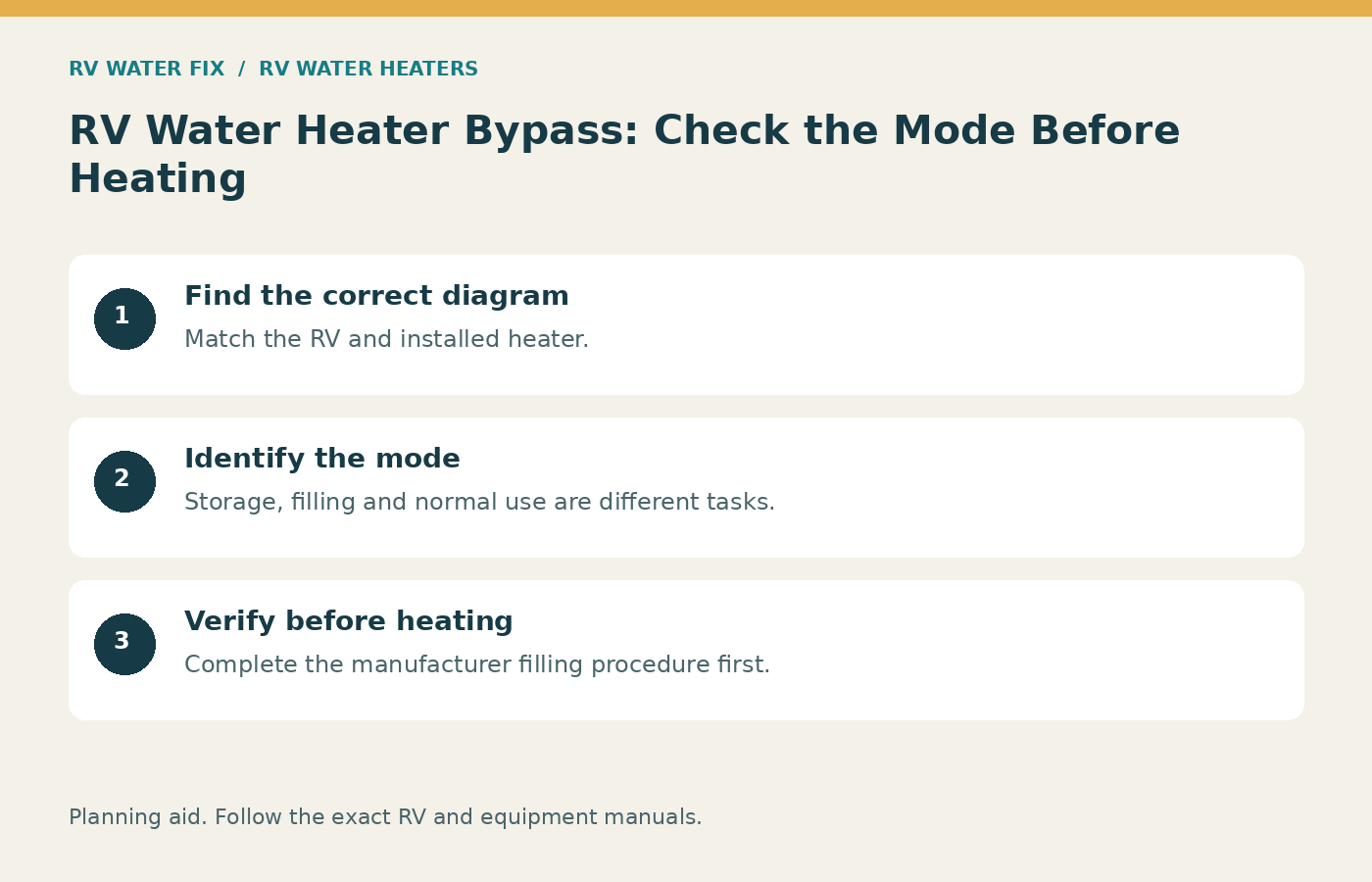
What an RV water heater bypass does
For the covered Suburban tank heaters, the maintenance guide describes bypassing the heater when introducing antifreeze into the plumbing. The heater still has its own draining and storage requirements. Routing water around an appliance does not automatically empty it.
This distinction prevents a common planning mistake: checking “bypass” on a winterization list and assuming you have protected the heater. You must account for the appliance's separate procedure and any other water-holding components.
Likewise, a faucet producing water does not by itself confirm the heater tank is full. Water may be following a path around it. Use the approved filling and air-purging procedure before enabling any heat source.
Check the RV water heater bypass after storage
Keep heating off while you verify the configuration. Review what happened during storage and which valves were moved. Check the manual's normal-use diagram and confirm that you have restored drains and plugs as required.
Next, follow the filling procedure for that appliance. Do not turn on electric heat to see whether the tank is full. Suburban warns that operating its tank heater without water can damage it.
If the configuration is correct but the problem remains, record the power mode and any error indicator. Use the normal troubleshooting instructions or arrange qualified service. The bypass is only one possible explanation for missing hot water.
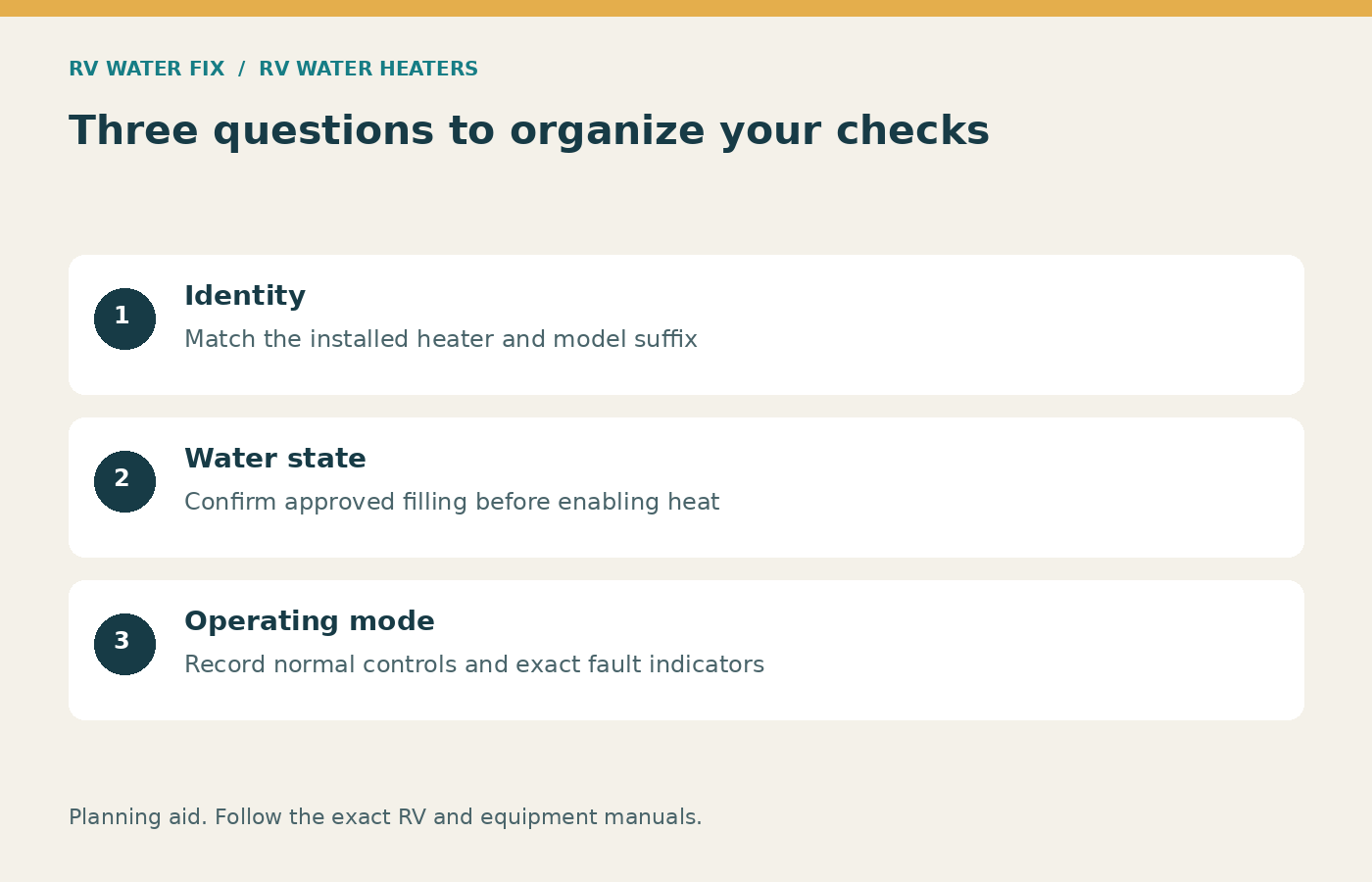
Keep a seasonal valve record
Create a simple maintenance note with a photo of each labeled position, the manual page and the date changed. Mark whether the heater is drained or filled. Store this note near your seasonal checklist rather than relying on memory months later.
For a modified system, have a technician document the approved arrangement. That record helps a future owner or service shop understand the installation without repeatedly tracing hidden pipes.
Avoid putting a large homemade label over the manufacturer's warnings or controls. The aim is to make the existing instructions easier to follow, not replace them with an oversimplified shortcut.
Common questions about bypass settings
Can I leave the heater bypassed while camping?
Follow the RV and appliance instructions for the intended operation. Do not enable heating if you have isolated and emptied a tank appliance. If you are using cold water only, still verify that the selected configuration is allowed.
Does every tankless heater use the same bypass method?
No. Find the actual appliance's freeze-protection and draining requirements. Do not assume that a storage-tank checklist protects a tankless installation.
Sources and editorial notes
Source check: November 25, 2026. This is a research-based guide, not a hands-on product test or a claim of certified technician review. Manufacturer instructions for the exact installed equipment take priority. Featured artwork is an AI-generated editorial illustration, not a product photograph or installation diagram.
- Suburban tank water heater operation and maintenance guide, pages 3 and 8–9
- Winnebago operator manuals by model and year
- Jayco: winterizing plumbing, general background, published 2012