
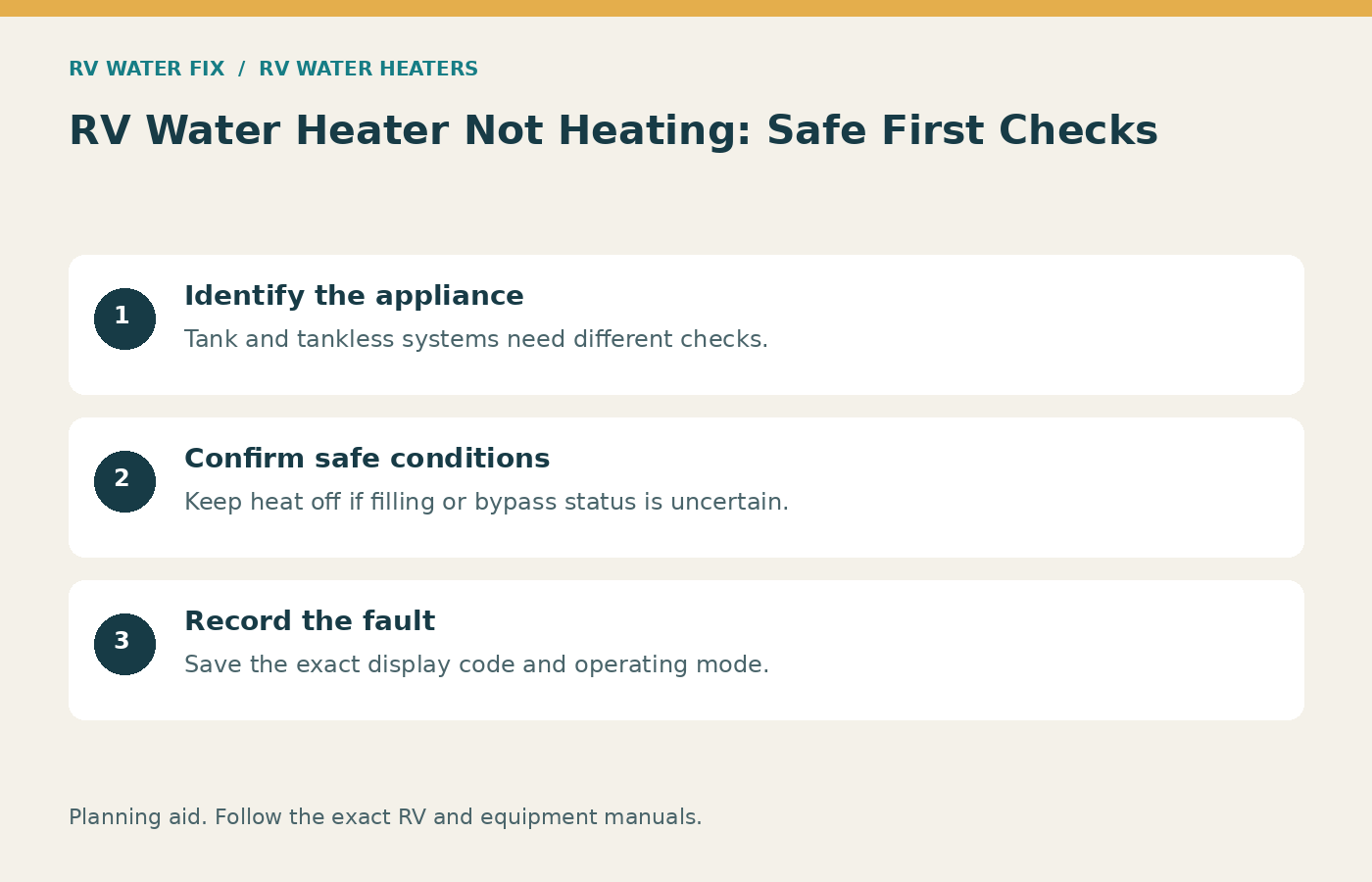
An RV water heater not heating needs a careful first check, not an immediate parts order. Identify the exact appliance and operating mode, then confirm that the water system is configured correctly. Tank and tankless heaters do not share one troubleshooting procedure.
This guide covers observations and normal user controls. It does not cover opening electrical enclosures, testing live circuits, adjusting gas pressure or servicing burners. Follow the appliance manual's requirements for qualified service.
RV water heater not heating: start with the model
Photograph the accessible model label without removing a service cover that the manual restricts. Record the RV year and model too. A previous owner may have replaced the heater, so the RV brochure alone may not identify what is installed.
Next, find the matching operating manual. Look for the section covering your model suffix, power options and control panel. An instruction for a gas-only storage heater may be irrelevant to a combination unit or tankless appliance.
If you smell gas, stop troubleshooting, leave the RV and follow the appliance's emergency instructions from a safe location. Do not keep trying ignition or operate electrical switches inside. Soot, damaged wiring or evidence of overheating also requires shutdown and qualified assessment.
RV water heater not heating after storage
Keep heating off if the tank may be empty. The Suburban tank-heater guide specifically requires a water-filled tank before operation. A tap producing water does not always establish correct heater filling if bypass valves are directing water around it.
Use the RV and heater manuals together to confirm normal-use valve positions and the prescribed filling procedure. Do not copy a photo of another rig's three-valve arrangement. Utility panels and bypass layouts differ.
If the problem began after winterization, take particular care with those settings. Photograph the panel before making an approved correction so you can explain what changed.
RV water heater not heating in the selected mode
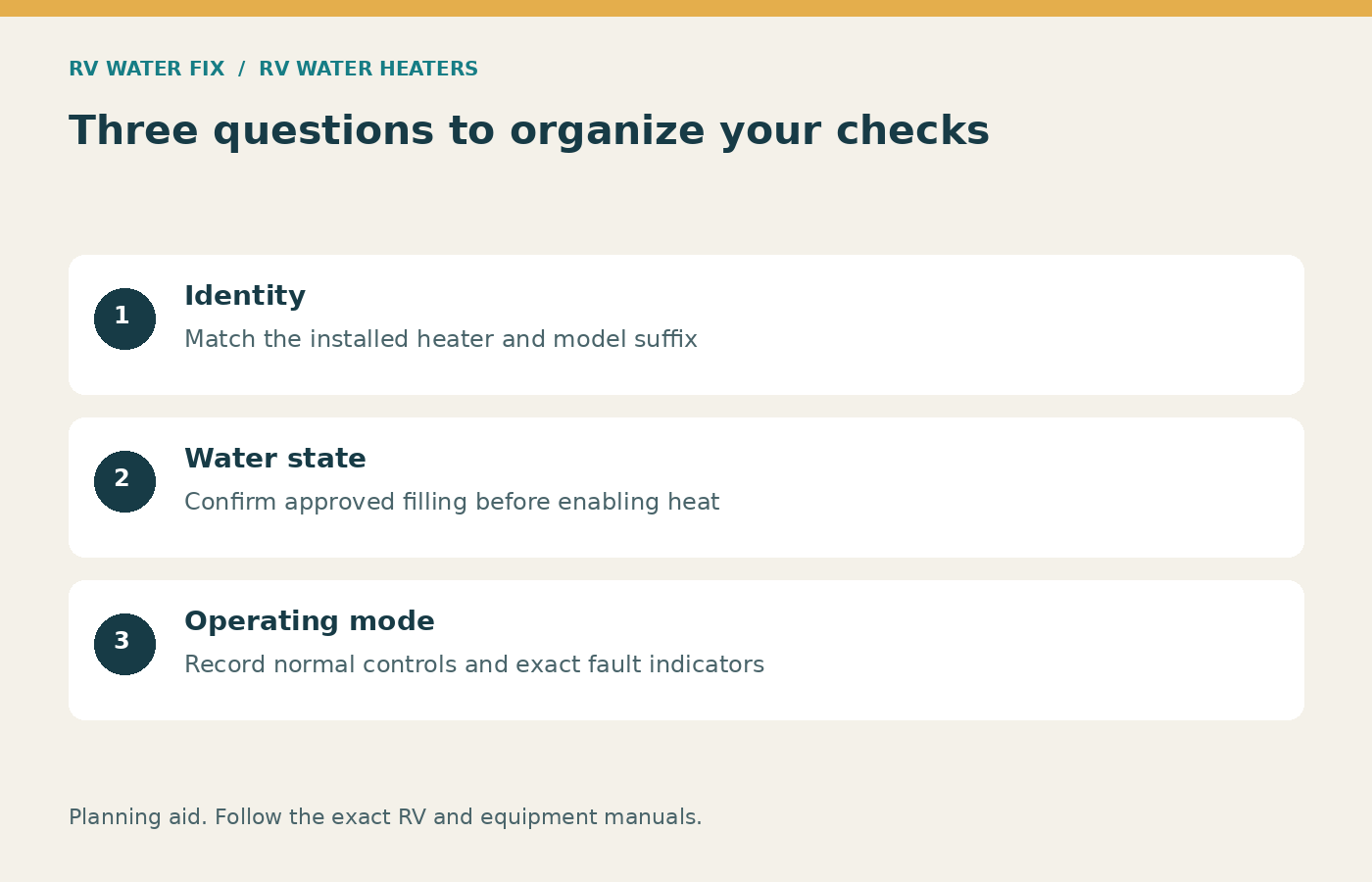
For a combination heater, record whether you selected electric, gas or both. Check the user-facing switches described in the manual. Confirm that the appropriate RV supply is available through its normal indicators. Do not remove panel covers or bypass protection to investigate further.
If a breaker or fuse has operated, follow the manual and obtain service for a recurring fault. Repeatedly resetting protection is not a repair. Likewise, avoid repeated ignition attempts outside the specified restart procedure.
Allow the model's stated recovery time before judging the result. “Still cold” immediately after startup and “went cold after a long shower” are different symptoms. Note elapsed time and water use instead of assuming the heater never started.
Distinguish cold water from lukewarm delivery
Compare the kitchen and bathroom hot outlets using care to avoid scalding. If one fixture behaves differently, record that. Also check normal user controls for an outside shower or mixing arrangement, where your manual describes them.
For tankless units, collect the exact error code and describe the water-flow conditions. Minimum flow requirements and freeze-protection behavior are model-specific. Do not use storage-tank troubleshooting to override a tankless heater's fault.
Prepare for a useful service visit
Send the technician the model number, power mode, display code, recent winterization history and the simple checks completed. Explain whether the issue affects every fixture and whether the heater has worked in that mode before.
Should I order a thermostat first?
Not from this symptom alone. An RV water heater not heating can have several causes. Proper diagnosis avoids replacing a working part while leaving a supply, configuration or electrical fault unresolved.
Sources and editorial notes
Source check: November 25, 2026. This is a research-based guide, not a hands-on product test or a claim of certified technician review. Manufacturer instructions for the exact installed equipment take priority. Featured artwork is an AI-generated editorial illustration, not a product photograph or installation diagram.
- Suburban tank water heater operation and maintenance guide, pages 3 and 8–9
- Lippert: RV water heater troubleshooting guide
- Winnebago operator manuals by model and year