
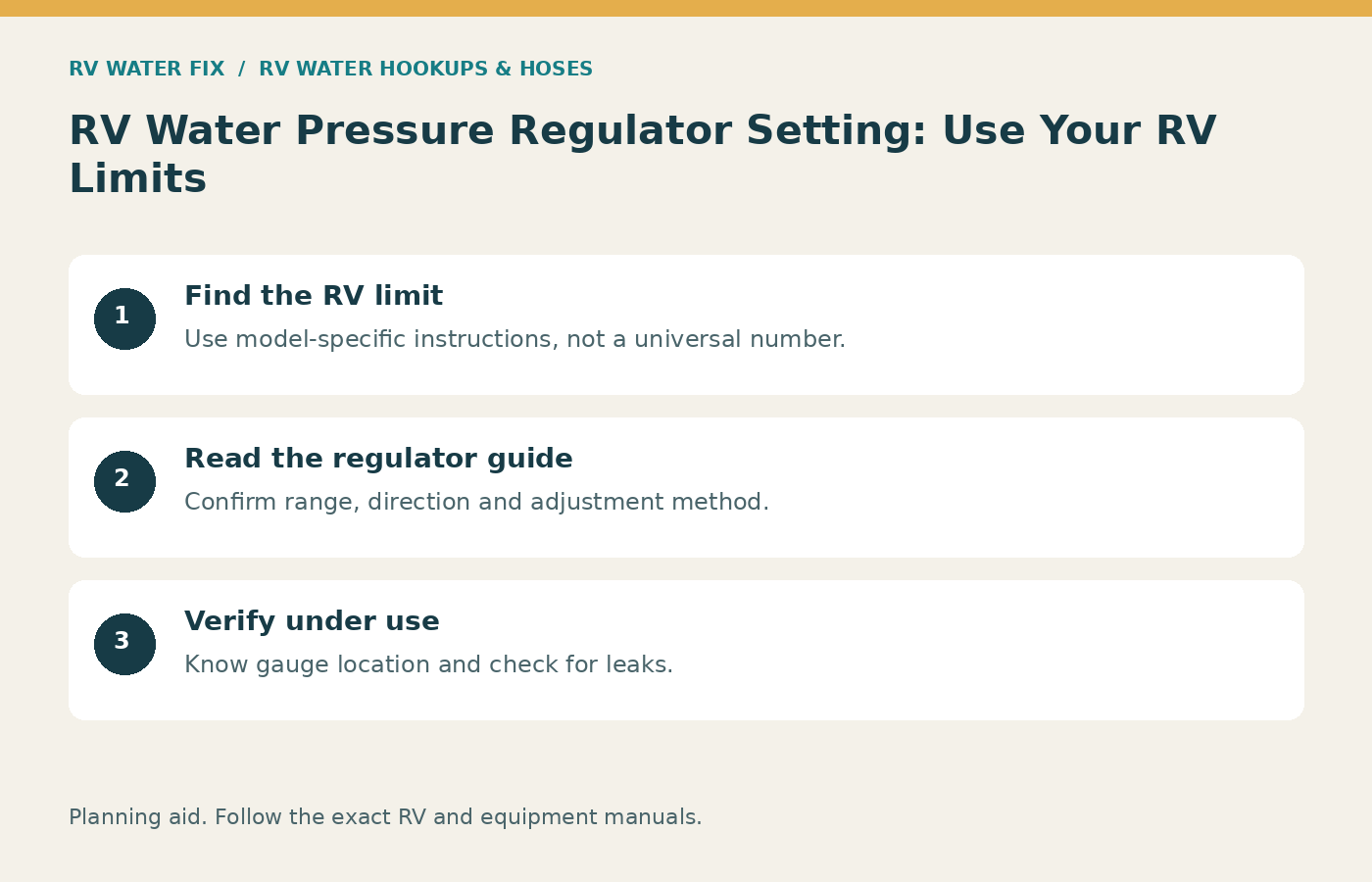
The correct RV water pressure regulator setting comes from your RV's instructions and the limits of the connected equipment. There is no single number that should replace those documents for every rig. Confirm the permitted setting before turning an adjustment screw.
Also distinguish pressure from flow. A regulator controls downstream pressure under its stated conditions. It cannot turn a weak campground supply into a stronger source or make a clogged cartridge deliver more water.
Find the RV water pressure regulator setting in the manual
Start with the actual model and year. Look for the fresh-water or city-water section. If the plumbing has been modified, ask the installer or manufacturer how the change affects the limits.
The Winnebago View and Towables documents linked below give different example recommendations. That difference is a practical reason to avoid copying another RV's number. Your hose, filter and other components also have specified limits.
Record the relevant manual page and the regulator model. Keep the reference available at setup so a future adjustment does not rely on memory or an old social-media comment.
RV water pressure regulator setting and device type
A fixed regulator has a manufacturer-defined output arrangement. An adjustable model allows settings within its specified range. Neither format should be assumed suitable solely because the hose threads fit.
Next, read the exact product's inlet limit, adjustment range, flow information and temperature requirements. For example, Watts identifies a particular LFH560G hose-thread model with a gauge and an adjustable range. That is a specification for that model, not a recommendation to use its highest setting in an RV.
Also check flow direction and mounting requirements. Protect connected equipment according to the approved installation sequence. Avoid supporting a heavy regulator-and-filter chain from a plastic inlet fitting without suitable support.
Verify the RV water pressure regulator setting
Before judging a number, identify where the gauge is installed. A reading before a filter does not show the pressure after that filter. Likewise, a reading with all taps closed describes a different condition from a reading while the shower runs.
Then use the regulator manufacturer's adjustment procedure and remain within every applicable limit. Do not force the adjustment mechanism or exceed the RV rating to improve a weak stream. Shut off the supply and relieve pressure before disassembling a connection or screen.
If a gauge behaves erratically or appears damaged, do not treat its reading as dependable. Arrange an appropriate check or replacement rather than assuming the regulator has failed in a particular direction.
Investigate low flow separately
Check for hose kinks, serviceable inlet screens, a restricted cartridge and partly closed valves. Compare several fixtures. If only one outlet is weak, begin with that fixture rather than changing the whole RV's pressure.
A regulator reduces pressure; it does not boost an inadequate upstream supply. Increasing an adjustment beyond the approved limit cannot solve that underlying shortage safely. Ask the campground operator about a supply problem.
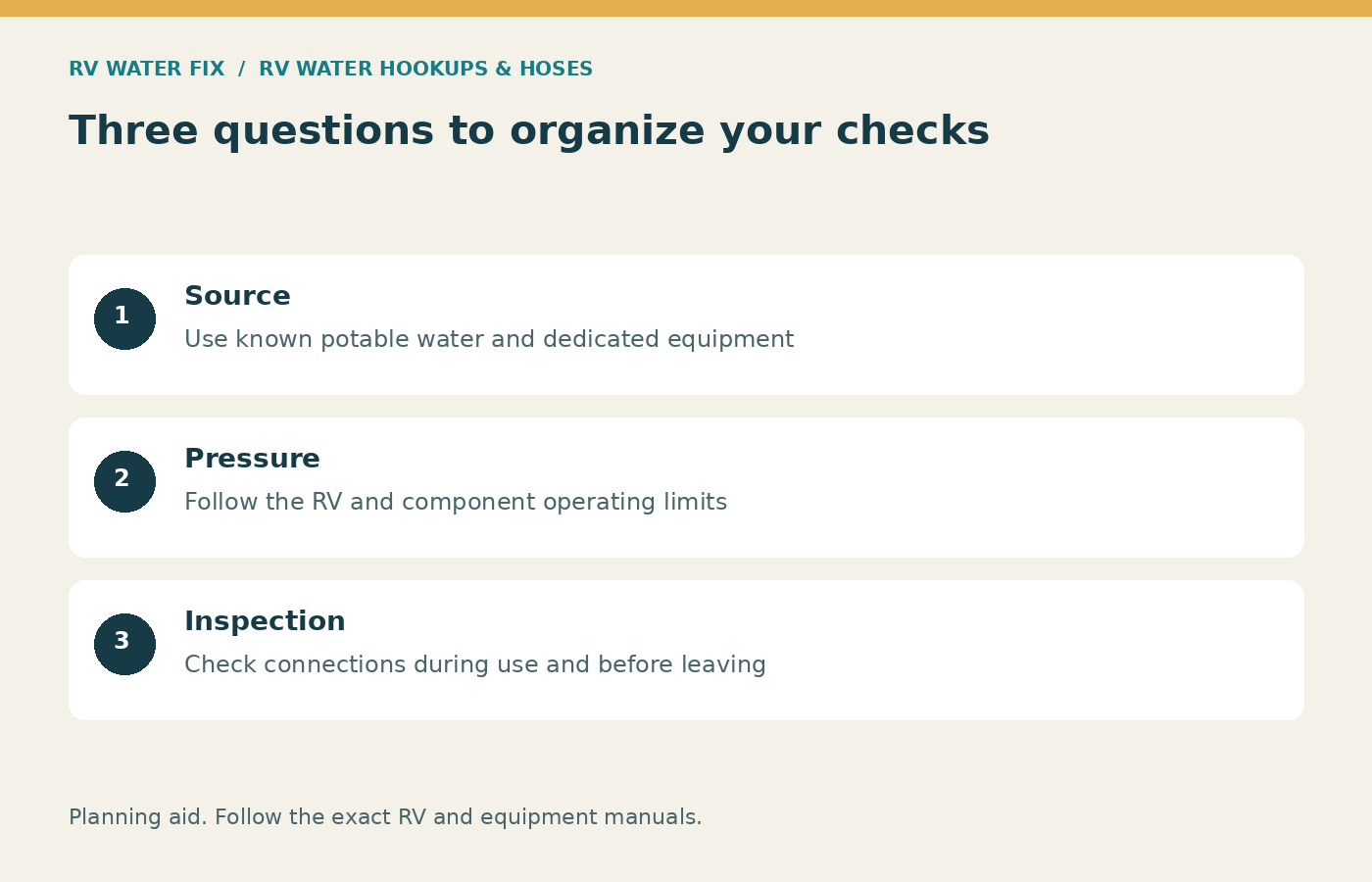
After any approved adjustment or reconnection, inspect for leaks. Check the setup again while water is being used and after fixtures close. Keep the gauge and shutoff accessible.
Common questions about settings
Should I use the highest pressure the hose can handle?
No. The hose is only one component. The RV plumbing, filters and other equipment may have lower applicable limits. Use the complete set of instructions.
Is a gauge a substitute for a regulator?
No. A gauge indicates pressure at its measurement point. It does not by itself control incoming pressure. Verify which functions your exact device provides before connecting it.
Sources and editorial notes
Source check: November 25, 2026. This is a research-based guide, not a hands-on product test or a claim of certified technician review. Manufacturer instructions for the exact installed equipment take priority. Featured artwork is an AI-generated editorial illustration, not a product photograph or installation diagram.
- 2026 Winnebago View operator manual, plumbing section
- 2025 Winnebago Towables owner manual, plumbing section
- Watts LFH560G regulator specifications