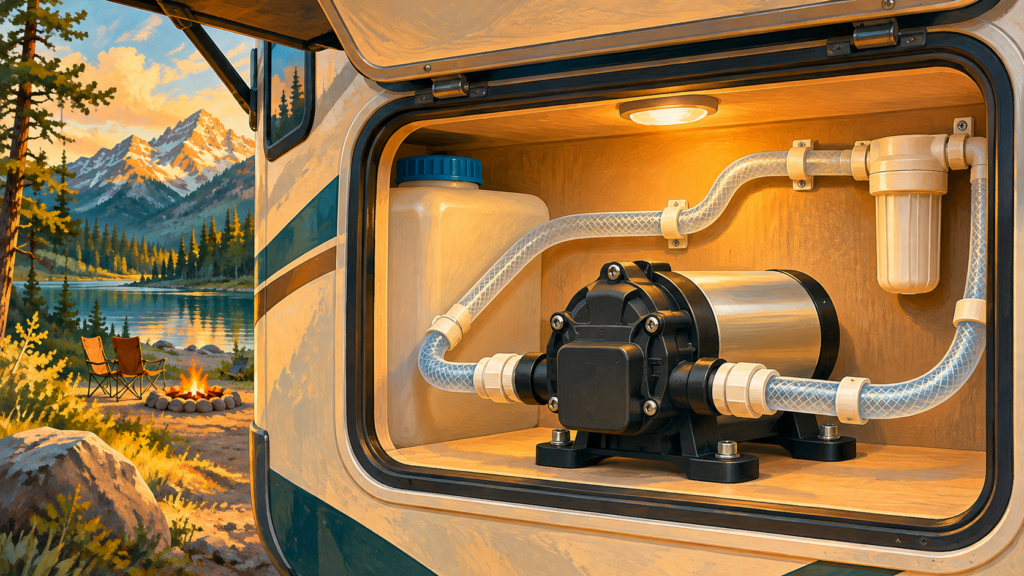
An RV water pump not priming can sound busy while delivering little or no water. Before replacing it, check that the pump can actually draw from the fresh tank. A wrong valve position, restricted inlet or air leak can resemble a failed pump.
Priming means establishing water flow through the pump and plumbing. The motor running only tells you that something is turning. It does not confirm a usable water supply or a sound suction connection.
RV water pump not priming after storage
Start with the owner's manual and a photo of the utility panel. After winterization, the pump may still be set to draw through an antifreeze pickup tube. Restore normal settings only according to the labels and manual for your RV.
Then confirm the tank has water and its drain is closed. Do not rely solely on a gauge that has behaved inconsistently. Use the fill history and any safe level-check method the manufacturer provides. Make sure you are checking the fresh tank rather than a waste-tank reading.
Keep the water heater off until its filling procedure is complete. If you cannot identify the heater bypass configuration, resolve that before trying to heat water.
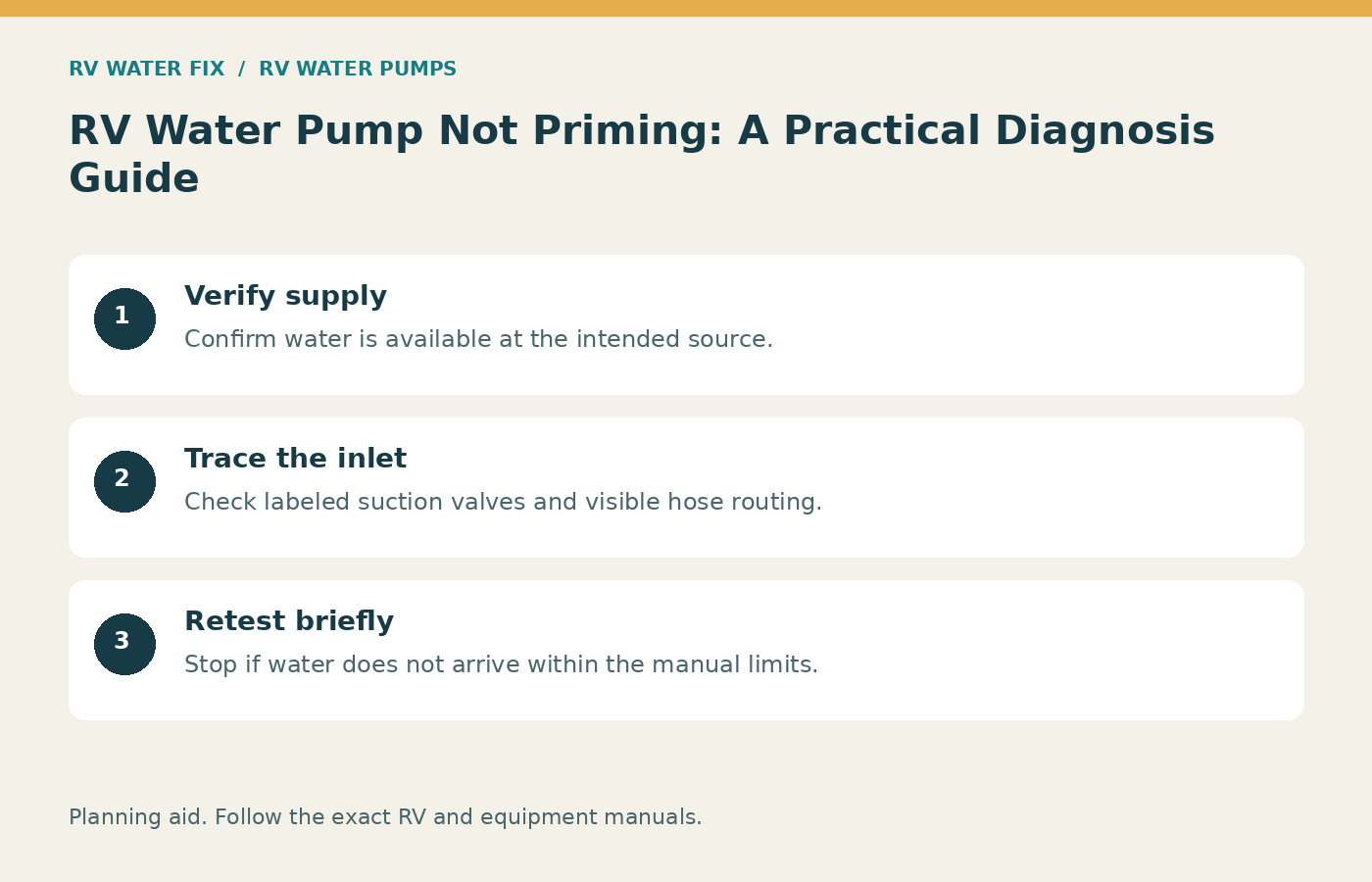
RV water pump not priming: trace the suction side
With the pump off, follow the visible route from the tank toward the inlet. Look for a kink, flattened hose or disconnected pickup connection. An inlet air leak may not leave a puddle because this part of the system is under suction when the pump runs.
The SHURFLO 4008 manual specifically identifies a clogged strainer, air entering inlet connections and restricted plumbing as possible reasons for sputtering or failure to prime. These clues help prioritize checks without proving that the pump itself is healthy.
Before opening any strainer, isolate the system and release pressure as instructed. Inspect the bowl and seal for damage. Clean and reassemble only using the manufacturer's method. A cracked bowl, misplaced seal or cross-threaded fitting can turn routine cleaning into an air-entry problem.
Make one change, then observe
Open the fixture identified in the RV's priming procedure and run the pump only within its permitted operating limits. Stay beside the system. Note whether the output changes from air to sputtering to steady water. Stop if the motor becomes unusually hot, the sound changes sharply or no water arrives.
Do not use a universal run time from an online comment. Dry-running tolerance and self-priming lift vary by model. An RV maker may impose a stricter limit than the pump's advertising suggests.
If one correction restores flow, close fixtures and inspect the serviced area again. Check that the pump shuts down normally. A successful prime is only the first part of verifying that the system works.
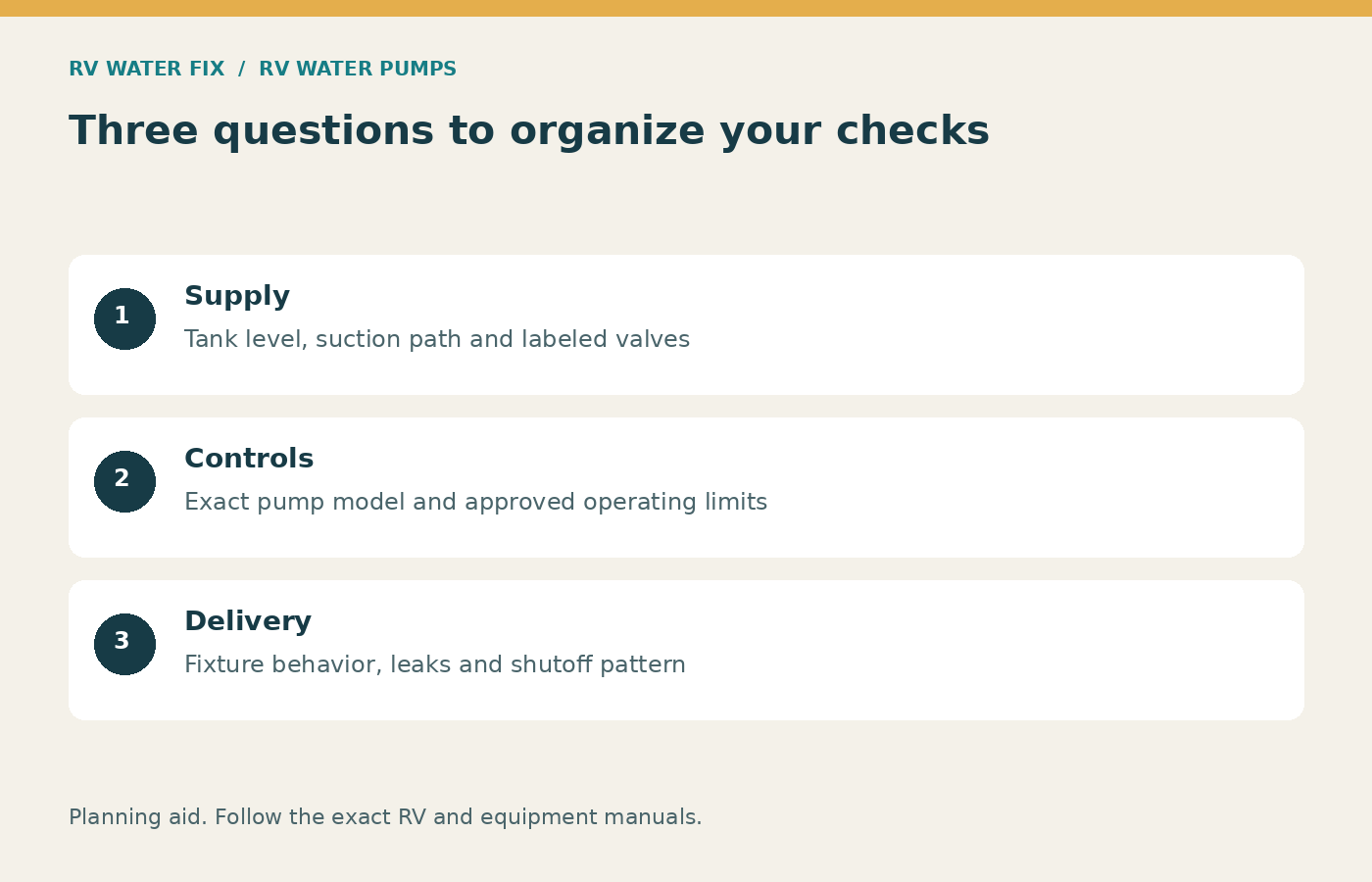
RV water pump not priming after the first checks
Record the exact pump number and describe when the problem began. Did it follow freezing weather, a strainer cleaning or a tank refill? That history can narrow the next service check more effectively than buying several replacement parts.
A technician may need to test the pump supply, internal valves or suction performance. Do not bypass electrical protection or connect an improvised power source. Xylem's Flojet guidance calls for properly protected wiring and qualified electrical installation.
If you compare replacements, match voltage, operating pressure, wiring requirements and fittings. More advertised flow will not correct a blocked tank outlet. Use our replacement guide to organize those requirements before ordering.
Common questions about priming
Can city water prove the pump is working?
No. City water can supply fixtures through a different path. A working faucet on that source does not establish that the tank and pump path is clear.
Should I pour water into the pump?
Only if the manufacturer explicitly specifies that procedure. Do not open connections or improvise a priming method while the system is powered or pressurized.
Sources and editorial notes
Source check: November 25, 2026. This is a research-based guide, not a hands-on product test or a claim of certified technician review. Manufacturer instructions for the exact installed equipment take priority. Featured artwork is an AI-generated editorial illustration, not a product photograph or installation diagram.