
The RV water filter vs softener decision starts with the problem you want to solve. A filter chosen for taste or sediment is not automatically a hardness treatment. A conventional softener does not automatically provide the contaminant reductions claimed by a particular filter.
Some RV owners may use both, while others need neither for their available water supply. First check reliable information about the source. Then choose equipment for a defined goal rather than buying the largest collection of canisters.
RV water filter vs softener: the basic difference
“Water filter” describes a broad group of products. Sediment media, activated carbon and membrane systems perform different jobs. Therefore, read the individual performance sheet instead of assuming that a generic filter label covers all of them.
NSF describes conventional softening under NSF/ANSI 44 as ion exchange that reduces hardness caused by calcium and magnesium. It also distinguishes those softeners from filters evaluated for aesthetic or specific health-related reductions under other standards.
That distinction is useful when reading listings. A picture of a clean shower wall does not establish a contaminant-reduction claim. A taste-improvement claim does not establish that the system removes hardness minerals.
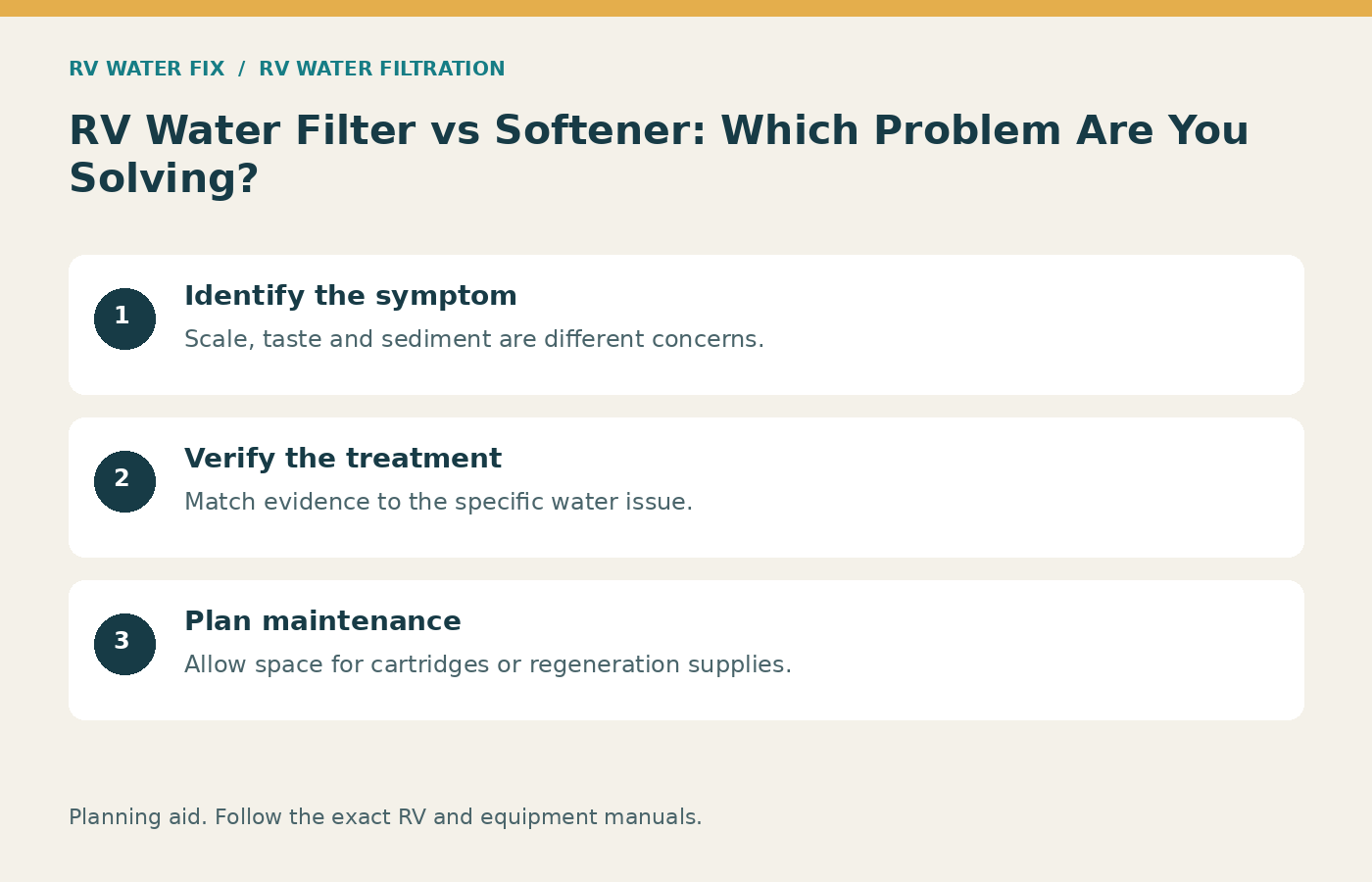
RV water filter vs softener: identify the concern
Gather the campground water information where available. If a recurring concern involves a particular substance, choose appropriate testing or ask the supplier for relevant results. Do not diagnose water safety from a stain, smell or online photograph alone.
Specifically, for scale-related concerns, hardness information is more useful than a generic “water quality” claim. To address a chlorine-taste goal, compare documented aesthetic reduction and service conditions. For a specific health-related concern, verify that exact reduction claim with the relevant certification listing.
CDC emphasizes that filters have different functions and that taste and appearance are unreliable safety indicators. Follow local advisories even if your setup includes several treatment devices.
RV water filter vs softener: maintenance
Also, a cartridge system needs compatible replacements and a clear service record. In addition, check time limits, rated capacity, storage instructions and freeze protection. A small system with readily available cartridges may be easier to keep in service during frequent travel.
A regenerating softener adds a different routine. Review the manufacturer’s regeneration method, supplies, rinse instructions and disposal requirements. Work out where you can perform that process lawfully before buying a portable unit.
Do not mix the maintenance procedures. A product intended for softener regeneration is not automatically appropriate for cleaning a filter. Likewise, sanitizing the RV tank is a separate task from replacing a cartridge or regenerating resin.
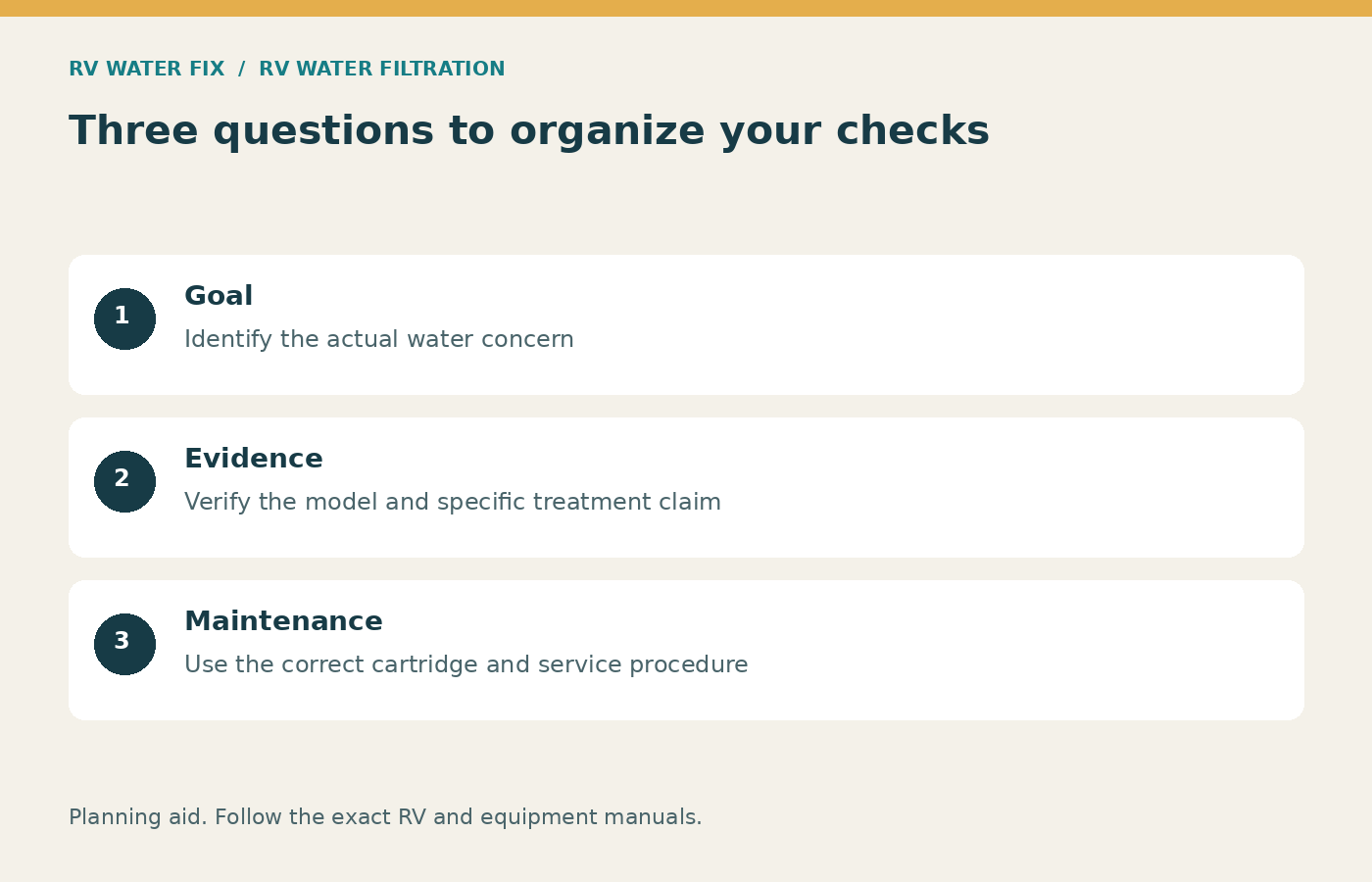
Think through installation and travel
In addition, measure the storage space, consider the lifting task and read pressure and temperature limits. Also account for fittings, connection support and hose routing. A device that works on a seasonal site may be inconvenient for someone moving every morning.
If combining equipment, use the manufacturers’ approved sequence. In particular, the correct order depends on the devices and treatment goal. Do not assume one universal order suits every portable softener, carbon filter and membrane unit.
Finally, keep an equipment list with model numbers and replacement parts. That makes it easier to understand which device is responsible when flow drops after maintenance.
Choose by a specific goal
For a verified taste issue, begin with a suitable documented filter claim. For verified hardness, investigate a compatible softening approach and its maintenance burden. If both concerns exist, assess a combined setup without overstating what it can treat.
Can either system make any campground water safe?
No universal claim follows from either product label. Water treatment must match the actual hazard and operating conditions. Use a known potable source and follow the authority responsible for any advisory.
Sources and editorial notes
Source check: November 25, 2026. This is a research-based guide, not a hands-on product test or a claim of certified technician review. Manufacturer instructions for the exact installed equipment take priority. Featured artwork is an AI-generated editorial illustration, not a product photograph or installation diagram.