
To dewinterize an RV water system, reverse the documented storage setup using the RV and appliance instructions, then verify normal operation. Flushing a faucet until it looks clear is only one part of the job. Filters, tanks, heaters and optional appliances need attention too.
Begin while there is still time to fix a leak before departure. If freezing conditions remain possible, plan how the system will be protected again. Restoring water service and safely leaving water in the RV are separate decisions.
Prepare to dewinterize an RV water system
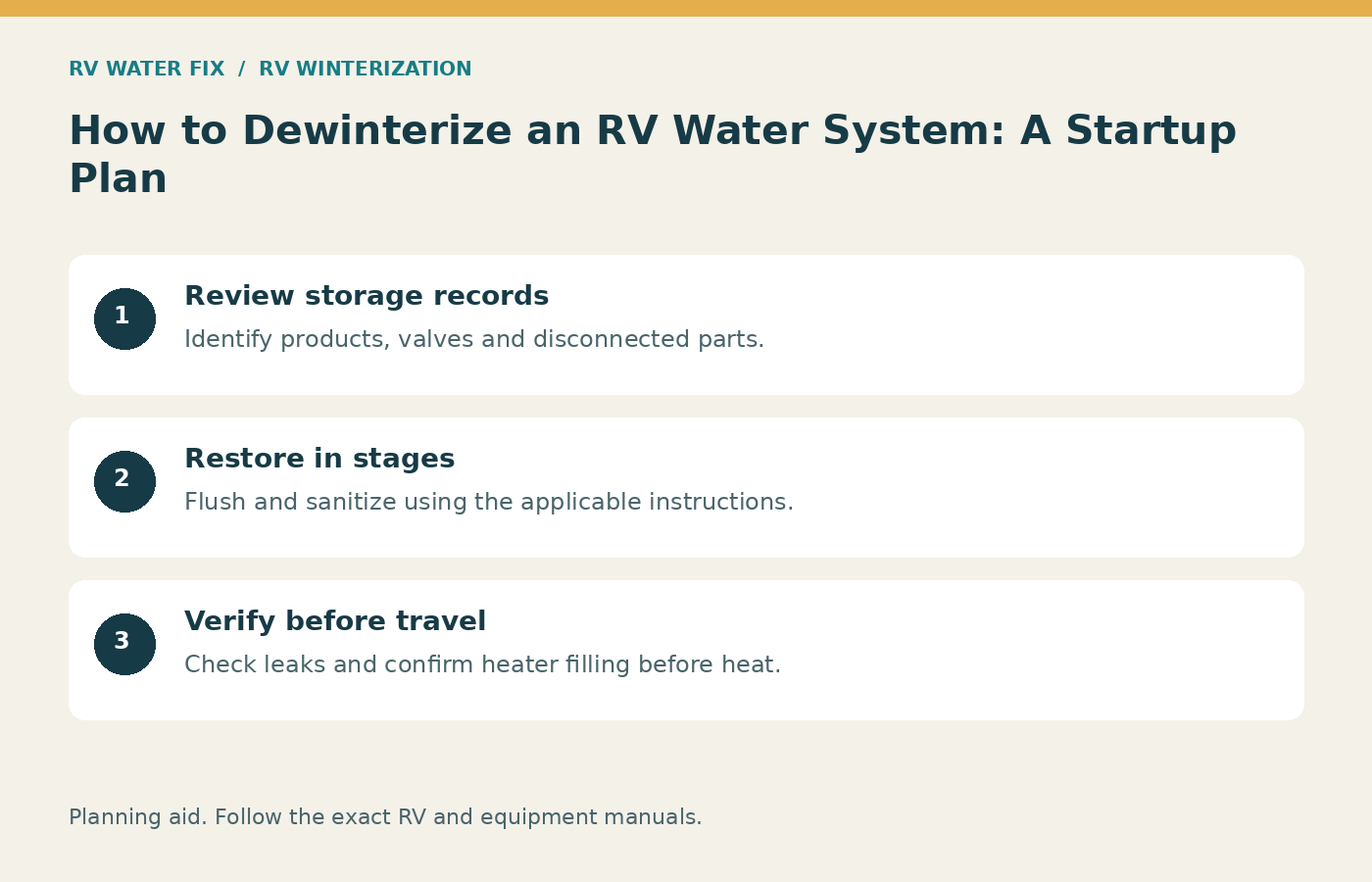
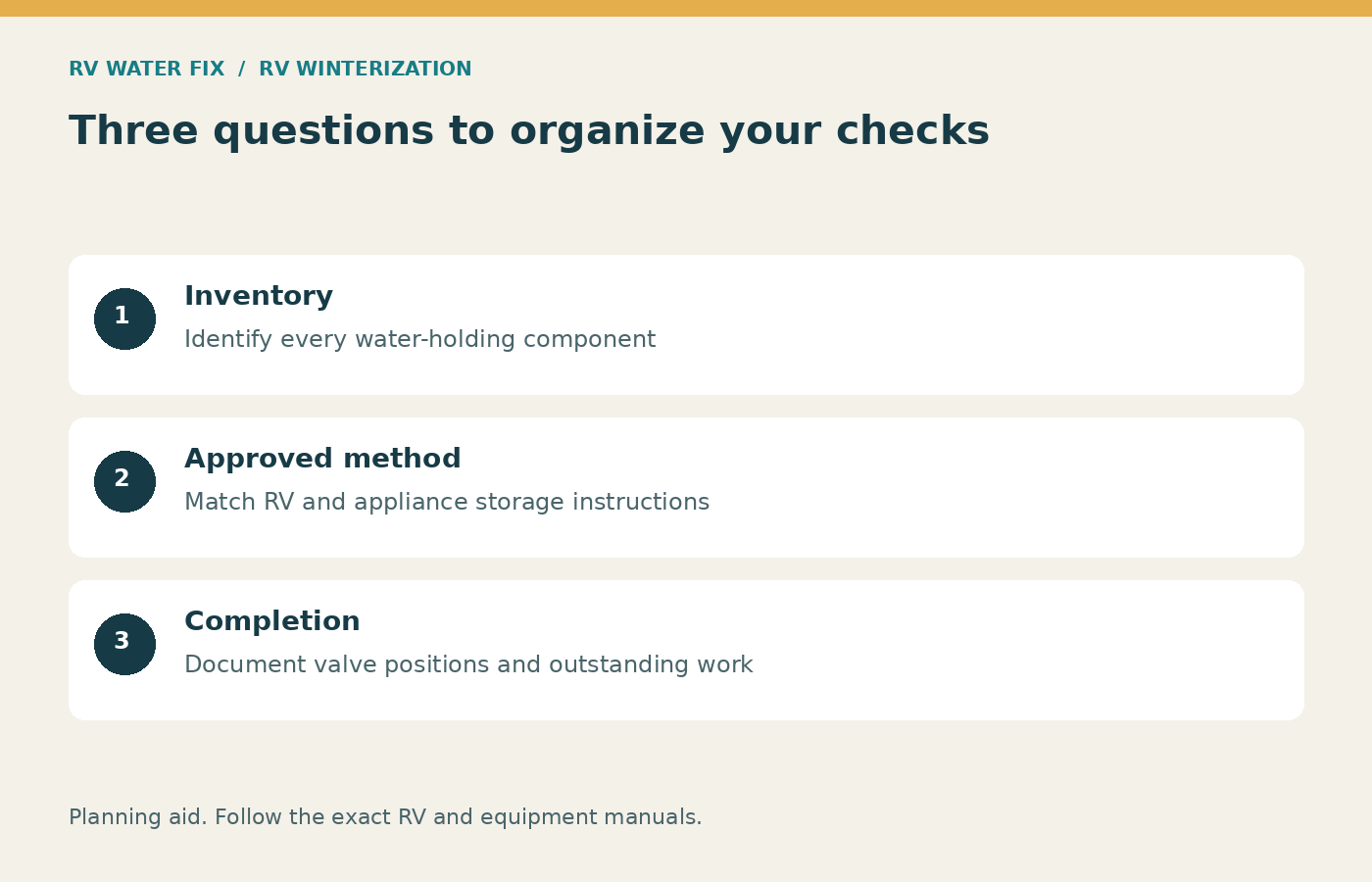
Gather the winterization record, product label, utility-panel photos and current manuals. Identify any drains left open, parts removed, filter cartridges stored separately and appliances isolated for winter.
If you bought the RV during storage, ask what method and product were used. Unknown liquid in the system should be identified before normal use. Do not assume every colored liquid is a suitable RV winterizing product.
Inspect accessible fittings, housings and hoses with the supply off. Cracks, displaced connections or wet insulation need assessment before pressurizing the system. Keep water away from electrical equipment.
Dewinterize an RV water system in stages
Follow the exact startup procedure for replacing plugs, closing drains and setting valves. Work from the manual rather than memory. Photograph restored settings so your maintenance record shows the finished configuration.
Use a known potable source and a drinking-water hose. Keep the pump and heater controlled as the instructions require. Do not enable heat merely because you have connected city water.
Introduce water with supervision and inspect accessible connections. If a leak appears, shut off the supply and address it before continuing. A slow filling process gives you more useful observations than walking away while the system pressurizes.
Flush and sanitize as separate tasks
Follow the winterizing product's flushing instructions and the RV's sanitizing procedure. Removing storage fluid and sanitizing the fresh-water system are related but distinct tasks. Do not substitute a taste test for completion of either procedure.
Use the tank capacity and chemical concentration specified by the applicable instructions. Avoid a universal bleach recipe copied from a different rig. If the RV manual and current product label conflict, obtain guidance rather than improvising a stronger mixture.
Never mix bleach with other cleaners, acids or ammonia. Keep treatment chemicals away from cartridges and appliances unless their manufacturers explicitly permit the procedure. Account for required bypasses and separate service steps.
Bring filters and appliances back into service
Inspect the filter system and use the correct replacement cartridges. Follow housing sanitation and startup flushing requirements. A cartridge that was frozen, stored improperly or left beyond its stated service period may need replacement.
For the water heater, follow its own fill and air-purge procedure before enabling either gas or electric heat. Suburban specifically warns against operating its covered tank heaters without water. Tankless systems need their own approved startup checks.
Optional appliances may require additional flushing or service. Include every branch listed in the storage inventory rather than stopping when the kitchen faucet works.
Dewinterize an RV water system before travel
Check each fixture and inspect underneath after use. Test the onboard supply separately where the manual permits. Note pump shutoff behavior, hot-water delivery and any recurring air or odor concern.
Save the startup date, cartridge details and repairs. Do not describe the water as safe solely because it tastes normal. Follow source-water advisories and use appropriate testing for unresolved concerns.
Can I skip sanitizing if I used RV antifreeze?
Follow your RV's startup requirements. Winterizing fluid is not proof that the tank and plumbing have been sanitized or that the stored water system is ready for drinking use.
Sources and editorial notes
Source check: November 25, 2026. This is a research-based guide, not a hands-on product test or a claim of certified technician review. Manufacturer instructions for the exact installed equipment take priority. Featured artwork is an AI-generated editorial illustration, not a product photograph or installation diagram.
- Winnebago operator manuals by model and year
- 2025 Winnebago Towables owner manual, plumbing section
- Lippert: RV spring maintenance checklist
- Suburban tank water heater operation and maintenance guide, pages 3 and 8–9
- CDC: choosing water filters