Clearsource Ultra RV Water Filter Guide
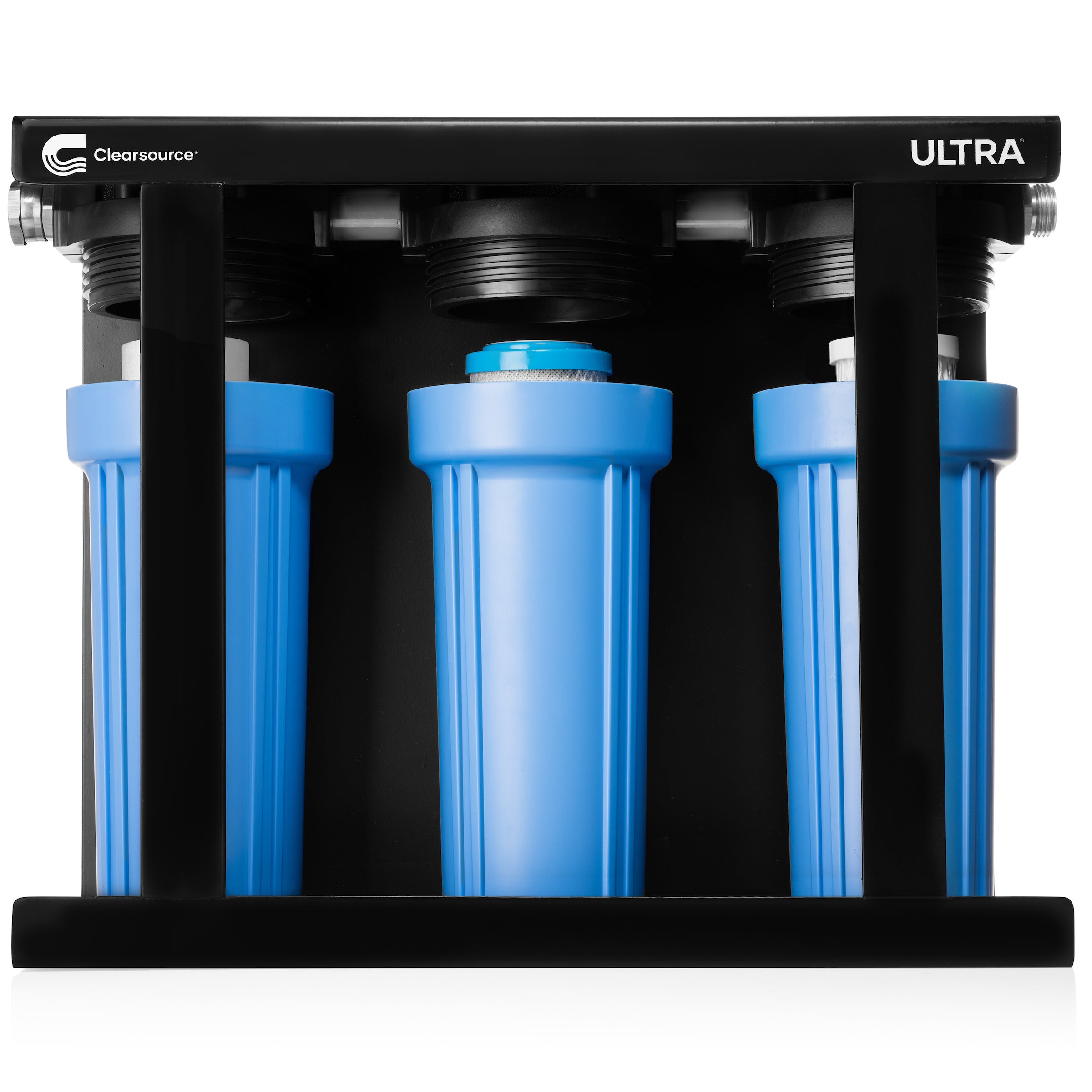
Exact product shown: Clearsource Ultra RV Water Filter Guide. Manufacturer photograph used with permission.
The Clearsource Ultra is a substantial freestanding RV water filter system with three separate treatment stages and a metal chassis. It belongs on a shortlist when an owner wants a serviceable external canister arrangement and is willing to carry, store and maintain a larger assembly. It deserves a closer look than a simple “premium choice” label, especially because its VirusGuard marketing raises questions that ordinary taste-filtration comparisons may not address.
Our assessment comes from manufacturer documentation and an analysis of ownership requirements. We have not used the Ultra at a campsite, performed laboratory testing or verified every reduction claim independently. Read the evidence and practical constraints together before deciding whether the additional equipment makes sense for your water source.
Identify the Ultra, not a similarly named system
This guide covers the full-size Clearsource Ultra described on its manufacturer page. The Ultra Mini, Premier Mini and replacement packs are separate products. A listing that groups several Clearsource models together may change its photographs, dimensions or included cartridges when you select a different option.
Record the exact system name and selected package before comparing offers. Then match the cartridge configuration to the correct replacement pack. Buying a similarly named kit because the housings look alike is an avoidable source of maintenance problems.
For wider comparison, the RV water filtration guide helps separate the treatment goal from the package format. A larger system is not automatically the right system, and a smaller one is not automatically inadequate.
What the three stages provide
Clearsource describes a five-micron sediment first stage, a 0.5-micron coconut-shell carbon-block second stage and a VirusGuard finishing stage. The division is useful because the cartridges are intended to perform different jobs. The first position intercepts particulate material, while the carbon position addresses taste, odor and specified chemical concerns in the manufacturer’s description.
The third stage is the distinctive part of the Ultra’s positioning. Clearsource markets VirusGuard for reduction or removal of bacteria, cysts and viruses. That is a manufacturer claim requiring model-specific supporting evidence, not a conclusion that follows merely from having three housings.
Do not rewrite marketing comparisons such as “better than survival filters” or claims of market exclusivity as established fact. Those statements require a defined comparison and evidence. For a buying guide, the more useful question is what the exact supplied cartridge has been evaluated to do under specified conditions.
Examine microbial-treatment evidence carefully
If your purchasing decision depends on a microbial reduction, request the applicable performance report, cartridge identification and certification listing. Match those documents to the actual Ultra configuration rather than another product using related media. A technology’s background or a broad reference to its development does not establish the performance of every finished system containing it.
Also determine the conditions attached to any test: source-water quality, service life, flow and other operating requirements. A claim without its conditions can be difficult to apply responsibly to a campground hookup. Where current independent evidence cannot be verified, describe that gap plainly instead of presenting manufacturer language as independent certification.
Continue to use an identified potable supply and follow current water advisories. Do not choose an unknown source solely because an equipment advertisement mentions viruses. Appropriate treatment depends on the actual hazard and the full procedure, not simply a reassuring product name.
Make room for the full-size assembly
The manufacturer lists the Ultra at 18.75 inches wide, 15.25 inches high and 7.5 inches deep, with a weight of 28 pounds. Those figures make storage and handling meaningful parts of the decision. Check the current specification and allow room for attached connections and the separate cartridge-service task.
A bay that barely fits the system may make it awkward to carry or inspect. Consider how you will move the unit after use and keep it stable during operation. Avoid routing hoses in a way that pulls on fittings or turns a heavy assembly into a lever against the RV inlet.
The product page describes a freestanding powder-coated metal chassis and stainless-steel fittings. Those are identifiable construction features, but we have not independently tested impact resistance or corrosion life. Prefer a practical assessment of handling, support and maintenance access over broad promises that equipment is indestructible.
Understand the stated flow figure
Clearsource lists a flow rate of 4.5 gallons per minute on the product page. The displayed specification does not provide the pressure condition beside that number. Consequently, it is not a complete basis for a direct performance ranking against another system advertised at a stated pressure.
Ask about performance at your permitted RV pressure, particularly if the campground supply is already weak or the hookup uses long hoses and several fittings. Do not increase your regulator setting beyond the RV manufacturer’s guidance to pursue a headline flow rate.
After installation, assess the whole water path using comparable observations. Record whether one fixture or several are operating, where any gauge is located and whether a particular cartridge change altered the result. Our pressure-regulator guide explains why pressure control and filter selection should be considered together.
Budget for the correct replacement pack
The Ultra’s ownership cost extends beyond the original system. Identify the Clearsource Ultra replacement three-pack and verify that its cartridge configuration matches the full-size model. Check current replacement availability before buying several seasons of equipment around one supply route.
Compare the actual purchase cost of compatible cartridges and shipping. Avoid publishing an exact cost per gallon based only on a maximum capacity claim when your source water and usage are unknown. A maintenance record is a more honest starting point than a theoretical number presented as a measured result.
Retain packaging information and note installation dates. If the manufacturer provides different requirements for different cartridges, do not replace those instructions with a single generic filter-change rule. Sediment loading and treatment capacity do not necessarily progress at the same rate.
Setup, service and storage
Use the current manual for connection order, flow direction, flushing and cartridge service. Assemble with the source shut off, support the system and introduce water while watching for leaks. Relieve pressure before opening a housing; never assume an apparently quiet system is depressurized.
Follow approved storage guidance for both housings and media. Protect the equipment from freezing and physical damage, and keep potable connections separate from wastewater equipment. Do not apply another brand’s cartridge-cleaning procedure to VirusGuard or assume every stage can be washed and reused.
Decide whether the size is justified
The Ultra is a relevant candidate for an owner who wants a full-size external system, can handle the listed weight and is prepared to verify the evidence behind the desired treatment claim. It is less appealing when storage is tight, the setup must be moved frequently by someone who cannot comfortably handle it, or the intended water concern remains undefined.
Compare the Ultra Mini for space and handling, a simpler inline system for minimal setup, and other canister systems for their specific documented claims. The appropriate choice is the one that fits the treatment task and the maintenance routine you will actually follow.
Does VirusGuard make all water sources acceptable?
No universal conclusion follows from the name. Obtain the exact performance evidence, follow its operating conditions and obey source-water advisories. Do not use this guide as a substitute for a water-safety assessment.
Is the highest-priced system automatically the strongest recommendation?
No. Price is separate from compatibility, evidence and ownership effort. The Ultra should earn its place through a clearly defined need and a workable maintenance plan, not its position at the top of a price table.
Sources and verification
Research and specifications checked November 25, 2026. Verify current model details, availability and instructions before purchase.