
RV water filter slow flow can follow a cartridge change, develop gradually or appear only at one campground. Before blaming the filter, compare the whole supply path. A kinked hose or weak faucet can produce the same frustrating shower.
This guide helps organize observations on a known potable water hookup. It does not recommend bypassing treatment required for a known contamination concern. Follow any water advisory and the filter manufacturer's service instructions.
When did RV water filter slow flow begin?
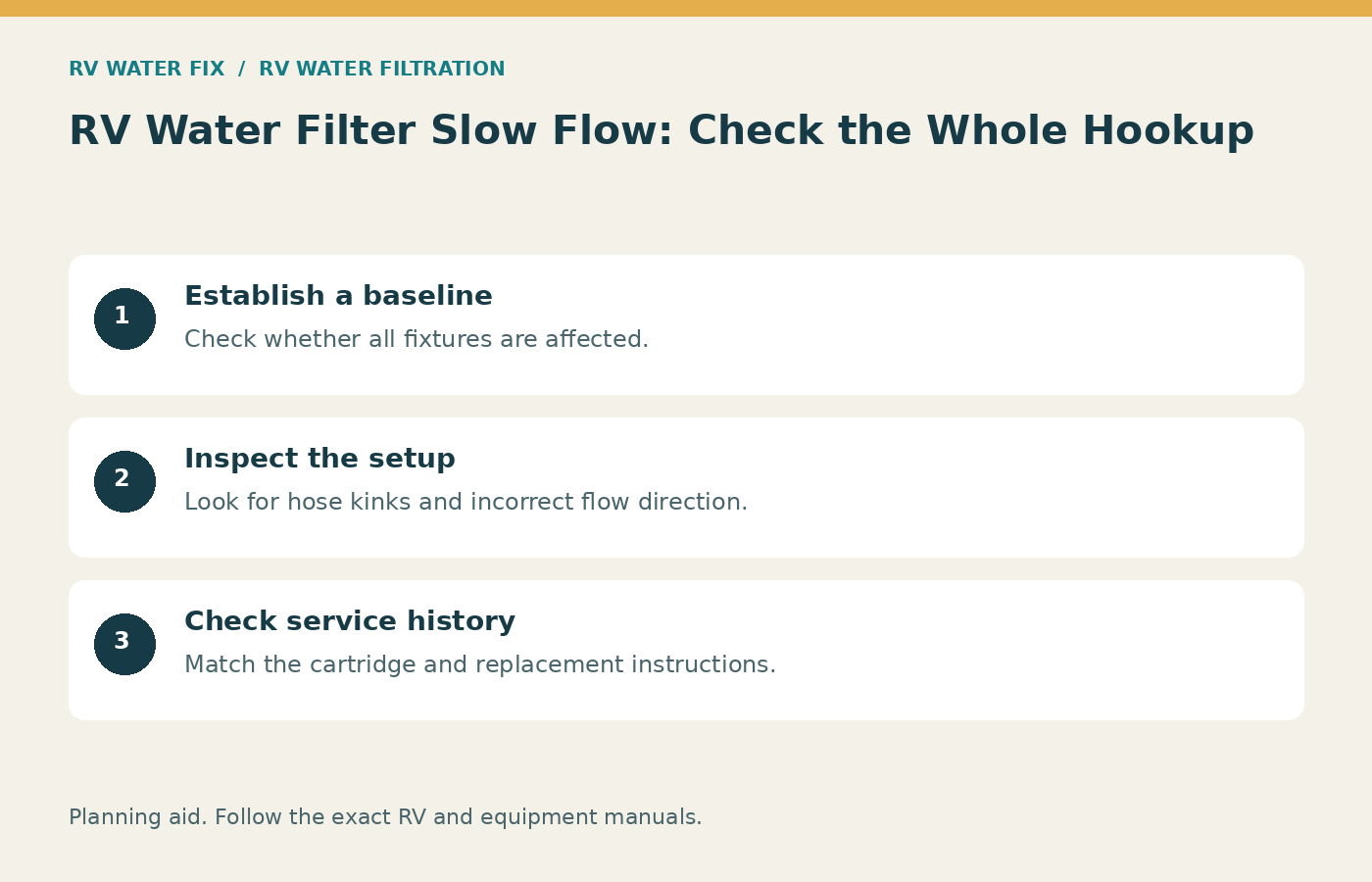
Write down the last time the system worked normally. If the change happened immediately after maintenance, recheck the exact cartridge model, installation direction and startup procedure. If it developed over several trips, review the service record and the water conditions encountered.
Then compare fixtures. A problem at one faucet points toward its screen or local branch. Weak flow everywhere makes the shared supply, regulator, filter and inlet path more relevant. Hot-only symptoms deserve a separate heater and bypass check.
Before opening a housing, shut off city water and the pump. Relieve pressure using the equipment instructions. A housing that feels stuck may still contain pressure, so do not force it open.
RV water filter slow flow: inspect the hookup
Look for flattened hose sections, tight bends and partly closed valves. Confirm that the water supply is fully available under the campground's normal rules. Keep connections supported so a heavy housing does not pull against the RV inlet.
Check the arrow on an inline filter or the inlet and outlet labels on a multi-stage assembly. Also confirm that the cartridge arrangement matches the manual. Do not rearrange stages based on a generic diagram from another brand.
If a manufacturer-approved comparison test removes or bypasses a filter, use only an appropriate potable source and treat it as a short diagnostic step. A stronger stream after bypassing identifies a restriction along that section. It does not prove the unfiltered water is suitable to drink.
Separate pressure readings from flow observations
A gauge reading with all taps closed cannot describe the entire flowing system. Note whether the gauge sits before or after the filter. A downstream reading during use can answer a different question from an upstream static reading.
Do not raise the regulator above the RV's permitted setting to push through a restricted cartridge. Check the pressure limits of every component, including the hose and housings. The strictest applicable equipment limit needs attention.
For a service discussion, record which tap was running, where the gauge was installed and whether any other outlet was open. Comparable observations are more useful than isolated numbers.
RV water filter slow flow and cartridge replacement
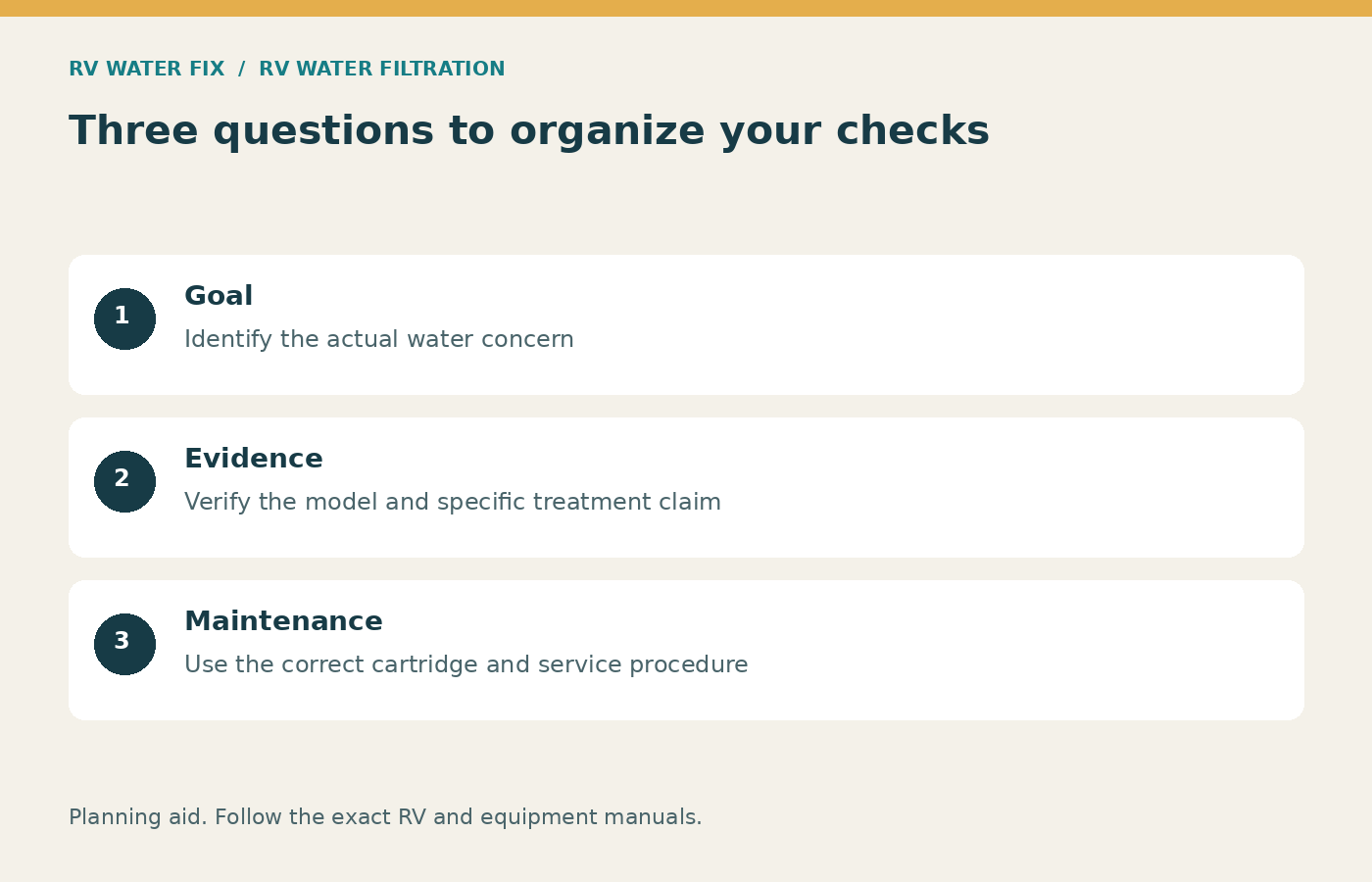
Consult the stated time, capacity and storage requirements. Use the earliest applicable replacement condition specified by the manufacturer. Color alone cannot show the remaining ability to reduce a particular chemical, and taste is not a safety test.
Check whether the product has a cleaning procedure. Many disposable cartridges should be replaced rather than scrubbed or soaked. Do not improvise a bleach treatment inside carbon media or restore a freeze-damaged housing to service.
Before buying replacements, confirm the part number and availability. Our cartridge directory can help you organize options, but the original system documentation controls compatibility and treatment claims.
After service, verify the result
Follow the required flushing procedure, inspect for leaks and repeat the same fixture comparison. Save the date and cartridge number. If RV water filter slow flow continues with the correct setup, investigate the upstream supply and RV inlet before ordering a larger filter system.
Does clearer water prove the cartridge works?
No. CDC notes that harmful contaminants may not change water's appearance or taste. Use appropriate water information and documented treatment claims, not appearance alone.
Sources and editorial notes
Source check: November 25, 2026. This is a research-based guide, not a hands-on product test or a claim of certified technician review. Manufacturer instructions for the exact installed equipment take priority. Featured artwork is an AI-generated editorial illustration, not a product photograph or installation diagram.
- CDC: choosing water filters
- 2026 Winnebago View operator manual, plumbing section
- Watts LFH560G regulator specifications